Postpartum Hair Shedding: Do Supplements Help?
Shedding that starts a few months after birth often settles on its own; biotin hasn’t been shown to treat this common postpartum pattern.
Postpartum shedding often begins a few months after delivery, peaks around four months, and usually improves by your baby’s first birthday. Biotin hasn’t been shown to treat it. The usual postpartum shedding course does not itself establish a need for iron, zinc, vitamin D, or a combination hair supplement; addressing an identified nutritional need is a separate question. If your usual fullness hasn’t returned by a year, an assessment can look for another cause. 1 2
The timing can explain a lot
Hair shedding that starts a few months after birth often follows a recognizable course. The American Academy of Dermatology describes postpartum shedding, also called telogen effluvium, as temporary: it usually peaks around four months after delivery, and most women regain their usual fullness by their baby’s first birthday, sometimes sooner. The shift is linked to falling estrogen after delivery. 1
That timeline can make a handful of hair in the shower feel less alarming, even when the change is upsetting. It also offers a useful distinction: shedding that gradually eases over the first year fits the common postpartum pattern better than hair loss that remains noticeably thin without improvement. If your usual fullness hasn’t returned by your baby’s first birthday, the Academy advises a dermatology assessment to look for another cause. 1
What supplement claims can tell you
Biotin is often marketed for hair. The NIH Office of Dietary Supplements describes the support for hair-benefit claims as limited to case reports in children with rare hair disorders. Those reports don’t show that biotin treats postpartum shedding in adults. 2
The usual postpartum shedding course does not itself establish a need for iron, zinc, vitamin D, or a combination hair supplement. A label listing those nutrients does not show that a formula speeds regrowth. Addressing an identified nutritional need is a different question. 1 2 4
Biotin deserves a specific caution if blood tests are planned. High supplemental intakes can interfere with some laboratory tests, including thyroid hormone and vitamin D tests, and may produce misleading results. The NIH describes interference even after a single 10 mg dose taken within 24 hours of testing; that finding does not mean every supplemental amount has the same effect. Tell the person ordering or interpreting tests about any biotin-containing product you take. 2
While breastfeeding, check the actual ingredients
“Hair vitamins” can refer to products with different ingredients and amounts, so look at the full label rather than relying on the product name. The NIH lists an adequate biotin intake of 35 micrograms a day for breastfeeding adults. That’s a reference for nutritional adequacy, not a dose shown to treat shedding or proof that a high-biotin hair product is appropriate while breastfeeding. The clinical significance of changes in biotin status during lactation remains unclear. 2
The distinction matters for combination products, too: a formula listing iron, zinc, or vitamin D cannot be judged by those names alone. Its postpartum hair benefit and breastfeeding suitability do not follow from its ingredient list. 4 If you’re considering one, bring its full ingredient list and amounts to your clinician or pharmacist, particularly if you’re also taking another supplement.
When the pattern deserves another look
Some postpartum hair loss can occur alongside another hair disorder. In a clinical evaluation of 200 women already experiencing postpartum hair loss, researchers identified telogen effluvium together with other diagnoses, including androgenetic alopecia and traction alopecia. Because this was a selected clinical group, its findings don’t tell us how often those conditions occur among all new mothers. Nor does the study provide a reliable at-home sign for telling those disorders apart. 3
If shedding isn’t easing, your hair isn’t returning toward its usual fullness by a year, or you’re concerned about the change, an assessment can help identify what’s contributing. The most useful first question isn’t which supplement promises the most. It’s whether your hair is following the expected postpartum course or needs a closer look. 1 3
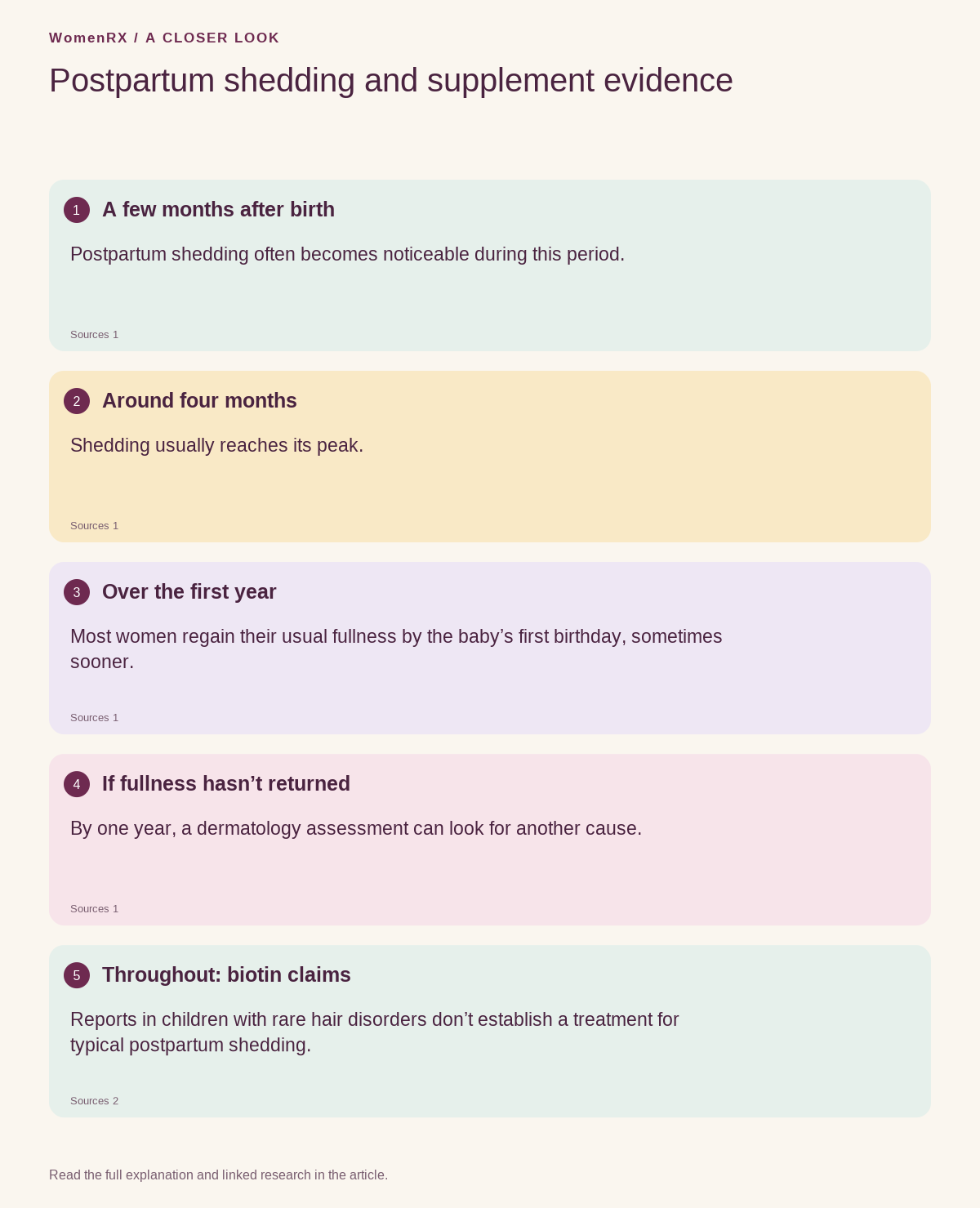
Postpartum shedding and supplement evidence
A few months after birth: Postpartum shedding often becomes noticeable during this period.1
Around four months: Shedding usually reaches its peak.1
Over the first year: Most women regain their usual fullness by the baby’s first birthday, sometimes sooner.1
If fullness hasn’t returned: By one year, a dermatology assessment can look for another cause.1
Throughout: biotin claims: Reports in children with rare hair disorders don’t establish a treatment for typical postpartum shedding.2
Read the figure as text
The usual shedding course offers a timing guide; supplement claims are a separate question.- A few months after birth: Postpartum shedding often becomes noticeable during this period.1
- Around four months: Shedding usually reaches its peak.1
- Over the first year: Most women regain their usual fullness by the baby’s first birthday, sometimes sooner.1
- If fullness hasn’t returned: By one year, a dermatology assessment can look for another cause.1
- Throughout: biotin claims: Reports in children with rare hair disorders don’t establish a treatment for typical postpartum shedding.2
More questions, answered
Does breastfeeding make biotin a proven hair-loss treatment?
No. The biotin intake reference for lactation addresses nutritional adequacy, not treatment of maternal hair shedding. The hair-benefit reports described by the NIH concern children with rare hair disorders, not postpartum adults. 2
Why mention a high-biotin product before a blood test?
High biotin intakes can make some test results misleading, including thyroid hormone results. The NIH describes interference after a 10 mg dose taken within 24 hours of testing. Tell the person ordering or interpreting tests what biotin-containing products you take; don’t assume every dose has the same effect. 2
Sources you can check
- Hair loss in new moms: Dermatologist tipsAccessed 2026-09-25Return to first citation
- Biotin - Health Professional Fact SheetAccessed 2026-09-25Return to first citation
- Postpartum Telogen Effluvium Unmasking Additional Latent Hair Loss Disorders.Galal SA, El-Sayed SK, Henidy MMH. · The Journal of clinical and aesthetic dermatology · 2024Return to first citation
- Marine Oils2006Return to first citation