D3 and K2 Supplements: Check Each Ingredient Separately
A D3-and-K2 supplement combines two nutrients, but each ingredient has its own dose, overlap, and medication questions.
Review the D3 and K2 amounts separately, then add them to what you already get from multivitamins, prenatal vitamins, and other supplements. The clearest medicine concern here is vitamin K with warfarin and similar anticoagulants: sudden changes in vitamin K intake can affect how these medicines work. K2 isn’t automatically needed just because a product contains D3, and evidence for bone benefits from K supplementation is mixed. 1 2
A bottle that pairs vitamin D3 with K2 can look like one carefully matched formula. For a useful safety check, treat it as two ingredients first: find each amount, look for overlap elsewhere, and check whether either one matters for a medicine or health condition you have.
Read the two amounts separately
On the Supplement Facts label, note the amount of vitamin D3 and vitamin K2 per serving. Check the serving size, too: the listed amounts may be for more than one capsule or softgel. If the label identifies the K2 form, record whether it is MK-4 or MK-7; both forms are used in supplements, and research on how their absorption compares is limited. 1
Next, look at other products you take, including a multivitamin, prenatal vitamin, calcium product, or a separate D supplement. Vitamin K is present in many multivitamins, and products containing D and K together are common. Adding labels side by side is a practical way to spot duplicate ingredients before you take a combined product on top of them. 1 2
The pairing itself doesn’t show that you need both nutrients. Vitamin D has a role in normal calcium metabolism, while vitamin K has roles in blood clotting and bone-related proteins. 2 1 Although K2 has been studied for bone outcomes, the NIH Office of Dietary Supplements says it remains unclear whether supplementing with any form of vitamin K reduces osteoporosis risk. A review of trials in postmenopausal women also reported mixed findings across bone measures, with limitations in some studies. That evidence doesn’t establish that every woman taking D3 needs K2. 1 3
If you take warfarin, treat K2 as a medication question
Vitamin K can have a serious interaction with warfarin and similar vitamin K-antagonist anticoagulants. Changes in vitamin K from food or supplements can increase or decrease the medicines’ anticoagulant effect, so people taking them are advised to keep vitamin K intake consistent. That means a new K2 supplement, stopping one, or changing how much you take is worth discussing with the clinician who manages your anticoagulant before making the change. 1
This warning is specific to warfarin and similar medicines. Don’t assume it applies in the same way to every medicine described as a blood thinner, and don’t infer that a K2 product is safe with another anticoagulant just because it isn’t warfarin. Check the exact medicine and product with your prescriber or pharmacist.
Other situations can affect vitamin K too. The NIH fact sheet notes that bile acid sequestrants such as cholestyramine and colestipol can reduce vitamin K absorption, although the clinical significance is unclear. Orlistat can also reduce absorption of fat-soluble vitamins, including K. Prolonged antibiotic use may affect vitamin K status in some circumstances. These are reasons to review the actual medicine and supplement combination, not to add K2 automatically. 1
Review D3 with your current plan
D3 is one form of vitamin D. The NIH lists an adult recommended dietary allowance of 15 micrograms (600 IU) for adults through age 70, and notes that 1 microgram equals 40 IU. That reference is a daily intake benchmark for healthy people, not a personalized treatment target. Look at the D amount in all your supplements rather than judging a combination product by its K2 content or by the word “balanced.” 2
If you’re being treated for a medical condition, or have been told to take a particular amount of vitamin D, compare the product with that plan instead of treating a general reference intake as your personal dose. A general reference intake can’t settle whether this specific formula fits your treatment.
Pregnancy and breastfeeding call for a product-specific check
During pregnancy or breastfeeding, include prenatal or other stage-specific supplements in the label check. The vitamin K reference table lists pregnancy and lactation separately, with values matching those for the corresponding female age groups; vitamin D guidance also includes age- and context-specific recommendations. Those separate nutrient recommendations don’t establish that a combined D3-plus-K2 product is uniquely needed during pregnancy or breastfeeding. Review the exact formula alongside your existing supplements and care plan rather than adding it based on the pairing alone. 1 2
A simple review can be enough to decide what to ask: the D3 amount, the K2 amount and form, the serving size, the other products that contain either vitamin, and the exact medicines you take. For warfarin, keep your anticoagulation team involved before changing vitamin K intake.
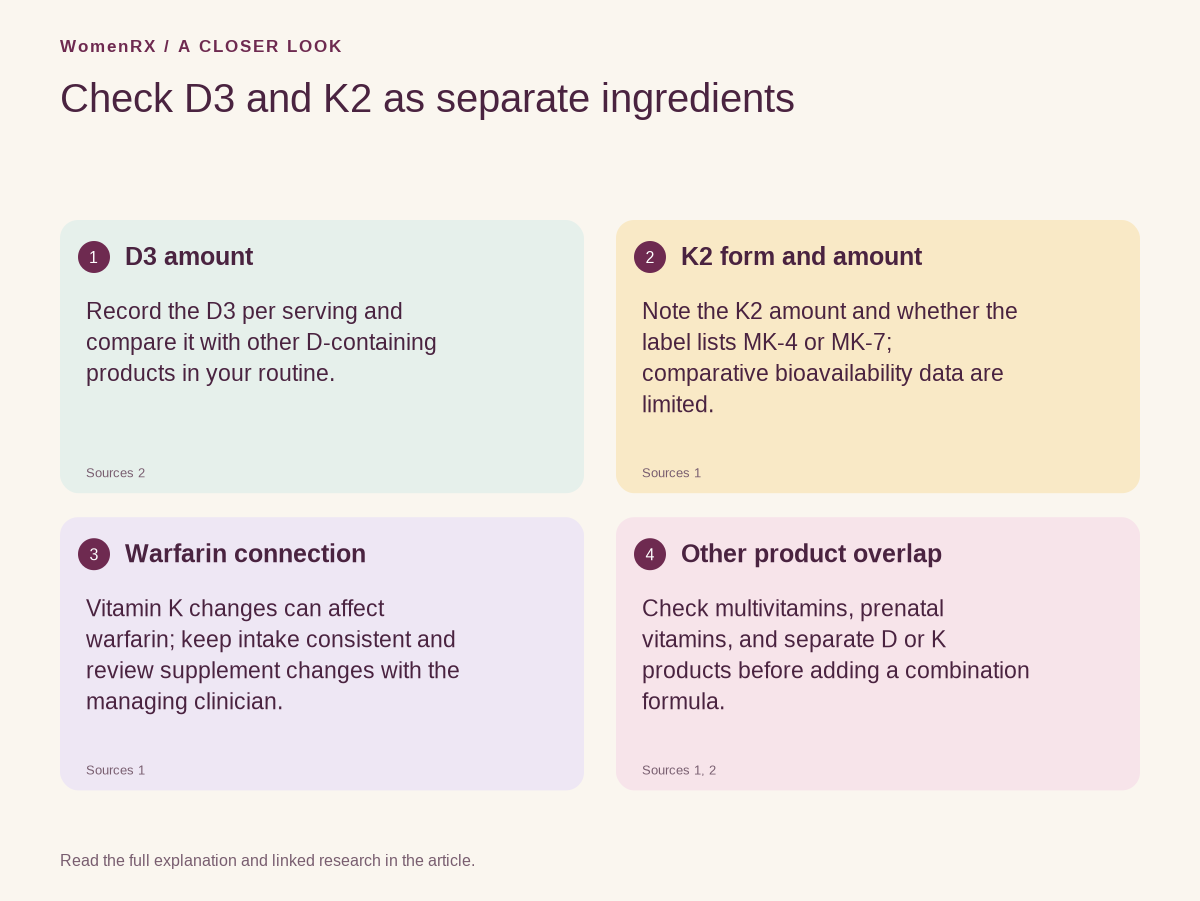
Check D3 and K2 as separate ingredients
D3 amount: Record the D3 per serving and compare it with other D-containing products in your routine.2
K2 form and amount: Note the K2 amount and whether the label lists MK-4 or MK-7; comparative bioavailability data are limited.1
Warfarin connection: Vitamin K changes can affect warfarin; keep intake consistent and review supplement changes with the managing clinician.1
Other product overlap: Check multivitamins, prenatal vitamins, and separate D or K products before adding a combination formula.12
Read the figure as text
A combined formula still needs two label checks and a review of medicines and overlapping supplements.- D3 amount: Record the D3 per serving and compare it with other D-containing products in your routine.2
- K2 form and amount: Note the K2 amount and whether the label lists MK-4 or MK-7; comparative bioavailability data are limited.1
- Warfarin connection: Vitamin K changes can affect warfarin; keep intake consistent and review supplement changes with the managing clinician.1
- Other product overlap: Check multivitamins, prenatal vitamins, and separate D or K products before adding a combination formula.12
More questions, answered
Does everyone taking warfarin need to avoid vitamin K?
The NIH guidance focuses on keeping vitamin K intake consistent, because sudden changes from food or supplements can change warfarin’s effect. It doesn’t mean you should independently stop vitamin K or alter your diet; discuss a new or discontinued K2 supplement with the clinician managing your warfarin. 1
Sources you can check
- Vitamin K - Health Professional Fact SheetAccessed 2026-09-25Return to first citation
- Vitamin D - Health Professional Fact SheetAccessed 2026-09-25Return to first citation
- Effect of Vitamin K2 Alone or in Combination on Various Bone Turnover Markers Amongst Postmenopausal Females.AlHajri L, Ayoub A, Ahmed H, AlMulla M. · Journal of bone metabolism · 2021Return to first citation