D3 and K2 Supplements: Risks and Medicine Checks
A combined capsule needs two separate safety checks: too much vitamin D can cause high blood calcium, and changes in vitamin K intake can affect warfarin.
Check both ingredients before taking a D3-and-K2 supplement. Excess vitamin D can cause high blood calcium, while a change in vitamin K intake can alter warfarin’s effect. Vitamin K has a low reported risk of toxicity on its own, but that doesn’t erase its medicine interaction. If you take warfarin or orlistat, or you’re pregnant or breastfeeding, review the full label with your care team or pharmacist. 1 3 4
One capsule, two different cautions
D3 is cholecalciferol, a form of vitamin D. K2 is a name for several forms of vitamin K called menaquinones. Vitamin D helps your body absorb calcium; vitamin K helps make proteins involved in blood clotting and bone metabolism. Packaging them together doesn’t make either ingredient’s cautions disappear. 1 2
The useful question isn’t just “Is this combination safe?” It’s how much of each ingredient would I add to what I already take, and do my medicines change the answer?
With D3, consider the total amount
Vitamin D excess is a dose-related concern because vitamin D can cause high blood calcium, called hypercalcemia, when levels become too high. A review of vitamin D toxicity identifies hypercalcemia as the key hazard; it doesn’t provide a personal dose at which it will happen. 4
The NIH Office of Dietary Supplements says a blood level of 25-hydroxyvitamin D above 125 nmol/L (50 ng/mL) can be associated with adverse effects, particularly above 150 nmol/L (60 ng/mL). Those are blood-test results, not amounts to look for on a supplement label. They can’t tell you, on their own, whether a particular capsule is right for you. 2
Start with a simpler check: read the D3 amount on the combination product, then look at any multivitamin or separate vitamin D supplement you use. Vitamin D can appear in more than one bottle, so a combination product may add to an intake you haven’t counted yet. MedlinePlus notes that many multivitamins contain vitamin D. 3
With K2, the medicine matters more than toxicity
The Food and Nutrition Board did not set an upper intake limit for vitamin K because of its low potential for toxicity; its review reported no adverse effects from vitamin K consumed in food or supplements. That finding is about toxicity, not freedom from medicine interactions. 1
Warfarin works by opposing vitamin K’s role in clotting. If you take warfarin, a sudden change in vitamin K from food or supplements can increase or decrease the drug’s anticoagulant effect. Before starting, stopping, or changing a K2 product, show its label to your prescriber or pharmacist. Don’t change prescribed warfarin to make room for a supplement. 1
K2 isn’t one identical ingredient in every bottle: menaquinones include forms designated MK-4 through MK-13. The guidance to keep vitamin K intake consistent while taking warfarin doesn’t establish that every K2 form has the same interaction profile. Check the form and amount on your label rather than assuming the word “K2” tells you everything. 1
Another medicine worth flagging is orlistat. It reduces absorption of dietary fat and can reduce absorption of fat-soluble vitamins, including vitamin K. The NIH fact sheet also notes that orlistat combined with warfarin might significantly increase prothrombin time, a measure of how long blood takes to clot. 1
If you’re pregnant or breastfeeding
MedlinePlus lists 600 IU per day as the recommended vitamin D amount during pregnancy and breastfeeding. That’s a daily nutrient recommendation, not a recommendation to get that amount from a D3-and-K2 capsule. Compare the product with any prenatal vitamin or other supplement you take, and ask your pregnancy or postpartum care team whether the combination fits your needs. The vitamin D recommendation alone doesn’t establish that a particular K2 product is appropriate for you. 3
Before buying, you can make the decision more concrete: write down the D3 amount and K2 form and amount, check for vitamin D in your other supplements, and note whether you take warfarin or orlistat. Bring those details along if you need a medicine or pregnancy-related check. 1 3
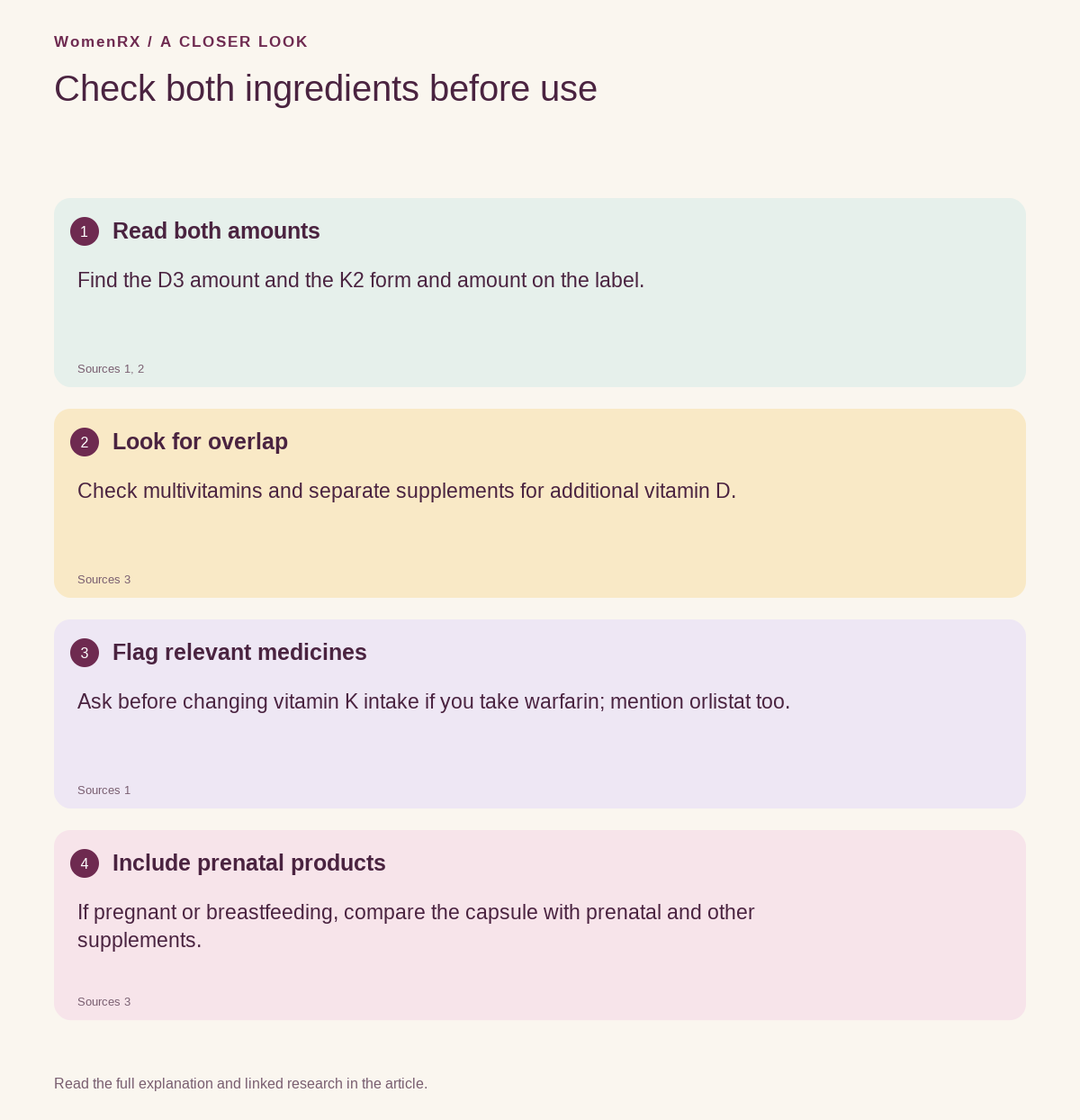
Check both ingredients before use
Read both amounts: Find the D3 amount and the K2 form and amount on the label.12
Look for overlap: Check multivitamins and separate supplements for additional vitamin D.3
Flag relevant medicines: Ask before changing vitamin K intake if you take warfarin; mention orlistat too.1
Include prenatal products: If pregnant or breastfeeding, compare the capsule with prenatal and other supplements.3
Read the figure as text
A short label and medicine review keeps the two kinds of caution separate.- Read both amounts: Find the D3 amount and the K2 form and amount on the label.12
- Look for overlap: Check multivitamins and separate supplements for additional vitamin D.3
- Flag relevant medicines: Ask before changing vitamin K intake if you take warfarin; mention orlistat too.1
- Include prenatal products: If pregnant or breastfeeding, compare the capsule with prenatal and other supplements.3
Sources you can check
- Vitamin K - Health Professional Fact SheetAccessed 2026-09-25Return to first citation
- Vitamin D - Health Professional Fact SheetAccessed 2026-09-25Return to first citation
- Vitamin D: MedlinePlusAccessed 2026-09-25Return to first citation
- Vitamin D toxicity, policy, and science.Vieth R. · Journal of bone and mineral research : the official journal of the American Society for Bone and Mineral Research · 2007Return to first citation