Could Folate Deficiency Explain These Symptoms?
Fatigue, a sore tongue, or mouth ulcers can occur with folate deficiency, but they can’t tell you whether folate is the cause.
Folate deficiency can cause tiredness, weakness, shortness of breath, headaches, a sore or red tongue, mouth ulcers, and sometimes digestive or cognitive symptoms. But many of these also occur with vitamin B12 deficiency and other conditions. Blood testing helps sort out the cause, and B12 should be checked before folic acid is used to treat suspected deficiency. 2 3
What folate deficiency can feel like
Folate helps your body make DNA and form red blood cells. When folate is low, the body may produce unusually large red blood cells that don’t work properly, leading to a type of anemia called megaloblastic anemia. 1 5
Possible symptoms include unusual tiredness or weakness, shortness of breath, headaches, a racing or pounding heartbeat, reduced appetite, diarrhea, and a sore or red tongue. Mouth ulcers and changes in memory, understanding, or judgment can also occur. Some symptoms may appear even before anemia develops. 1 2
These signs are clues, not a diagnosis. They can have other causes, and the symptoms of folate deficiency often overlap with vitamin B12 deficiency. Fatigue, for example, can also occur with other forms of anemia; iron deficiency is a common cause, and blood loss, including heavy periods, can contribute to anemia. 2 4
Why B12 needs to be part of the check
Folate and vitamin B12 are both involved in making healthy red blood cells, so either deficiency can cause similar anemia symptoms. Numbness is one symptom that can occur with B12 deficiency, but symptoms alone still can’t reliably distinguish the two. 1 2
That distinction matters before treatment: folic acid can improve symptoms of an underlying B12 deficiency enough to mask it, while the B12 problem remains untreated and may affect the nervous system. Guidance on folate-deficiency treatment therefore recommends checking B12 levels first. 3
If you’re considering folic acid because you feel tired or have mouth symptoms, don’t assume it will address the cause. A clinician can assess your symptoms and use blood tests to investigate folate and B12 deficiency or anemia. The results help guide treatment, which depends on what’s actually low and why. 1 3
Pregnancy is a separate reason folate matters
Folate has an important role in fetal development, particularly in preventing neural tube defects, and the need for folate is higher during pregnancy. That matters whether or not you have symptoms: feeling well doesn’t establish your folate status, and having fatigue doesn’t show that you’re deficient. If you’re planning a pregnancy or are pregnant, raise folate and folic acid with your pregnancy care team rather than using symptoms to decide whether you need them. 5
A useful next step
If these symptoms are persistent or concerning, ask about checking for anemia and considering both folate and B12, rather than requesting folate alone. Mention any restrictive eating pattern, medicines, or other health context that may help explain a deficiency; some diets and medicines can affect B-vitamin intake or absorption. 1
The key point is simple: folate deficiency is one possible explanation, but the symptom pattern can’t confirm it. Testing helps distinguish it from B12 deficiency and other causes, so treatment can address the right problem.
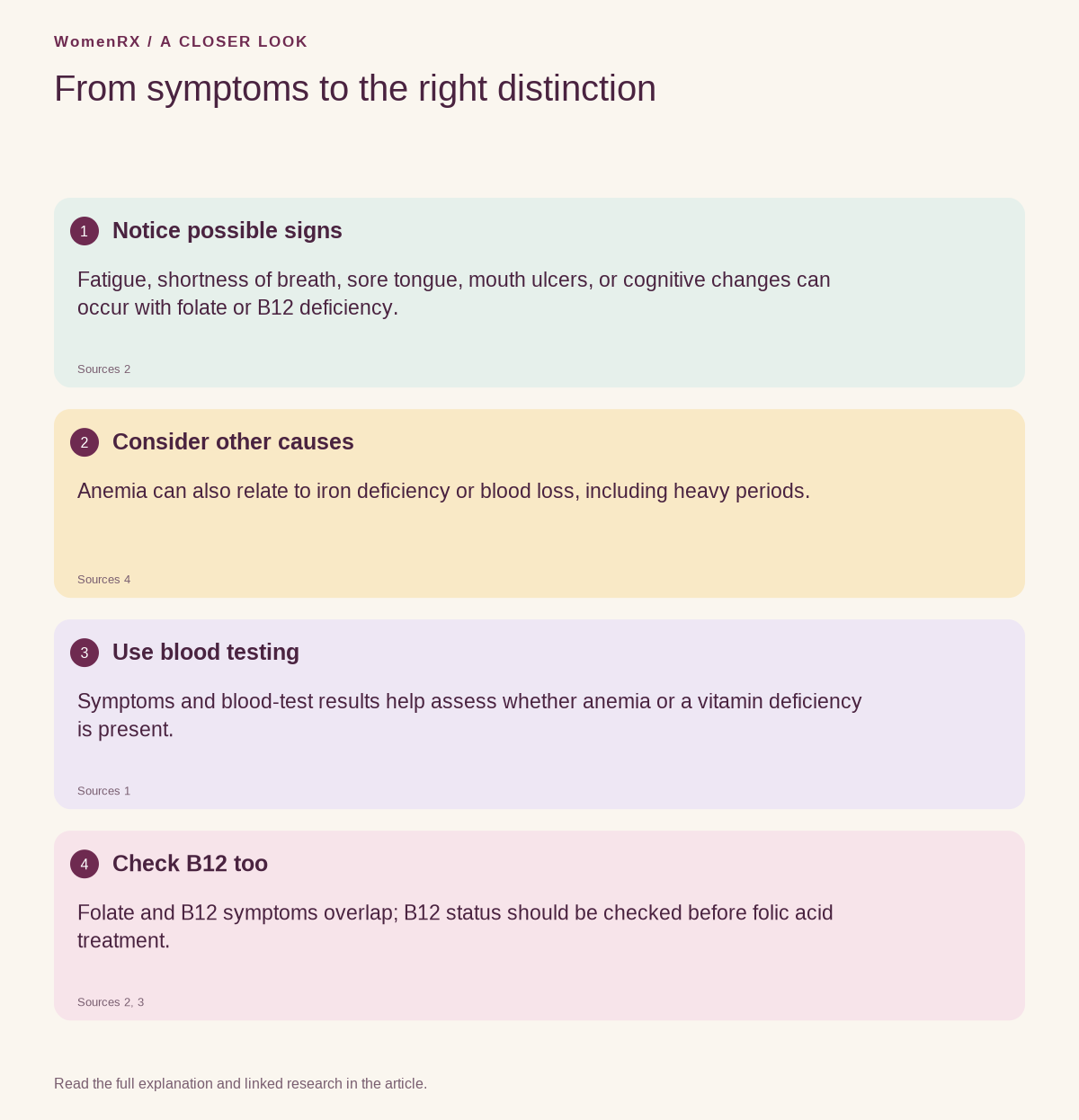
From symptoms to the right distinction
Notice possible signs: Fatigue, shortness of breath, sore tongue, mouth ulcers, or cognitive changes can occur with folate or B12 deficiency.2
Consider other causes: Anemia can also relate to iron deficiency or blood loss, including heavy periods.4
Use blood testing: Symptoms and blood-test results help assess whether anemia or a vitamin deficiency is present.1
Check B12 too: Folate and B12 symptoms overlap; B12 status should be checked before folic acid treatment.23
Read the figure as text
Symptoms can raise the question of deficiency, but testing and a B12 check help distinguish folate deficiency from overlapping causes.- Notice possible signs: Fatigue, shortness of breath, sore tongue, mouth ulcers, or cognitive changes can occur with folate or B12 deficiency.2
- Consider other causes: Anemia can also relate to iron deficiency or blood loss, including heavy periods.4
- Use blood testing: Symptoms and blood-test results help assess whether anemia or a vitamin deficiency is present.1
- Check B12 too: Folate and B12 symptoms overlap; B12 status should be checked before folic acid treatment.23
More questions, answered
Do mouth ulcers mean I have low folate?
No. Mouth ulcers can occur with folate or B12 deficiency, but they don’t identify the cause on their own. If they persist or come with other symptoms, testing can help clarify whether anemia or a vitamin deficiency is involved. 2
Can folate deficiency cause symptoms without anemia?
Yes. Some symptoms associated with folate or B12 deficiency can occur before anemia develops, so a normal impression of your energy or appearance can’t settle the question. 1 2
Sources you can check
- Vitamin B12 or folate deficiency anaemia - NHSAccessed 2026-09-25Return to first citation
- Vitamin B12 or folate deficiency anaemia - Symptoms - NHSAccessed 2026-09-25Return to first citation
- Vitamin B12 or folate deficiency anaemia - Treatment - NHSAccessed 2026-09-25Return to first citation
- Anemia | MedlinePlusAccessed 2026-09-25Return to first citation
- Folic Acid DeficiencyBaddam S, Khan KM, Jialal I. · 2025Return to first citation