Folate, Folic Acid, and MTHFR: What Your Result Means
The common MTHFR C677T variant doesn’t change the standard folic acid guidance for people who may become pregnant.
Folate is vitamin B9; food folate occurs naturally, while folic acid is used in supplements and fortified foods. 5-MTHF is another supplemental form. The common MTHFR C677T variant can affect how the body processes folate, but it doesn’t mean folic acid won’t work or that you need a different form. People who could become pregnant are advised to get 400 mcg of folic acid daily from supplements and/or fortified foods. 2
Three names, different forms
Folate is the general name for vitamin B9. It occurs naturally in foods such as leafy greens, beans, fruit, eggs, and some other foods. Folic acid is a form added to enriched grain products and used in many supplements. 5-methyltetrahydrofolate, often shortened to 5-MTHF or methylfolate, is another form sold in supplements. 2
These names aren’t interchangeable on a nutrition label. Food folate and folic acid are counted differently because the body absorbs them differently. Labels may list total folate as dietary folate equivalents (DFE) and give the amount of folic acid in parentheses. If you’re comparing products, look for the stated folic acid amount rather than assuming that two numbers labeled “folate” mean the same thing. 2
Where MTHFR fits
The MTHFR gene helps make an enzyme involved in converting folate into 5-MTHF, a form used in the body’s folate pathways. The common C677T variant can make that enzyme less active. The C677T variant has been associated with increased neural tube defect risk at a population level. But your result alone doesn’t predict what will happen in an individual pregnancy or show that your body can’t use folic acid. 2
That distinction matters because a plausible pathway isn’t the same as proof that changing supplements improves health outcomes. A 5-MTHF supplement may seem like a direct way around the MTHFR step, but that reasoning alone doesn’t establish that it prevents neural tube defects better than folic acid. The NIH Office of Dietary Supplements describes research on whether 5-MTHF is more beneficial for people with the C677T variant as inconclusive, and summarizes CDC guidance as recommending folic acid even for people with that variant. 2
What the result means for pregnancy planning
For people who could become pregnant, the standard recommendation is to get 400 mcg of folic acid daily from supplements and/or fortified foods, in addition to folate from a varied diet. Getting enough before and during pregnancy can prevent major birth defects of the brain and spine called neural tube defects. An MTHFR C677T result does not replace this guidance with a different form. 12
One source of confusion: the recommended dietary allowance during pregnancy is 600 mcg DFE a day, while the 400 mcg recommendation refers specifically to folic acid. They use different units and describe different things, so don’t treat those numbers as competing supplement instructions. 2
If you’ve already had MTHFR testing, the result is one piece of information about a folate-processing pathway, not a reason on its own to stop folic acid or switch forms. If your pregnancy history or another medical circumstance has led to individualized advice, follow that advice rather than trying to make a change based on the gene result alone. For a routine supplement choice, a product listing folic acid is consistent with the established recommendation. 2
A practical way to compare supplement labels
Start by checking whether the label gives an amount of folic acid, not only total folate in DFE. Some products use 5-MTHF instead; NIH notes that formal conversion factors between its amount and DFE haven’t been established. That makes a simple number-for-number comparison less straightforward. A methylfolate label may describe a different form, but the form alone doesn’t show that it offers better neural tube defect prevention. 2
In short, the useful distinction is between what a form does in a biochemical pathway and what has been established for preventing a health outcome. For neural tube defect prevention, the established guidance remains folic acid, including for people with the MTHFR C677T variant. 12
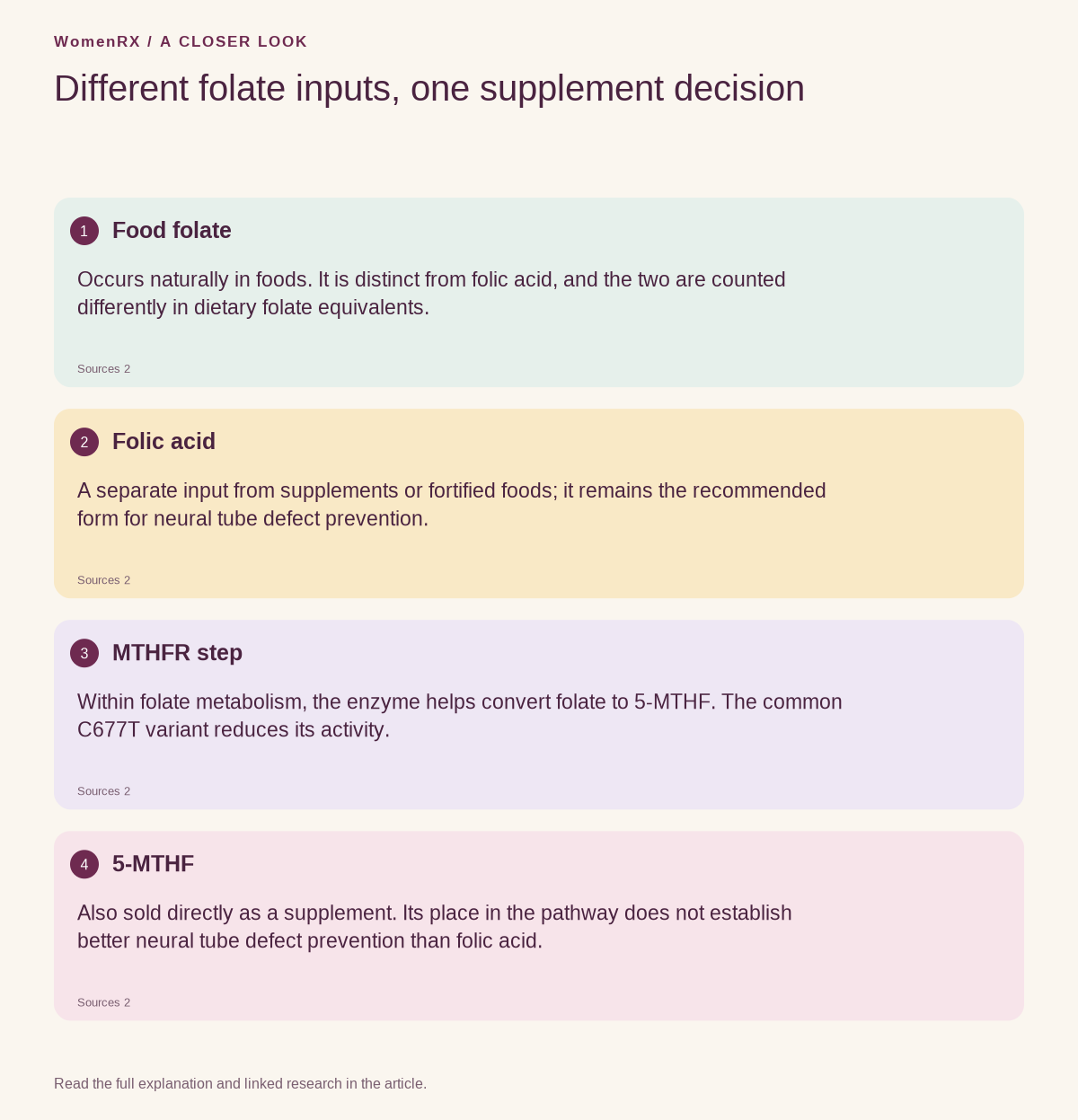
Different folate inputs, one supplement decision
Food folate: Occurs naturally in foods. It is distinct from folic acid, and the two are counted differently in dietary folate equivalents.2
Folic acid: A separate input from supplements or fortified foods; it remains the recommended form for neural tube defect prevention.2
MTHFR step: Within folate metabolism, the enzyme helps convert folate to 5-MTHF. The common C677T variant reduces its activity.2
5-MTHF: Also sold directly as a supplement. Its place in the pathway does not establish better neural tube defect prevention than folic acid.2
Read the figure as text
Food folate and folic acid are different inputs to folate metabolism, not consecutive steps. The MTHFR pathway helps explain the forms but does not, by itself, establish which supplement better prevents neural tube defects.- Food folate: Occurs naturally in foods. It is distinct from folic acid, and the two are counted differently in dietary folate equivalents.2
- Folic acid: A separate input from supplements or fortified foods; it remains the recommended form for neural tube defect prevention.2
- MTHFR step: Within folate metabolism, the enzyme helps convert folate to 5-MTHF. The common C677T variant reduces its activity.2
- 5-MTHF: Also sold directly as a supplement. Its place in the pathway does not establish better neural tube defect prevention than folic acid.2
More questions, answered
Does an MTHFR C677T result mean I can’t use folic acid?
No. The C677T variant can affect an enzyme involved in folate processing, but CDC guidance, as summarized by NIH, still recommends 400 mcg of folic acid daily for people who could become pregnant, including those with this variant. 2
Is 5-MTHF proven to prevent neural tube defects better?
The fact that 5-MTHF is part of the body’s folate pathway doesn’t establish better prevention outcomes. NIH describes the research on greater benefit for people with the MTHFR C677T variant as inconclusive; the established guidance remains folic acid. 2
Sources you can check
- Folic Acid: MedlinePlusAccessed 2026-09-25Return to first citation
- Folate - Health Professional Fact SheetAccessed 2026-09-25Return to first citation