Folate From Food: When Folic Acid Still Matters
A varied diet can supply plenty of folate, but pregnancy-related guidance calls for folic acid too.
For most adults, the recommended intake is 400 mcg DFE of folate a day, and many foods can contribute. If you could become pregnant, however, naturally occurring folate in food is not a substitute for the recommended 400 mcg of folic acid daily from a supplement and/or fortified foods. During pregnancy, the folate RDA rises to 600 mcg DFE, while public health guidance still emphasizes folic acid before conception and early in pregnancy. 1
A varied diet can provide folate through beans, leafy greens, asparagus, fruit, eggs, and other foods. But if pregnancy is possible, the answer isn’t simply “eat more greens”: guidance calls for folic acid, the form used in most supplements and added to fortified foods, in addition to food folate. Getting enough folic acid before and during pregnancy can help prevent major birth defects of the brain and spine. 1 2
Folate and folic acid aren’t the same form
Folate is the umbrella term for forms of this B vitamin. Food folate occurs naturally in foods; folic acid is the form commonly added to fortified foods and used in most supplements. Some supplements contain 5-MTHF, another form. The names matter because pregnancy guidance specifically identifies folic acid, not just a general amount of folate. 1
You may also see folate amounts listed as mcg DFE, or micrograms of dietary folate equivalents. DFE accounts for the fact that folic acid is more bioavailable than naturally occurring food folate. For example, 1 mcg DFE equals 1 mcg of food folate, but 0.6 mcg of folic acid consumed with food. So the number of micrograms of folic acid on a label won’t always match the DFE number beside it. 1
What food can contribute
For adult women, the recommended dietary allowance (RDA) is 400 mcg DFE a day. A few examples of foods that contribute folate are half a cup of boiled spinach (131 mcg DFE), half a cup of black-eyed peas (105 mcg DFE), four boiled asparagus spears (89 mcg DFE), and a slice of enriched white bread (50 mcg DFE). These are individual serving examples, not a complete day’s intake. 1
Folate is naturally present in foods such as dark leafy vegetables, beans, peas, fruits, nuts, eggs, and some seafood. Enriched grain products may also provide folic acid: in the United States, certain enriched breads, cereals, flours, pastas, and other grains are fortified. Check the package for folate listed in mcg DFE; if folic acid has been added, the label also lists its amount in parentheses. 1
A food-first pattern can help meet general folate needs. But counting a serving of spinach as interchangeable with a recommended amount of folic acid for pregnancy misses the difference in both form and guidance.
Why pregnancy planning changes the recommendation
During pregnancy, the RDA rises from 400 to 600 mcg DFE a day because folate needs increase. Separately, women and adolescents who could become pregnant are advised to get 400 mcg of folic acid daily from supplements and/or fortified foods, in addition to folate from a varied diet. The U.S. Preventive Services Task Force recommends a daily supplement containing 400 to 800 mcg of folic acid for people planning to become pregnant or capable of pregnancy, starting at least one month before conception and continuing through the first two to three months of pregnancy. 1
That timing matters because the neural tube, which develops into the brain and spine, closes very early, often before someone knows they’re pregnant. Adequate folic acid around conception helps prevent neural tube defects. 1
In practical terms, if you could become pregnant, don’t rely on naturally folate-rich foods alone to meet the folic-acid guidance. Fortified foods can contribute folic acid, and a supplement is another source; the recommendation is not a reason to abandon a varied diet. If you’re already pregnant, folate needs remain higher than outside pregnancy, and prenatal vitamins are commonly recommended to help cover folic acid and other nutrients. 1
A quick way to read a label
Look for both the total folate amount in mcg DFE and, when present, the amount of folic acid in parentheses. Some supplements contain 5-MTHF instead; formal conversion factors for comparing supplemental 5-MTHF with mcg DFE have not been established. For the specific guidance for people who could become pregnant, NIH’s fact sheet cites CDC’s recommendation for 400 mcg of folic acid, including for people with an MTHFR variant. 1
Outside pregnancy planning and pregnancy, the general adult target is 400 mcg DFE daily; during lactation, it is 500 mcg DFE. These are life-stage intake recommendations, not a signal that everyone needs the same supplement. Food remains a useful source of folate, while the pregnancy-related folic-acid recommendation addresses a distinct need and timing. 1
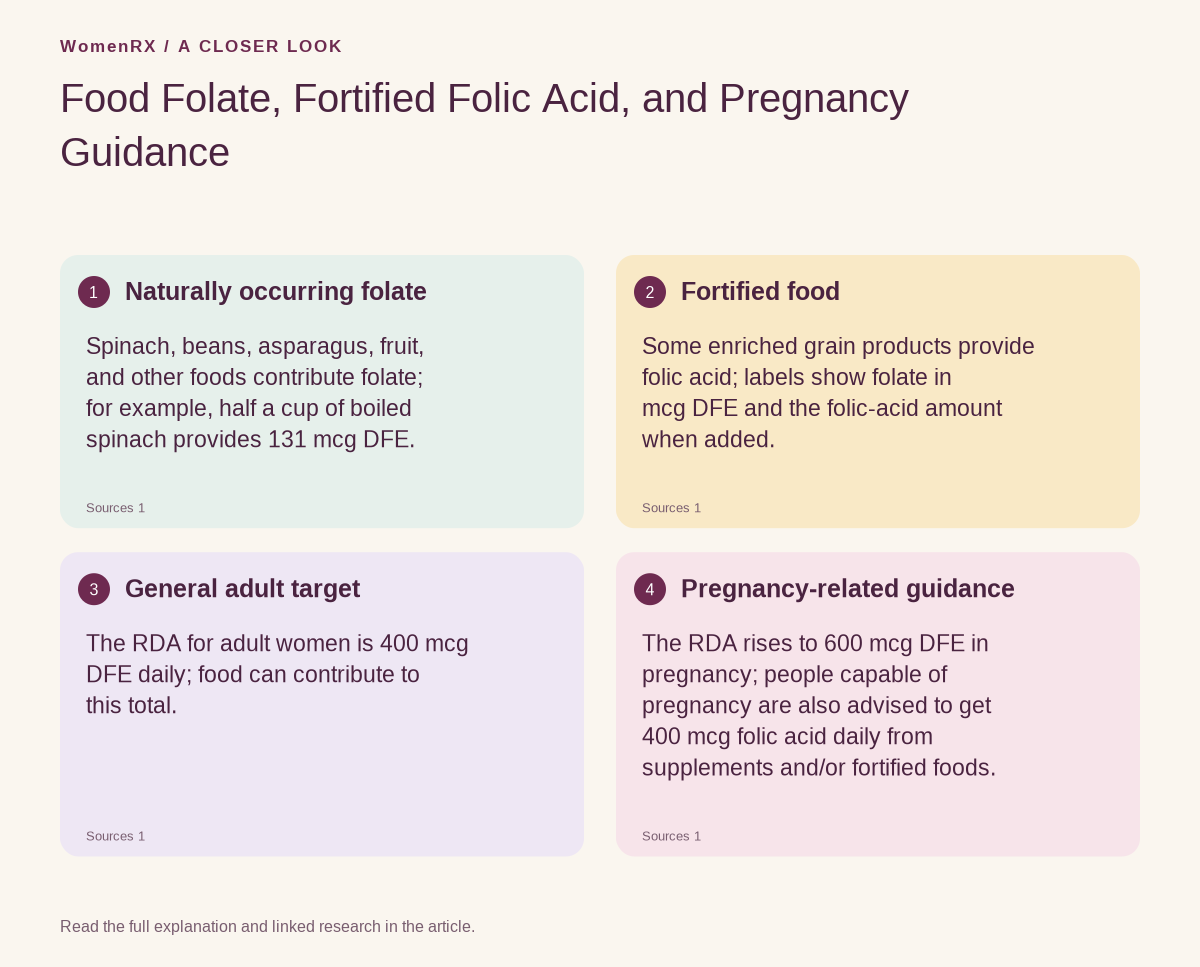
Food Folate, Fortified Folic Acid, and Pregnancy Guidance
Naturally occurring folate: Spinach, beans, asparagus, fruit, and other foods contribute folate; for example, half a cup of boiled spinach provides 131 mcg DFE.1
Fortified food: Some enriched grain products provide folic acid; labels show folate in mcg DFE and the folic-acid amount when added.1
General adult target: The RDA for adult women is 400 mcg DFE daily; food can contribute to this total.1
Pregnancy-related guidance: The RDA rises to 600 mcg DFE in pregnancy; people capable of pregnancy are also advised to get 400 mcg folic acid daily from supplements and/or fortified foods.1
Read the figure as text
These comparisons show what common foods contribute and why pregnancy-related folic-acid guidance is distinct from general folate intake.- Naturally occurring folate: Spinach, beans, asparagus, fruit, and other foods contribute folate; for example, half a cup of boiled spinach provides 131 mcg DFE.1
- Fortified food: Some enriched grain products provide folic acid; labels show folate in mcg DFE and the folic-acid amount when added.1
- General adult target: The RDA for adult women is 400 mcg DFE daily; food can contribute to this total.1
- Pregnancy-related guidance: The RDA rises to 600 mcg DFE in pregnancy; people capable of pregnancy are also advised to get 400 mcg folic acid daily from supplements and/or fortified foods.1
More questions, answered
Can fortified cereal or bread count toward the folic-acid recommendation?
Yes. The guidance allows folic acid from fortified foods and/or supplements, in addition to food folate. Check the label: it lists folate in mcg DFE and, when folic acid is added, gives the folic-acid amount in parentheses. 1
Does an MTHFR variant mean I should choose 5-MTHF instead?
The NIH fact sheet cites CDC guidance recommending 400 mcg of folic acid for people who could become pregnant, even if they have the common MTHFR 677C>T variant. It does not establish a general need to switch to 5-MTHF. 1
Sources you can check
- Folate - Health Professional Fact SheetAccessed 2026-09-25Return to first citation
- Folic Acid: MedlinePlusAccessed 2026-09-25Return to first citation