Folate After 40: When a Supplement Makes Sense
Age alone doesn’t mean you need a folate supplement, but pregnancy plans and certain health conditions can change the advice.
Being over 40 isn’t, by itself, a reason to start folate supplements. If you could become pregnant, folic acid guidance still applies: age doesn’t remove the need to consider it before pregnancy. If pregnancy isn’t relevant, focus on a varied diet and whether you have a condition that raises deficiency risk; a clinician can advise whether supplementation is needed. 2
Start with what applies to you now
There isn’t a single “folate after 40” rule. The useful question is whether you could become pregnant, have a reason to suspect low folate, or have been advised to take it for a particular health concern. Age on its own doesn’t settle that question. 2
Folate is the form of vitamin B9 found naturally in foods; folic acid is the form used in most fortified foods and supplements. Both contribute to folate intake, but pregnancy guidance specifically emphasizes folic acid. 1 2
If pregnancy is possible, age doesn’t cancel the guidance
If pregnancy is possible for you, don’t assume that being over 40 means preconception folic acid advice no longer matters. NIH’s Office of Dietary Supplements says women who could become pregnant should get 400 micrograms of folic acid daily from supplements and/or fortified foods, along with folate from a varied diet. The reason is timing: enough folic acid before and early in pregnancy helps reduce the risk of major birth defects of the brain and spine. 1 2
During pregnancy, the recommended dietary allowance rises from 400 micrograms of dietary folate equivalents (DFE) a day for adults who aren’t pregnant to 600 micrograms DFE a day. DFE accounts for differences in how the body uses food folate and folic acid, so it isn’t interchangeable with the folic acid amount shown on a supplement label. 2
If you’re trying to conceive, might become pregnant, or are already pregnant, ask how to meet the relevant recommendation using your diet and any supplements you already take. A prenatal vitamin may be recommended during pregnancy, but that doesn’t mean everyone over 40 needs one when pregnancy isn’t relevant. 2
If pregnancy isn’t relevant, look at diet and health
For adults, the folate recommended dietary allowance is 400 micrograms DFE a day. Folate is found in foods such as leafy greens, beans, peas, fruit, eggs, and nuts. In the U.S., many enriched grain products also contain folic acid. A supplement may not be necessary if your food intake meets your needs and you don’t have a clinical reason for extra support. 2
Some health circumstances make low folate more likely. These include conditions that interfere with absorption, such as celiac disease or inflammatory bowel disease; prior gastric surgery; and alcohol use disorder, which can affect both diet and folate handling in the body. These factors can matter more than age alone. If one applies to you, ask whether your folate status or overall nutrition needs assessment rather than starting a high-dose supplement on your own. 2
Folate deficiency can occur alongside other nutrient deficiencies. It can cause a type of anemia, but symptoms such as fatigue or weakness have many possible causes and don’t identify folate deficiency by themselves. A clinician can help determine whether an evaluation or treatment is appropriate. 2
A practical decision guide
- Pregnancy is possible: Follow the folic acid guidance for people who could become pregnant, even if you’re over 40. Consider how supplements and fortified foods fit with your current diet. 2
- You’re pregnant: Folate needs are higher in pregnancy. Ask about a prenatal supplement and how your intake compares with the pregnancy recommendation. 2
- Pregnancy isn’t relevant, and no risk factor is known: Age alone doesn’t establish a need for a supplement. Build intake from foods and fortified grains, and check what you already get from any multivitamin. 2
- You have an absorption-related condition or another clinical concern: Ask about an individualized plan. The right response depends on the underlying issue, not simply on being over 40. 2
More isn’t automatically better. Folate amounts from supplements and fortified foods can add up, and NIH reports that some adults exceed the upper limit for folic acid intake, primarily through supplements. Check labels across products before adding another source, and avoid treating a larger amount as a substitute for individualized advice. 2
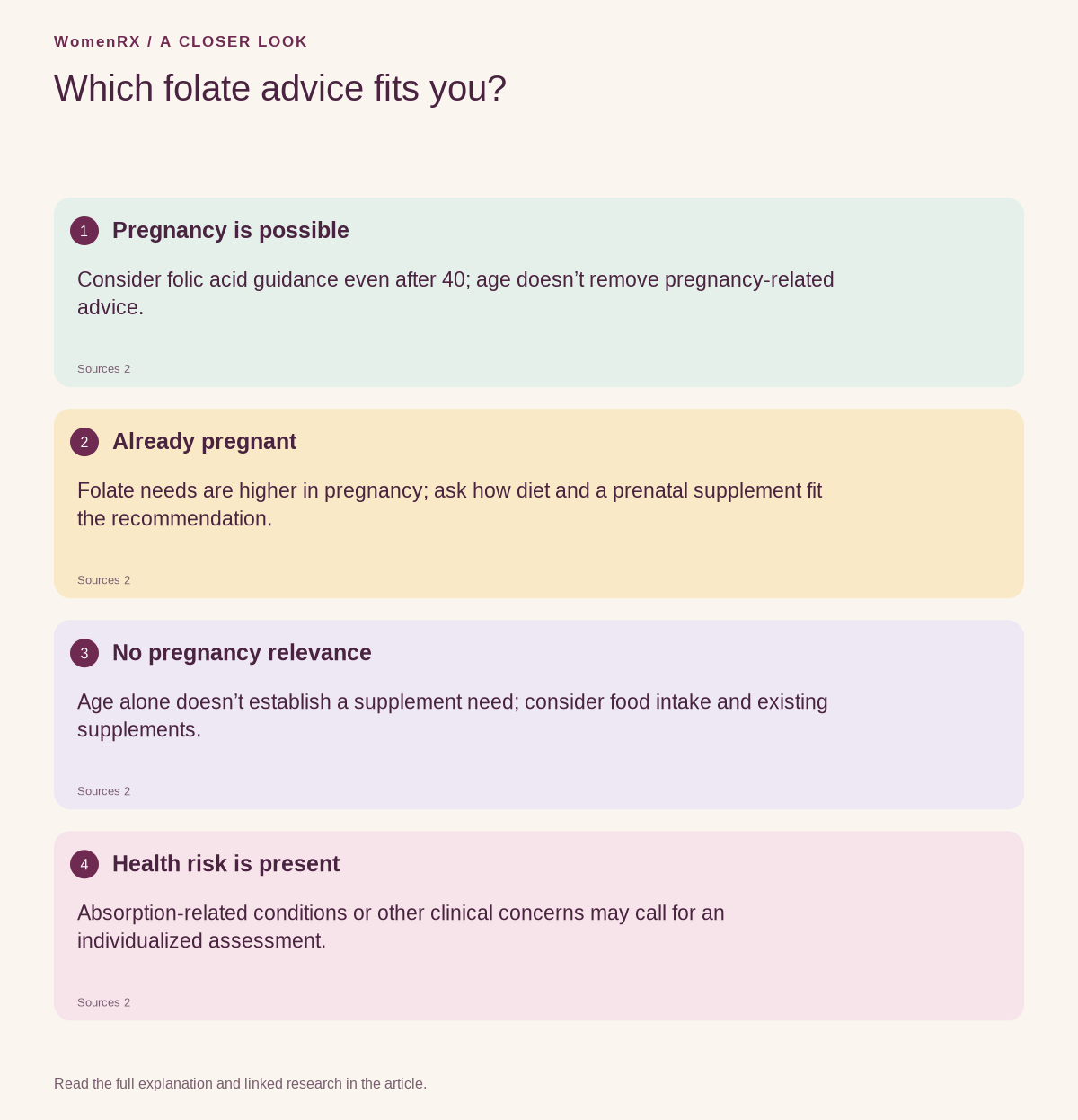
Which folate advice fits you?
Pregnancy is possible: Consider folic acid guidance even after 40; age doesn’t remove pregnancy-related advice.2
Already pregnant: Folate needs are higher in pregnancy; ask how diet and a prenatal supplement fit the recommendation.2
No pregnancy relevance: Age alone doesn’t establish a supplement need; consider food intake and existing supplements.2
Health risk is present: Absorption-related conditions or other clinical concerns may call for an individualized assessment.2
Read the figure as text
A quick route from pregnancy possibility, diet, and health circumstances to the kind of folate question worth asking.- Pregnancy is possible: Consider folic acid guidance even after 40; age doesn’t remove pregnancy-related advice.2
- Already pregnant: Folate needs are higher in pregnancy; ask how diet and a prenatal supplement fit the recommendation.2
- No pregnancy relevance: Age alone doesn’t establish a supplement need; consider food intake and existing supplements.2
- Health risk is present: Absorption-related conditions or other clinical concerns may call for an individualized assessment.2
More questions, answered
Does menopause change whether I need folate?
The guidance here is based on pregnancy possibility, diet, and health circumstances, not the label of perimenopause or menopause. If pregnancy isn’t possible, age or life-stage terminology alone doesn’t establish a need for a folate supplement. 2
Are folate and folic acid the same thing?
They’re forms of vitamin B9, but the terms refer to different sources: folate occurs naturally in foods, while folic acid is used in supplements and fortified foods. Pregnancy guidance specifically refers to folic acid. 1 2
Sources you can check
- Folic Acid: MedlinePlusAccessed 2026-09-25Return to first citation
- Folate - Health Professional Fact SheetAccessed 2026-09-25Return to first citation