Zinc for Skin After 40: When a Supplement Makes Sense
Turning 40 or going through menopause doesn’t by itself create a reason to take zinc for your skin.
For women 19 and older, the recommended daily zinc intake is 8 mg, and it doesn’t rise at 40 or after menopause. A supplement may be worth discussing if you have a diagnosed deficiency or a reason your intake or absorption may be low, such as a vegan diet or certain digestive conditions. Evidence from postmenopausal zinc trials doesn’t establish a skin-aging benefit. 1 2 3
Start with the reason, not your age
Zinc is needed for processes that include cell division and wound healing, and a true deficiency can affect the skin. But that doesn’t mean extra zinc improves age-related skin changes when you’re already getting enough. The national recommended intake for women 19 and older is 8 mg a day, with no separate increase for people over 40 or after menopause. Pregnancy and lactation are different life stages, with higher recommendations. 1
The practical distinction is between getting enough zinc and taking more zinc in hopes of changing your skin. The first is a nutrition question. The second needs evidence that the supplement helps with a specific skin concern. The reports on postmenopausal zinc studies don’t report skin outcomes, so they can’t establish whether zinc improves skin aging. 2 3
What the menopause research does, and doesn’t, tell you
Each of two reports describes an eight-week randomized zinc supplementation trial involving 51 postmenopausal women, ages 44 to 76. The reported outcomes were blood or nutritional markers such as vitamin D, leptin, folate, and homocysteine, not skin aging or skin appearance. These reports show that zinc supplementation has been studied in postmenopausal women, but they don’t answer whether a supplement improves skin. 2 3
That distinction matters: a change in a blood marker isn’t proof of a visible skin benefit. These studies also don’t establish that menopause causes zinc deficiency or that every woman in midlife needs a supplement.
When a zinc question is more relevant
It’s more reasonable to look at zinc intake and deficiency risk if you have a factor that could make low intake or absorption more likely. Examples include following a vegetarian or vegan diet, having Crohn’s disease or another malabsorptive digestive condition, having had bariatric surgery involving the digestive tract, or having alcohol use disorder. Plant foods such as beans, nuts, and whole grains contain zinc, but zinc from these foods is generally less readily absorbed than zinc from animal foods. 1
A skin concern alone can’t tell you whether you’re zinc-deficient. Zinc status is not easy to assess from a single number: blood zinc can vary with factors such as age, sex, time of day, infection, and illness, and it doesn’t always match zinc intake. A clinician assessing possible deficiency may consider your diet and relevant health history alongside testing. 1 4
If your diet seems like the main question, start by noticing whether you regularly eat zinc-containing foods. Meat, seafood, eggs, and dairy are sources; beans, nuts, seeds, and whole grains also contribute. Fortified breakfast cereals can contribute too. This is a way to assess your eating pattern, not a skin treatment plan. 1
Weigh the downside before adding a pill
More isn’t automatically better. The adult upper limit is 40 mg of zinc per day from food and supplements combined; it’s a safety ceiling, not a target. High supplemental intakes can cause nausea and other stomach symptoms. Taking 50 mg or more daily for weeks can interfere with copper absorption and affect immune function. Check the amount of elemental zinc on the Supplement Facts label, including zinc in a multivitamin or other products, before adding another supplement. 1
The useful next step depends on your situation: if you have a condition linked to poor absorption, a restrictive diet, or a clinician-raised concern about deficiency, discuss whether assessing your zinc status makes sense. If your only reason is that your skin has changed with age or menopause, there’s no demonstrated skin benefit here to weigh against the cost and risks of extra zinc.
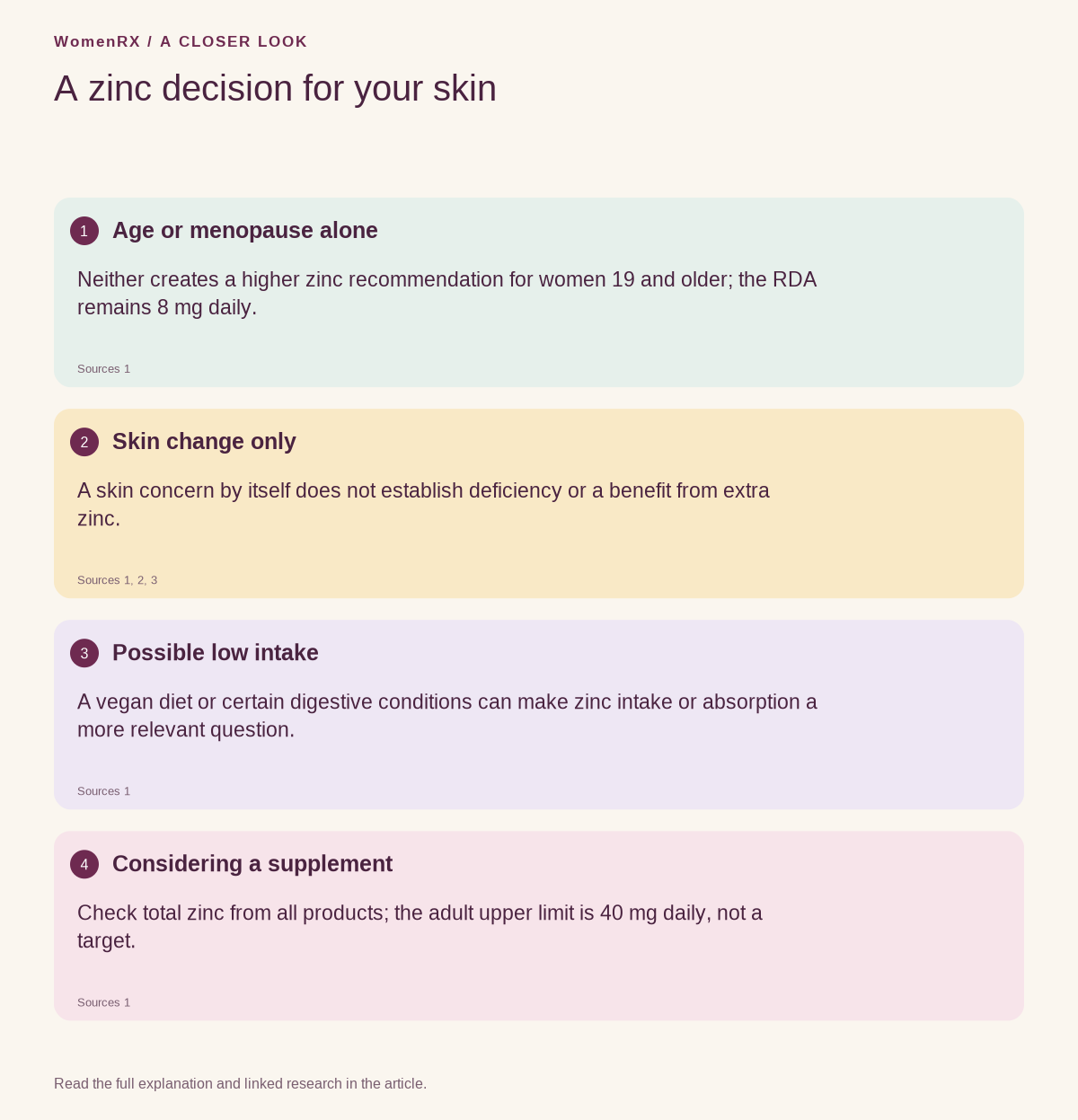
A zinc decision for your skin
Age or menopause alone: Neither creates a higher zinc recommendation for women 19 and older; the RDA remains 8 mg daily.1
Skin change only: A skin concern by itself does not establish deficiency or a benefit from extra zinc.123
Possible low intake: A vegan diet or certain digestive conditions can make zinc intake or absorption a more relevant question.1
Considering a supplement: Check total zinc from all products; the adult upper limit is 40 mg daily, not a target.1
Read the figure as text
Separate a skin-ageing concern from a possible nutrition or deficiency question before considering a supplement.- Age or menopause alone: Neither creates a higher zinc recommendation for women 19 and older; the RDA remains 8 mg daily.1
- Skin change only: A skin concern by itself does not establish deficiency or a benefit from extra zinc.123
- Possible low intake: A vegan diet or certain digestive conditions can make zinc intake or absorption a more relevant question.1
- Considering a supplement: Check total zinc from all products; the adult upper limit is 40 mg daily, not a target.1
Sources you can check
- Zinc - Health Professional Fact SheetAccessed 2026-09-25Return to first citation
- Effectiveness of eight-week zinc supplementation on vitamin D3 status and leptin levels in a population of postmenopausal women: a double-blind randomized trial.Vázquez-Lorente H, Molina-López J, Herrera-Quintana L, Gamarra-Morales Y, López-González B, Planells E. · Journal of trace elements in medicine and biology : organ of the Society for Minerals and Trace Elements (GMS) · 2021Return to first citation
- Effect of zinc supplementation on circulating concentrations of homocysteine, vitamin B12, and folate in a postmenopausal population.Vázquez-Lorente H, Herrera-Quintana L, Molina-López J, Gamarra Y, Planells E. · Journal of trace elements in medicine and biology : organ of the Society for Minerals and Trace Elements (GMS) · 2022Return to first citation
- Methods of Assessment of Zinc Status in Humans: An Updated Review and Meta-analysis.Ceballos-Rasgado M, Brazier AKM, Gupta S, Moran VH, Pierella E, Fekete K, Lowe NM. · Nutrition reviews · 2025Return to first citation