Zinc for Skin: What Dose Has Evidence, and When Is It Too Much?
Zinc matters for healthy skin, but your reason for taking it matters more than the form on the bottle.
Zinc deficiency can affect the skin, but a recommended daily intake isn’t a dose shown to treat acne. Acne has established treatments that address blocked pores and inflammation. If you’re considering zinc, check the elemental amount and your other sources: the adult upper limit is 40 mg a day from food and supplements, not a skin-treatment target. 1 3 4
Start with the skin concern, not the milligrams
Zinc plays roles in cell growth and wound healing, and deficiency can affect the skin. But needing enough zinc is different from benefiting from extra zinc when your intake is already adequate. 1
Acne: Blocked follicles, increased oil production and inflammation are central to acne. Hormonal changes during the menstrual cycle or pregnancy can trigger episodes, but a hormonal flare doesn’t by itself tell you whether your zinc intake is low. Established acne care includes topical treatments; painful nodules or cysts deserve attention because they carry a risk of scarring. 1 3 4
Psoriasis and other inflammatory skin conditions: A 2024 review reports conflicting findings on zinc levels in people with psoriasis: some studies found lower levels than in people without psoriasis, while others found no difference. A difference in zinc levels, even when observed, doesn’t show that taking zinc improves the condition. The review also discusses acne and other skin diseases and concludes that the role of trace-element testing or supplementation in skin conditions needs further research. 5
Zinc deficiency: This is a reason to assess zinc intake and status rather than choose a product marketed for skin. Digestive disorders or bariatric surgery can raise the risk of inadequacy. Zinc deficiency can affect the skin, though a skin change alone cannot identify its cause. 1
That comparison makes the decision more useful: if you have acne, a zinc bottle isn’t a substitute for acne treatment. If you have a reason to suspect deficiency, the question is whether you’re getting or absorbing enough zinc, not which product promises the clearest skin. 1 3 4
What the form and label actually tell you
Zinc sulfate, zinc gluconate, and zinc acetate are among the forms used in supplements. NIH guidance reports similar zinc absorption from citrate and gluconate supplements in young adults. That’s an absorption finding, not a comparison of acne outcomes, so it can’t tell you which form to choose for a skin concern. 1
On a Supplement Facts panel, the zinc amount refers to elemental zinc, not the weight of the entire zinc compound. Use that elemental amount when comparing products and totaling your daily intake. 1
Check the total, not just the acne bottle
For a straightforward label check, write down the elemental zinc in each product you take by mouth, such as a multivitamin, a standalone zinc supplement or zinc-containing cold lozenges. Add those amounts together, then allow for zinc from food when comparing your intake with the upper limit. A skin cream isn’t something you add to this dietary-intake calculation. 1
For adults, the recommended intake is 8 mg a day for women, 11 mg during pregnancy, and 12 mg while breastfeeding. These are intake recommendations, not skin-treatment doses. The adult upper limit is 40 mg a day, including during pregnancy and breastfeeding. It’s a limit unlikely to cause harm for most healthy people, not a target to approach for clearer skin. 1
The upper limit is lower for teens: 34 mg a day for ages 14-18, including during pregnancy and breastfeeding. If you’re under 19, don’t use the adult limit to judge a product. 1
Why duration matters
Too much zinc can cause nausea, dizziness, headache, stomach upset, vomiting, or loss of appetite. Taking 50 mg a day or more for weeks can interfere with copper absorption and may reduce immune function and HDL (“good”) cholesterol. The adult upper limit is 40 mg a day, so a product supplying 50 mg by itself exceeds that limit before food or other supplements are counted. 1
Excess zinc can cause copper deficiency. The practical safeguard is not to add copper on your own to offset a high-zinc product; instead, reconsider whether you need the zinc and review the total and duration with a clinician or pharmacist. 1 2
Check medicines and life stage, too
Zinc can interfere with absorption of quinolone and tetracycline antibiotics and penicillamine when taken at the same time. Ask a pharmacist how to time products if you take one of these medicines. Thiazide diuretics, such as hydrochlorothiazide, can increase zinc loss in urine. Taking a zinc supplement at the same time as an iron supplement containing 25 mg or more of elemental iron can also reduce zinc absorption. 1
Pregnancy and breastfeeding change the recommended zinc intake, but not the adult upper limit: it remains 40 mg a day. Since a prenatal or postnatal multivitamin may already contain zinc, count it before adding another product. Pregnancy recommendations are about meeting nutritional needs, not treating a skin condition with zinc. 1
If acne is the concern, don’t let a supplement label delay care for painful nodules, cysts, or acne that is scarring or deeply upsetting. These concerns may need established acne treatment. 3 4
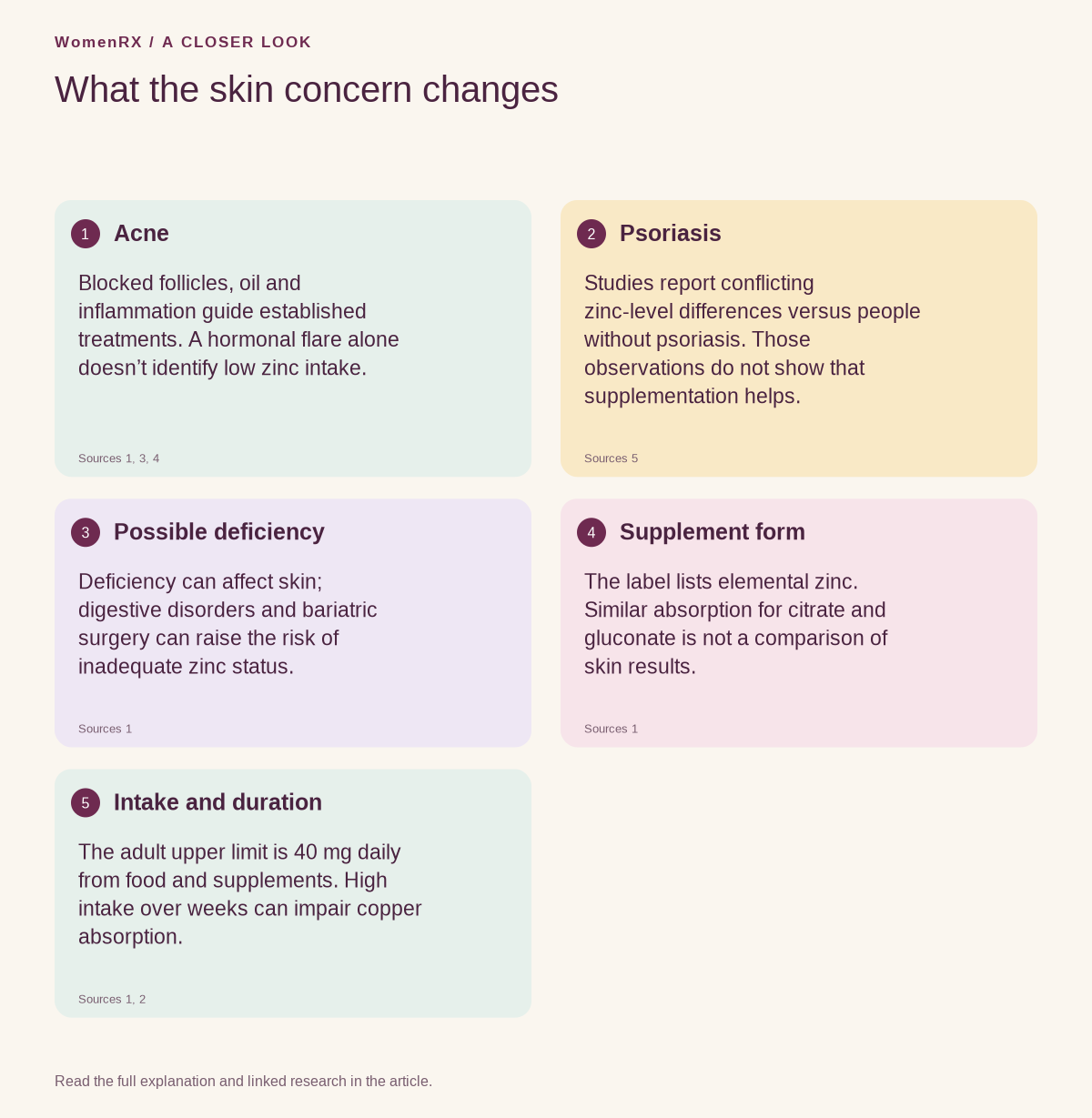
What the skin concern changes
Acne: Blocked follicles, oil and inflammation guide established treatments. A hormonal flare alone doesn’t identify low zinc intake.134
Psoriasis: Studies report conflicting zinc-level differences versus people without psoriasis. Those observations do not show that supplementation helps.5
Possible deficiency: Deficiency can affect skin; digestive disorders and bariatric surgery can raise the risk of inadequate zinc status.1
Supplement form: The label lists elemental zinc. Similar absorption for citrate and gluconate is not a comparison of skin results.1
Intake and duration: The adult upper limit is 40 mg daily from food and supplements. High intake over weeks can impair copper absorption.12
Read the figure as text
A finding about zinc levels, an absorption study and a nutritional intake limit answer different questions.- Acne: Blocked follicles, oil and inflammation guide established treatments. A hormonal flare alone doesn’t identify low zinc intake.134
- Psoriasis: Studies report conflicting zinc-level differences versus people without psoriasis. Those observations do not show that supplementation helps.5
- Possible deficiency: Deficiency can affect skin; digestive disorders and bariatric surgery can raise the risk of inadequate zinc status.1
- Supplement form: The label lists elemental zinc. Similar absorption for citrate and gluconate is not a comparison of skin results.1
- Intake and duration: The adult upper limit is 40 mg daily from food and supplements. High intake over weeks can impair copper absorption.12
More questions, answered
Is 40 mg of zinc a recommended acne dose?
No. Forty milligrams a day is the adult upper limit from food and supplements, not a treatment target. The recommended intake for adult women is 8 mg a day, or 11 mg during pregnancy and 12 mg while breastfeeding. Those figures describe nutritional intake, not acne outcomes. 1
Should I add copper if I take zinc?
Don’t add copper automatically to compensate for a high-zinc supplement. Excess zinc can impair copper absorption, but the safer first step is to review whether you need the zinc product and how much you take over time. 1 2
Sources you can check
- Zinc - Health Professional Fact SheetAccessed 2026-09-25Return to first citation
- Copper - Health Professional Fact SheetAccessed 2026-09-25Return to first citation
- Acne - NHSAccessed 2026-09-25Return to first citation
- Acne - Treatment - NHSAccessed 2026-09-25Return to first citation
- Zinc, Copper, and Iron in Selected Skin Diseases.Podgórska A, Kicman A, Naliwajko S, Wacewicz-Muczyńska M, Niczyporuk M. · International journal of molecular sciences · 2024Return to first citation