Choosing Zinc for Skin Without a Brand Ranking
Oral zinc may help some inflammatory acne, but the skin concern and the amount of elemental zinc matter more than a brand name.
If you’re considering oral zinc for acne, the most promising evidence concerns inflamed pimples, not every type of acne or every skin condition. One large trial found that an acne antibiotic worked better than zinc gluconate after three months. Compare products by zinc form and elemental zinc amount, rather than a “best for skin” claim; neither the studies nor a label can tell you which brand will work for you. 4 5
First, name the skin concern
Zinc is often marketed for “skin,” but that word covers conditions with different causes and treatments. For acne, the clearest research signal is a reduction in inflammatory lesions, such as red, swollen pimples. A systematic review reported benefit in 10 of 14 acne studies. A separate meta-analysis found that people treated with zinc had a greater reduction in average inflammatory papule counts than those who weren’t treated with zinc, while describing the overall evidence for its effectiveness as not definitive. Those findings don’t establish that zinc clears blackheads, prevents acne, or works for everyone. 3 4
The route matters too. Studies have examined both oral and topical zinc preparations. A result from a swallowed supplement doesn’t establish that a zinc cream works the same way, or vice versa. The product comparison below is for oral zinc, not a topical acne treatment. 4 5
Put zinc beside other acne options
One useful comparison comes from a randomized trial of 332 people with inflammatory acne. After three months, 31.2% of those receiving zinc gluconate and 63.4% of those receiving minocycline met the trial’s definition of clinical success: at least a two-thirds reduction in inflammatory lesion count. Zinc helped some participants, but the antibiotic did better on that measure. The review reporting this trial describes the zinc preparation as providing 30 mg of elemental zinc daily. That’s a study detail, not an instruction for choosing an amount to take. 5
Acne treatment also depends on severity. For a few spots, established options include topical treatments such as benzoyl peroxide. Painful nodules, cysts, or scarring deserve a treatment assessment rather than relying on a supplement alone. 1 2
What to check on an oral zinc label
When two bottles both say “zinc,” look past the front-of-package skin claim:
- Find the zinc form. A label may name a compound such as zinc gluconate. The large acne trial used zinc gluconate, but that doesn’t prove it’s the best form or that all zinc gluconate products perform alike. Studies differ in formulation as well as other design details. 5
- Find the elemental zinc amount. The compound name and the amount of elemental zinc are different pieces of information. Use the elemental amount, not just the compound name, when comparing a label with a study. 5
- Check what else is in the product. If it combines zinc with other ingredients, a study of zinc alone cannot tell you what the combination will do. The acne reviews don’t provide a basis for ranking brands or extra “skin” ingredients. 3 5
- Think about the person taking it. The comparative trial reported mainly mild gastrointestinal effects, but it doesn’t establish the safety of every product or amount, particularly during pregnancy. Don’t treat a research dose as a personal target. 5
These checks can help you see whether a product even resembles one studied for acne. They can’t turn mixed research findings into a guarantee: studies vary in zinc form, amount, duration, and the outcomes they measure. 5
Hormonal acne is a separate question
Acne can appear in adolescence, persist into adulthood, or flare around the menstrual cycle or during pregnancy. Hormonal changes can increase oil production and contribute to blocked follicles and inflammation. A flare that follows your cycle may make the hormonal connection noticeable, but it doesn’t show that zinc treats the reason for that flare. 1
The zinc research described here doesn’t establish a separate benefit for adult women versus adolescents, or a pregnancy-specific benefit or safety profile. If you’re pregnant or breastfeeding, treatment choice needs its own discussion rather than an assumption that a general acne study applies to you. Acne guidance distinguishes treatment choices during those periods. 2 5
Don’t carry acne results over to another condition
A systematic review found preliminary support for zinc in hidradenitis suppurativa, but the evidence was limited and called for larger, more consistent studies. For rosacea and psoriasis, the single study it identified for each condition did not find a significant benefit. That’s too little research to settle either question, and it’s no reason to assume an acne supplement treats them. 3
The useful shopping question is therefore narrower than “Which zinc is best for skin?” Ask whether oral zinc has evidence for your concern, then whether the label lets you identify the zinc form and elemental amount. For inflammatory acne, it may be worth considering alongside established treatment. A brand ranking would imply a product-level comparison the research hasn’t established. 2 5
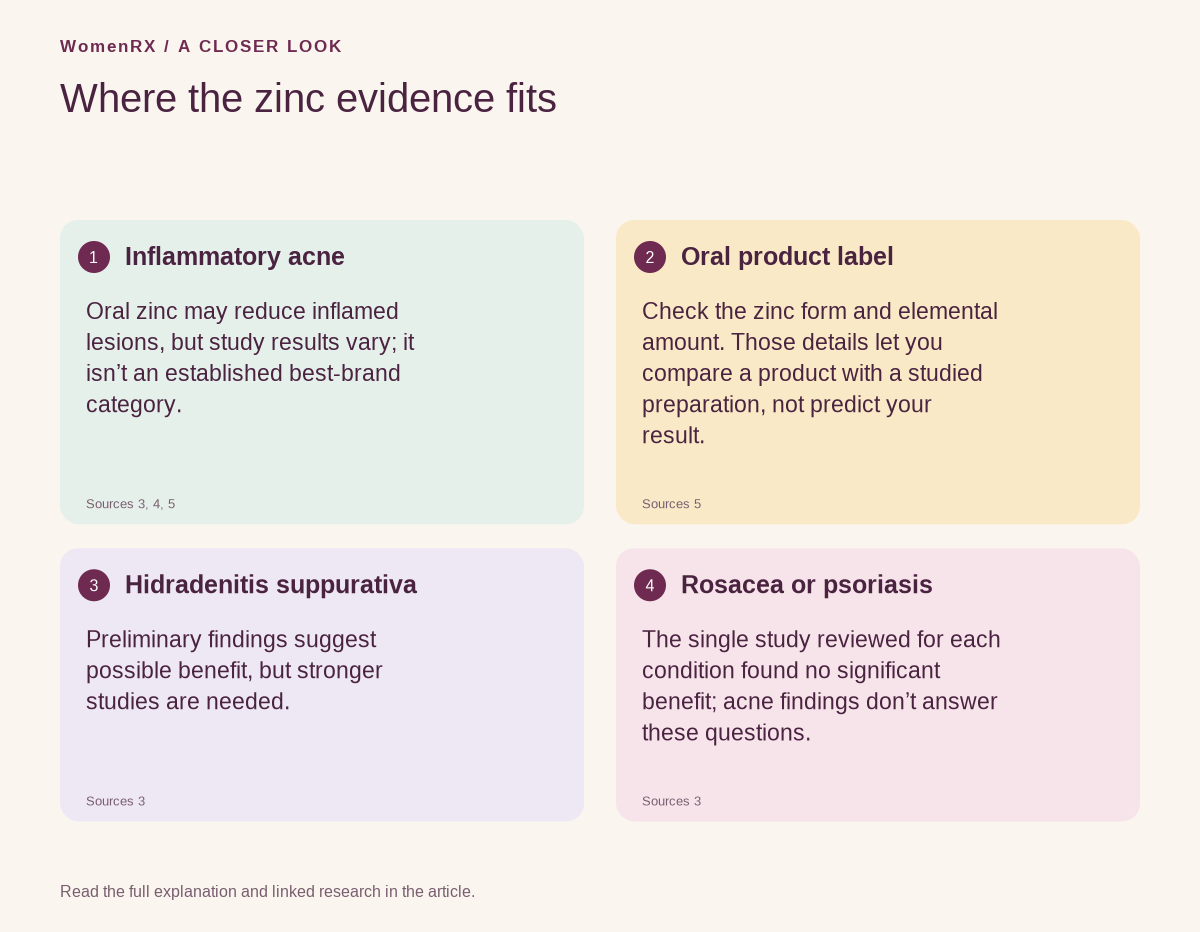
Where the zinc evidence fits
Inflammatory acne: Oral zinc may reduce inflamed lesions, but study results vary; it isn’t an established best-brand category.345
Oral product label: Check the zinc form and elemental amount. Those details let you compare a product with a studied preparation, not predict your result.5
Hidradenitis suppurativa: Preliminary findings suggest possible benefit, but stronger studies are needed.3
Rosacea or psoriasis: The single study reviewed for each condition found no significant benefit; acne findings don’t answer these questions.3
Read the figure as text
Match the concern and route to the research before comparing an oral product’s label.- Inflammatory acne: Oral zinc may reduce inflamed lesions, but study results vary; it isn’t an established best-brand category.345
- Oral product label: Check the zinc form and elemental amount. Those details let you compare a product with a studied preparation, not predict your result.5
- Hidradenitis suppurativa: Preliminary findings suggest possible benefit, but stronger studies are needed.3
- Rosacea or psoriasis: The single study reviewed for each condition found no significant benefit; acne findings don’t answer these questions.3
Sources you can check
- Acne - NHSAccessed 2026-09-25Return to first citation
- Acne - Treatment - NHSAccessed 2026-09-25Return to first citation
- Effects of Zinc Supplementation on Inflammatory Skin Diseases: A Systematic Review of the Clinical Evidence.Dhaliwal S, Nguyen M, Vaughn AR, Notay M, Chambers CJ, Sivamani RK. · American journal of clinical dermatology · 2020Return to first citation
- Serum zinc levels and efficacy of zinc treatment in acne vulgaris: A systematic review and meta-analysis.Yee BE, Richards P, Sui JY, Marsch AF. · Dermatologic therapy · 2020Return to first citation
- Oral Zinc Supplementation in Acne Vulgaris and Hidradenitis Suppurativa: An Updated Comprehensive Review.Spiniello S, Termini D, Tavoletti G, Avallone G, Alberti-Violetti S, Marzano AV, Nazzaro G. · Nutrients · 2026Return to first citation