Could These Symptoms Be Vitamin B12 Deficiency?
Tingling, numbness, or a new balance change deserves more attention than fatigue alone, but only an assessment and testing can help show whether B12 is involved.
Vitamin B12 deficiency can cause fatigue, anemia, and nerve changes such as numbness or tingling. Those nerve symptoms can happen even without anemia, so a normal blood count doesn’t rule them out. Fatigue and memory concerns have many possible causes; a blood B12 test, sometimes followed by methylmalonic acid testing, helps put symptoms in context. 1 3
Fatigue, tingling, or changes in balance can make you wonder about vitamin B12. Deficiency is one possible cause, but symptoms alone can’t tell you. The practical difference is that fatigue by itself is broad and common, while new or worsening nerve symptoms are a reason to seek assessment rather than wait for anemia to appear. 1 3
Which symptoms are clues, and which are nonspecific?
B12 deficiency can cause fatigue, pale skin, palpitations, a sore tongue, anemia, and neurological changes. Numbness or tingling in the hands and feet are examples of nerve symptoms. These changes can develop gradually, and neurological symptoms may occur without anemia. 1
Fatigue alone doesn’t point specifically to B12. It can also be related to sleep, stress, pregnancy, medicines, anemia, or other health conditions. If tiredness has lasted for weeks, it’s reasonable to ask about its cause rather than assume a vitamin deficiency. 3
Memory concerns need context, too. Forgetting a name now and then can be ordinary; a change that interferes with everyday tasks is different and deserves attention. B12 deficiency can affect the nervous system, but a memory change by itself doesn’t identify B12 as the cause. 1 2
A new change in balance or walking also deserves timely assessment, especially if it comes with numbness or tingling. B12-related neurological damage can become irreversible, which is why identifying a possible deficiency matters. Balance changes have other possible explanations, though, and symptoms don’t establish the cause. 1 A review focused on people with cancer and B12 deficiency also describes impaired vibration sense and ataxia, but that specific population can’t tell us how likely a balance change is to reflect B12 deficiency in adults generally. 4
How testing adds context
A blood test measures B12, but a result near the low end may not settle the question. The NIH Office of Dietary Supplements describes checking methylmalonic acid (MMA) when serum B12 is between 150 and 399 pg/mL to help confirm deficiency. This is a suggested way to clarify a result, not a symptom-based diagnosis. 1
MMA is useful, but it has limits: it can also rise with reduced kidney function and tends to be higher in older adults. Homocysteine is another marker, but it is less specific because folate levels and kidney function can affect it. Your symptoms and health context matter alongside the lab result. 1
If you have tingling, numbness, or a change in balance or walking, mention when it began and whether it’s getting worse. Those details help distinguish a possible nerve problem from fatigue alone. You can ask what your B12 result means and whether additional testing is appropriate. A blood count that doesn’t show anemia isn’t enough to dismiss nerve symptoms. 1
Diet and pregnancy matter to interpretation
B12 deficiency can occur even when someone eats foods containing B12. Difficulty absorbing the vitamin, pernicious anemia, gastrointestinal surgery, prolonged use of some medicines, and dietary deficiency are among the possible causes. Vegetarian diets are also identified as a risk context, so tell the clinician if you eat vegetarian or vegan. 1
Pregnancy adds a testing nuance: B12 blood levels tend to fall during pregnancy and usually return to normal after delivery. A result needs to be understood in that context, rather than read in isolation. B12 deficiency during pregnancy or breastfeeding may also affect the baby, so raise a suspected deficiency rather than relying on symptoms alone. 1
The useful takeaway is not that fatigue means low B12. It’s that persistent or worsening nerve symptoms, including numbness or tingling, deserve assessment; a new balance or walking change should be discussed promptly; and blood tests help determine whether B12 is part of the picture.
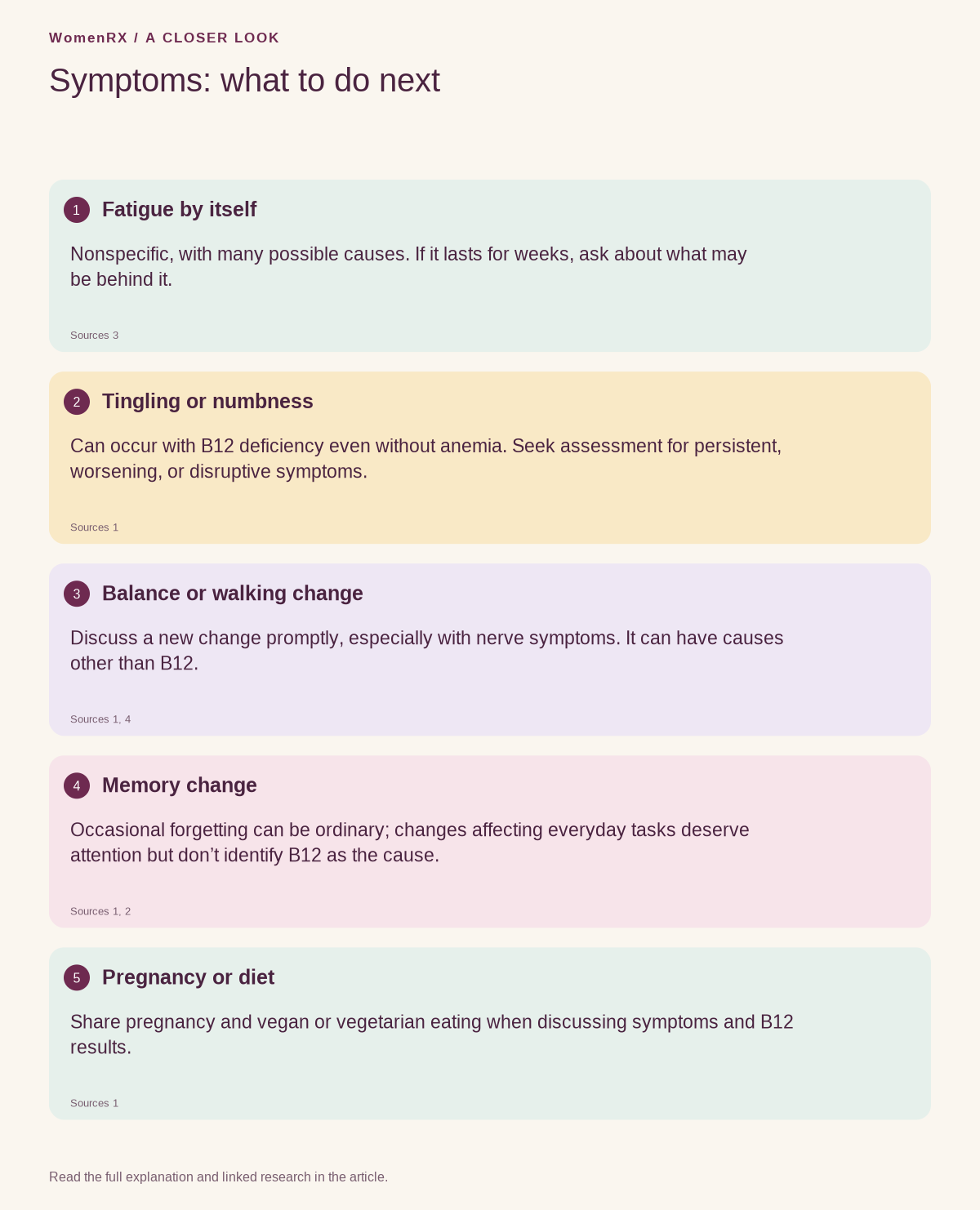
Symptoms: what to do next
Fatigue by itself: Nonspecific, with many possible causes. If it lasts for weeks, ask about what may be behind it.3
Tingling or numbness: Can occur with B12 deficiency even without anemia. Seek assessment for persistent, worsening, or disruptive symptoms.1
Balance or walking change: Discuss a new change promptly, especially with nerve symptoms. It can have causes other than B12.14
Memory change: Occasional forgetting can be ordinary; changes affecting everyday tasks deserve attention but don’t identify B12 as the cause.12
Pregnancy or diet: Share pregnancy and vegan or vegetarian eating when discussing symptoms and B12 results.1
Read the figure as text
These distinctions can help you decide what to raise in an assessment. They aren’t a diagnostic score or a substitute for testing.- Fatigue by itself: Nonspecific, with many possible causes. If it lasts for weeks, ask about what may be behind it.3
- Tingling or numbness: Can occur with B12 deficiency even without anemia. Seek assessment for persistent, worsening, or disruptive symptoms.1
- Balance or walking change: Discuss a new change promptly, especially with nerve symptoms. It can have causes other than B12.14
- Memory change: Occasional forgetting can be ordinary; changes affecting everyday tasks deserve attention but don’t identify B12 as the cause.12
- Pregnancy or diet: Share pregnancy and vegan or vegetarian eating when discussing symptoms and B12 results.1
More questions, answered
Can B12 deficiency cause tingling without anemia?
Yes. Numbness or tingling can occur even when anemia is absent, so not having anemia doesn’t rule out a possible B12-related nerve problem. Testing and clinical context are still needed. 1
Does a borderline B12 result need another test?
It may. The NIH Office of Dietary Supplements describes checking methylmalonic acid when serum B12 is between 150 and 399 pg/mL. MMA also has limitations, including effects from kidney function and age, so the result needs context. 1
Sources you can check
- Vitamin B12 - Health Professional Fact SheetAccessed 2026-09-25Return to first citation
- Memory | MedlinePlusAccessed 2026-09-25Return to first citation
- Fatigue: MedlinePlusAccessed 2026-09-25Return to first citation
- Vitamin B12 in Cancer Patients: Clinical Insights into Deficiency, Excess, Diagnosis, and Management.Osmola M, Tyszka M, Jirka A, Ciepiela O, Kapała A, Lenti MV, Matysiak-Budnik T. · Nutrients · 2025Return to first citation