Could These Symptoms Be Zinc Deficiency?
Symptoms can raise a question about zinc, but your diet, health context, and the limits of a blood test matter more than any one symptom.
Fatigue, hair changes, or a rash can have many causes and can’t confirm zinc deficiency by themselves. Concern is more reasonable when symptoms occur alongside risks such as a restrictive diet, low food intake, chronic alcohol use, or a digestive condition that affects nutrition. Assessment may include a blood zinc test, but its result needs context because levels can shift with illness and other factors. 1 2 3
Symptoms are clues, not a diagnosis
Zinc supports many body processes, so deficiency can have varied effects. That variety also makes symptoms nonspecific: feeling tired or noticing hair or skin changes does not tell you that zinc is low. Other health conditions and nutritional issues can cause similar changes, and a symptom alone cannot distinguish among them. 2
A rare inherited disorder that disrupts zinc absorption has been reported with a combination of skin lesions, hair loss, diarrhea, and poor growth. That case illustrates what severe zinc deficiency can look like in a specific condition; it is not a checklist for diagnosing ordinary deficiency in an adult. 5
Risk factors change how symptoms should be read
A clinician may pay closer attention to zinc status when symptoms appear alongside a reason your intake or status could be low. Relevant contexts include not eating enough overall, chronic alcohol use, or a digestive disease associated with malabsorption. Vegetarian and vegan diets are also associated with lower average zinc intake and lower serum zinc levels than diets that include animal products. Those patterns can inform an assessment, but they don’t establish that an individual has a deficiency. 1
Celiac disease is another context in which zinc deficiency has been reported. A small study of adults with celiac disease who already had zinc deficiency examined treatment preferences and supplementation; it does not show that celiac disease explains any one person’s symptoms or establish why deficiency occurs. 4
If you’re pregnant or breastfeeding, include that when discussing your usual diet and supplements. Zinc recommendations vary by life stage, but the evidence cited here does not establish pregnancy or lactation alone as a reason to assume deficiency. 1
What a zinc test can, and can’t, tell you
Serum or plasma zinc is commonly used to assess zinc status. The NIH Office of Dietary Supplements notes that a concentration below 70 mcg/dL in women indicates inadequate status. Still, a result is not a complete answer on its own: levels vary with factors such as age, sex, time of day, infection, changes in steroid hormones, and illness-related muscle loss. They also do not always match a person’s dietary or supplemental intake. 1
A review of abnormal plasma zinc results adds that inflammation, sample timing, low albumin, and some medications can contribute to a falsely low result. That’s why a clinician needs to interpret a number alongside your health and nutrition context rather than treating a lab value as proof by itself. 3
In practice, an assessment can bring together your symptoms, eating pattern, relevant digestive or other health conditions, and any test result. If you have ongoing symptoms and one or more risk factors, discuss those details with a clinician; the useful next step is figuring out whether zinc is a plausible part of the picture, not self-diagnosing from a symptom list.
Don’t use high-dose zinc as a diagnostic test
Taking extra zinc cannot tell you whether you were deficient. Excessive zinc exposure can cause toxicity. The NIH fact sheet describes chronic overuse of zinc-containing denture adhesive as a cause of copper deficiency and neurologic disease. That example is not a supplement dosing guide, but it underscores why high-dose self-treatment is not a safe substitute for assessment. 1
If you use zinc supplements or other zinc-containing products, mention them when discussing symptoms or a test result. That helps put both your intake and any findings in context. 1
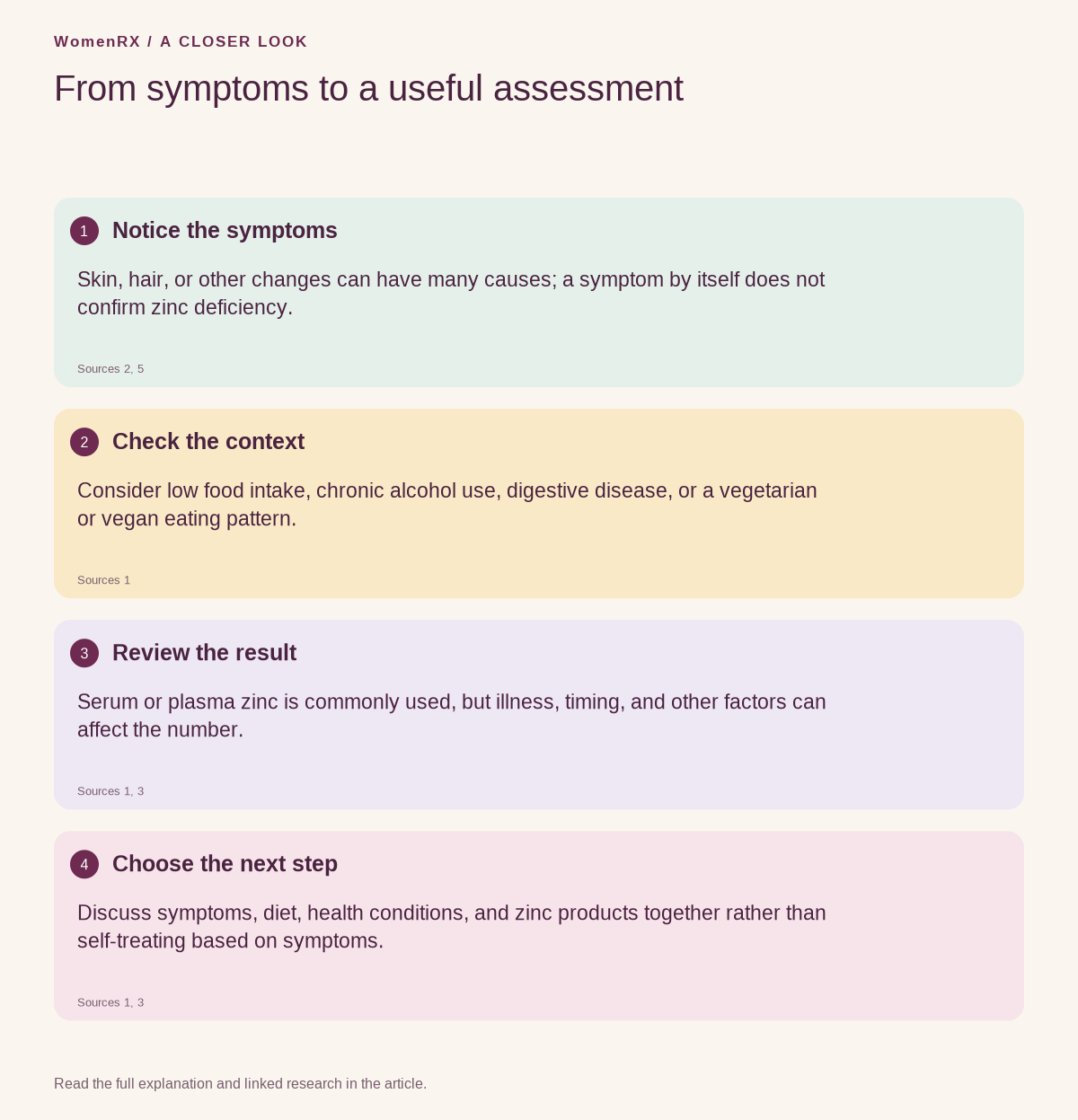
From symptoms to a useful assessment
Notice the symptoms: Skin, hair, or other changes can have many causes; a symptom by itself does not confirm zinc deficiency.25
Check the context: Consider low food intake, chronic alcohol use, digestive disease, or a vegetarian or vegan eating pattern.1
Review the result: Serum or plasma zinc is commonly used, but illness, timing, and other factors can affect the number.13
Choose the next step: Discuss symptoms, diet, health conditions, and zinc products together rather than self-treating based on symptoms.13
Read the figure as text
Symptoms alone are nonspecific. Risk factors and careful interpretation of a zinc result help put them in context.- Notice the symptoms: Skin, hair, or other changes can have many causes; a symptom by itself does not confirm zinc deficiency.25
- Check the context: Consider low food intake, chronic alcohol use, digestive disease, or a vegetarian or vegan eating pattern.1
- Review the result: Serum or plasma zinc is commonly used, but illness, timing, and other factors can affect the number.13
- Choose the next step: Discuss symptoms, diet, health conditions, and zinc products together rather than self-treating based on symptoms.13
More questions, answered
Does a low zinc blood result always mean I’m deficient?
Not necessarily. Serum and plasma zinc are useful measures, but illness, inflammation, sample timing, and other factors can affect the result. A clinician interprets it alongside your health and dietary context. 1 3
Does a vegetarian or vegan diet mean I have zinc deficiency?
No. These diets are associated with lower average zinc intake and serum zinc than diets that include animal products, but that association does not diagnose an individual deficiency. 1
Sources you can check
- Zinc - Health Professional Fact SheetAccessed 2026-09-25Return to first citation
- Evolution of zinc biomarkers and impact on clinical nutrition and public health.Bochud M, Berger MM. · Current opinion in clinical nutrition and metabolic care · 2026Return to first citation
- Investigative Algorithms for Disorders Affecting Plasma Zinc Concentrations: A Narrative Review.Frost B, Shipman AR, Shipman KE. · The journal of applied laboratory medicine · 2026Return to first citation
- Patient preferences in managing zinc deficiency in celiac disease: Insights to inform future clinical trial design.Verma AK, Tandon S, Graham K, Blom JJ, Russell L, Morgan J, Armstrong D, Pinto-Sanchez MI. · Nutrition and health · 2026Return to first citation
- Recurrent Acrodermatitis Enteropathica in a Pediatric Patient: A Rare Case Report with Zinc Deficiency and Complications.Hanan A, Rehman AU, Abdullah F, Anwar A, Umar M, Shafiq S, Rehman A, Iqbal J. · Case reports in dermatology · 2025Return to first citation