Copper Deficiency: Symptoms, Risks, and Evaluation
Copper deficiency is uncommon, but ongoing high zinc exposure or trouble absorbing nutrients can make it worth investigating.
Copper deficiency can be associated with anemia and problems with coordination, but symptoms alone can’t identify it. An evaluation starts with your symptoms, health history, and exposure to zinc or conditions that affect absorption. A clinician may consider copper and ceruloplasmin measurements, sometimes alongside zinc, then interpret the findings with your history to decide what to do next. 234
Copper deficiency is uncommon. If you’re tired, have been told you’re anemic, or have noticed a change in your balance, it’s reasonable to want an explanation. None of those findings, on its own, tells you that copper is low. A more useful question is whether the symptom comes with a risk such as substantial zinc exposure or difficulty absorbing nutrients. 2
Symptoms are clues, not proof
Anemia and poor coordination can occur with copper deficiency. Neither is unique to it, so the pattern of findings and your health history matter more than any one symptom. 24
Tingling or difficulty walking is also relevant to mention during an assessment, particularly if you use zinc regularly. A published case described a woman with long-term zinc-containing supplement use who developed sensory and walking problems. Because it’s one case with other nutritional abnormalities, it can’t show how likely that outcome is for someone else who takes zinc. 4
Look at zinc exposure and absorption
High zinc intake can interfere with copper absorption. Zinc may be in a standalone supplement, a multivitamin, or another combination product. Some denture adhesives also contain zinc; the reported concern is chronic, excessive use, not use as directed. 12
In a retrospective review of selected records from a Scottish trace-element laboratory, researchers confirmed zinc-induced copper deficiency in 14 patients with high zinc and low copper results. Seven of those 14 cases had not previously been diagnosed. This illustrates why zinc exposure can be missed, but it doesn’t tell us how common copper deficiency is among zinc users generally. 3
Absorption history matters too. Celiac disease is an identified risk for copper deficiency, while malabsorption and prior gastrointestinal surgery have been described in acquired cases. For example, an anemia finding paired with celiac disease raises a different question than anemia without a known absorption problem. It still doesn’t settle the diagnosis. 24
Before an assessment, check the labels of the supplements and other products you use. Bringing the product names, zinc amounts, and how long you’ve used them gives a clearer picture than trying to remember whether you take “a zinc supplement.” 1
How an evaluation can move from clue to plan
Start by sharing what prompted your concern, when it began, and whether it’s changing. Include relevant health history, such as celiac disease, absorption problems, or gastrointestinal surgery, and describe any ongoing zinc use. Bring product labels if you can, including combination supplements and denture adhesives. Zinc exposure and absorption history can help a clinician judge whether copper deficiency is a possibility worth assessing. 124
A clinician may consider measuring serum copper and ceruloplasmin, a copper-carrying protein. If zinc exposure is a concern, serum zinc may also be measured. These measurements can help assess copper status and whether zinc exposure fits the picture. The results need to be considered alongside your history and symptoms, not treated as a diagnosis based on one clue alone. 234
If the assessment supports copper deficiency, the next step is a plan that addresses the likely cause, such as excess zinc exposure or difficulty absorbing nutrients. Don’t start copper on your own based only on fatigue, anemia, or zinc use: the need for replacement should be established, and chronically high copper exposure can cause gastrointestinal symptoms and liver damage. 2
Copper needs during pregnancy and lactation
Recommended copper intake is higher during pregnancy and lactation: 1,000 micrograms a day during pregnancy and 1,300 micrograms during lactation, compared with 900 micrograms for other adults. These are dietary intake recommendations, not diagnostic cutoffs or a reason to start a copper supplement because you’re pregnant or breastfeeding. They don’t offer a separate symptom-based way to recognize copper deficiency. 2
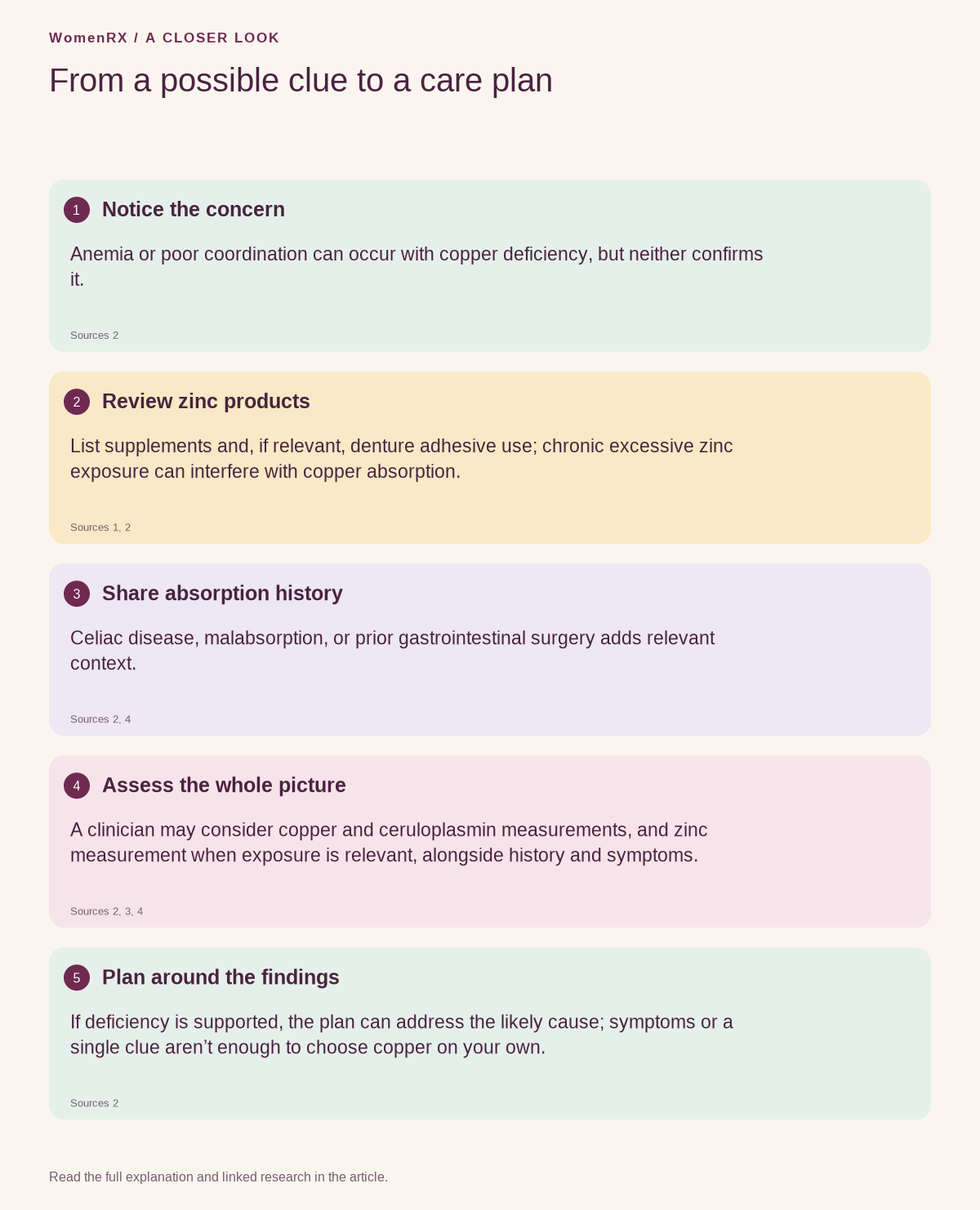
From a possible clue to a care plan
Notice the concern: Anemia or poor coordination can occur with copper deficiency, but neither confirms it.2
Review zinc products: List supplements and, if relevant, denture adhesive use; chronic excessive zinc exposure can interfere with copper absorption.12
Share absorption history: Celiac disease, malabsorption, or prior gastrointestinal surgery adds relevant context.24
Assess the whole picture: A clinician may consider copper and ceruloplasmin measurements, and zinc measurement when exposure is relevant, alongside history and symptoms.234
Plan around the findings: If deficiency is supported, the plan can address the likely cause; symptoms or a single clue aren’t enough to choose copper on your own.2
Read the figure as text
Symptoms alone don’t identify copper deficiency. This flow shows how zinc exposure and absorption history can inform an assessment and a clinician-directed next step.- Notice the concern: Anemia or poor coordination can occur with copper deficiency, but neither confirms it.2
- Review zinc products: List supplements and, if relevant, denture adhesive use; chronic excessive zinc exposure can interfere with copper absorption.12
- Share absorption history: Celiac disease, malabsorption, or prior gastrointestinal surgery adds relevant context.24
- Assess the whole picture: A clinician may consider copper and ceruloplasmin measurements, and zinc measurement when exposure is relevant, alongside history and symptoms.234
- Plan around the findings: If deficiency is supported, the plan can address the likely cause; symptoms or a single clue aren’t enough to choose copper on your own.2
Sources you can check
- Zinc - Health Professional Fact SheetAccessed 2026-09-25Return to first citation
- Copper - Health Professional Fact SheetAccessed 2026-09-25Return to first citation
- Iatrogenic copper deficiency: Risks and cautions with zinc prescribing.Duncan A, Morrison I, Bryson S. · British journal of clinical pharmacology · 2023Return to first citation
- Zinc-associated Copper Deficiency Myelopathy: A Case Report.Goodrich Z, Schneider J. · Clinical neuropharmacology · 2026Return to first citation