Taking Zinc Long Term? Check These Four Things
Before continuing zinc, add up every product, check how long you’ve used it, and compare your total intake with the limit for your age and life stage.
For adults 19 and older, the zinc upper limit is 40 mg a day from food and supplements combined; it’s a safety ceiling, not a goal. Long-term use deserves a closer look because high zinc intake can interfere with copper absorption. Check the elemental zinc on every label, including multivitamins and cold remedies, and review ongoing use or interacting medicines with a pharmacist or clinician. 1
Start with the number on the label
Look for zinc, listed in milligrams, in the Supplement Facts panel. That amount is elemental zinc, not the weight of the entire zinc compound. So zinc sulfate and zinc gluconate products shouldn’t be compared by the weight of their salts. Follow the serving size on the label, then add the elemental zinc from each product you actually take. 1
Include zinc-only supplements, multivitamins or prenatal vitamins, and cold lozenges or other cold remedies. Some denture adhesives also contain zinc, so check those if you use them regularly. A useful tally might look like this: the zinc in your multivitamin, plus the zinc in a separate supplement, plus any zinc lozenges used during a cold. 1
The adult upper limit is 40 mg daily from all sources, including food and supplements. It’s a ceiling for healthy adults, not a recommended daily intake. For comparison, the recommended intake is 8 mg daily for women 19 and older, 11 mg during pregnancy, and 12 mg while breastfeeding. If you’re 14 to 18, the upper limit is lower, at 34 mg daily, and recommendations differ by life stage. 1
Food is part of the total, though it’s unlikely to provide 50 mg of zinc on its own. A label tally can still show whether supplements are already bringing you close to the upper limit, before accounting for what you eat. 1
Why duration matters: zinc can lower copper absorption
Zinc and copper affect each other. With intakes of 50 mg of zinc a day or more for weeks, zinc can interfere with copper absorption. Over time, copper deficiency can affect blood cells and the nervous system. The upper limit is 40 mg for adults, so don’t treat 50 mg as a safe target or a threshold you need to reach before reviewing a supplement routine. 12
Copper deficiency is uncommon, but excessive zinc intake is a recognized cause. 2
High zinc can also cause nausea, dizziness, headaches, stomach upset, vomiting, or loss of appetite. These symptoms can have many causes, but if they begin after starting or increasing zinc, include that timing in your review. Unexplained anemia, numbness, or trouble with balance also deserves medical attention; these can occur with copper deficiency, but symptoms alone can’t establish the cause. In a small case series of seven people whose acquired copper deficiency first appeared with neurological symptoms, tingling and gait problems were among the presentations; four had chronic use of zinc-containing denture adhesive. Those cases illustrate possible symptoms, not the likelihood of harm from a particular supplement routine. 123
The upper limit doesn’t apply to zinc prescribed for a medical reason. In that case, the dose and follow-up belong with the clinician treating you. Don’t try to offset high zinc by adding copper on your own. 1
Pregnancy and breastfeeding call for a different tally
During pregnancy, the recommended zinc intake for adults rises from 8 mg to 11 mg daily; while breastfeeding, it’s 12 mg. Those are total intake recommendations, not instructions to add that amount as a supplement. Count the zinc in your prenatal product and consider food sources before adding a separate zinc supplement. The adult upper limit remains 40 mg daily during pregnancy and lactation. For pregnant or breastfeeding teens, age-specific values are different. 1
Evidence about routine zinc supplementation during pregnancy doesn’t show a consistent benefit across outcomes: it doesn’t appear to reduce low birth weight, stillbirth, or neonatal death, though it might reduce preterm birth. During breastfeeding, evidence is conflicting on whether supplements increase zinc in breast milk. That’s a reason to review an extra zinc product in the context of your prenatal or postpartum routine, rather than assuming more is better. 1
Check medicines before changing the routine
Zinc can interfere with the absorption of quinolone antibiotics, tetracycline antibiotics, and penicillamine when taken at the same time. Zinc can also reduce penicillamine’s absorption and effect. If you take one of these, ask a pharmacist or prescriber how to time it rather than guessing or stopping a prescribed medicine. Thiazide diuretics, including hydrochlorothiazide and chlorthalidone, can increase zinc loss in urine, which may lower zinc levels. 1
A practical review in four steps
Write down each zinc product, its elemental zinc per serving, how many servings you use, and how long you’ve taken it. Add the products together, check the age- and life-stage-appropriate upper limit, and bring the list to a pharmacist or clinician if your total is near or above that limit, your use is ongoing, you have symptoms, or one of the interacting medicines applies. That gives you a concrete starting point for deciding whether each product still belongs in your routine.
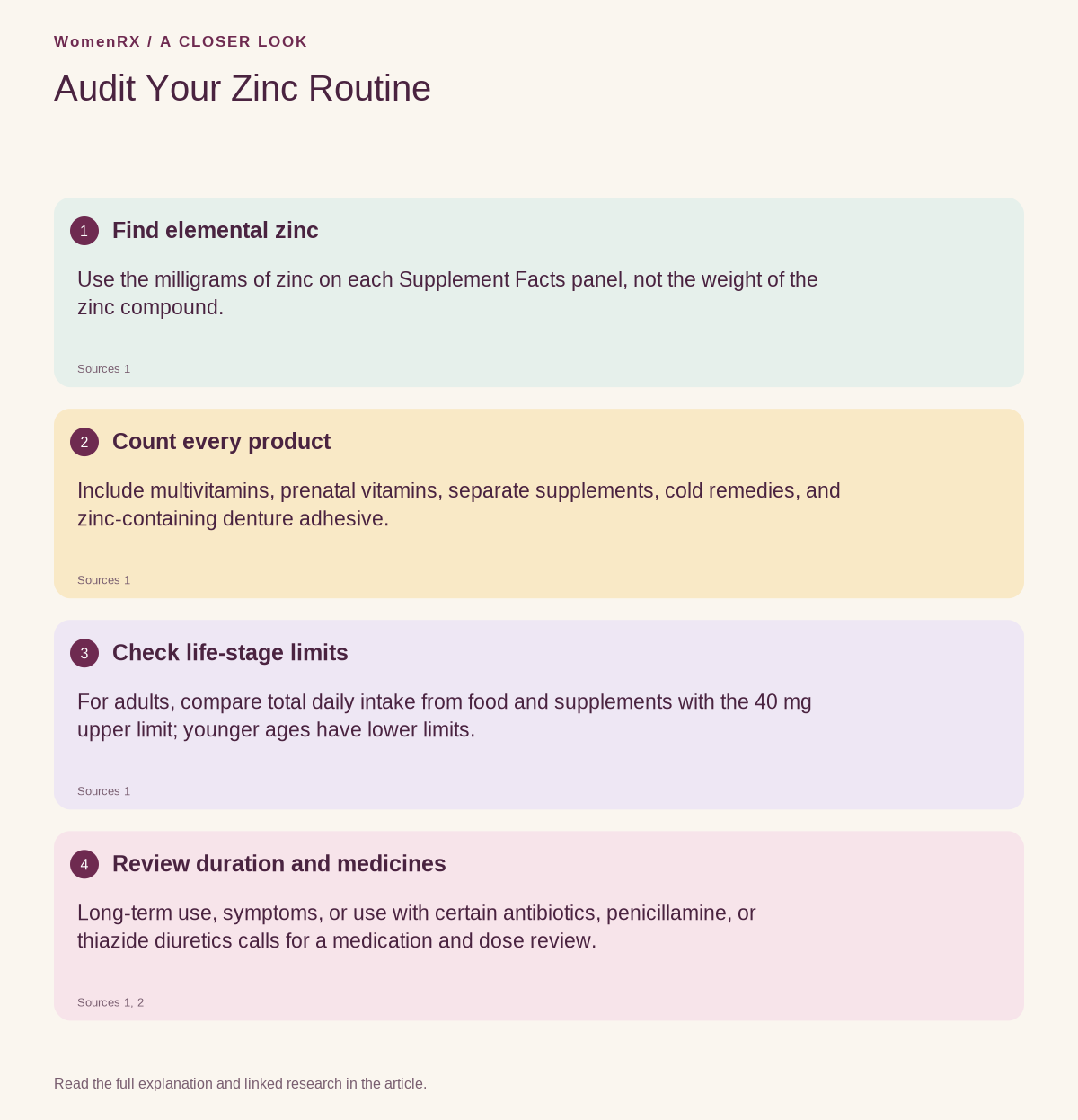
Audit Your Zinc Routine
Find elemental zinc: Use the milligrams of zinc on each Supplement Facts panel, not the weight of the zinc compound.1
Count every product: Include multivitamins, prenatal vitamins, separate supplements, cold remedies, and zinc-containing denture adhesive.1
Check life-stage limits: For adults, compare total daily intake from food and supplements with the 40 mg upper limit; younger ages have lower limits.1
Review duration and medicines: Long-term use, symptoms, or use with certain antibiotics, penicillamine, or thiazide diuretics calls for a medication and dose review.12
Read the figure as text
Check the label, total, duration, and reasons for review before continuing long-term zinc.- Find elemental zinc: Use the milligrams of zinc on each Supplement Facts panel, not the weight of the zinc compound.1
- Count every product: Include multivitamins, prenatal vitamins, separate supplements, cold remedies, and zinc-containing denture adhesive.1
- Check life-stage limits: For adults, compare total daily intake from food and supplements with the 40 mg upper limit; younger ages have lower limits.1
- Review duration and medicines: Long-term use, symptoms, or use with certain antibiotics, penicillamine, or thiazide diuretics calls for a medication and dose review.12
More questions, answered
Does the form of zinc change how I add up the dose?
Use the elemental zinc amount shown in the Supplement Facts panel, not the weight of zinc sulfate, zinc gluconate, or another zinc compound. Add the elemental amounts from each product you use. 1
Should I add copper if I take zinc regularly?
Not automatically. High zinc can interfere with copper absorption, but that doesn’t mean everyone taking zinc needs a copper supplement. Review the zinc amount, duration, symptoms, and reason for use with a clinician before adding another supplement. 12
Sources you can check
- Zinc - Health Professional Fact SheetAccessed 2026-09-25Return to first citation
- Copper - Health Professional Fact SheetAccessed 2026-09-25Return to first citation
- Neurological presentations revealing acquired copper deficiency: diagnosis features, aetiologies and evolution in seven patients.Poujois A, Djebrani-Oussedik N, Ory-Magne F, Woimant F. · Internal medicine journal · 2018Return to first citation