Zinc Supplements: Safety, Side Effects, and When to Check
A quick label check can reveal whether zinc from supplements, cold products, and other sources is adding up.
For most adults, the key is to count zinc from all sources, not just a stand-alone supplement. The recommended daily amount is 8 mg for women ages 19 and older, 11 mg during pregnancy, and 12 mg while breastfeeding; the upper limit for adults, including pregnancy and breastfeeding, is 40 mg per day from food and supplements. Too much can cause stomach symptoms, and high intake over time can interfere with copper absorption. 1
Start with the number on the label
Zinc can come from food, a multivitamin or prenatal vitamin, a zinc-only supplement, and some cold lozenges or other over-the-counter products. Add the amounts from the products you use regularly rather than looking at just one bottle. On a Supplement Facts panel, the listed amount is elemental zinc, not the weight of the whole zinc compound. 1
For a practical example, if your multivitamin lists 8 mg of zinc and a separate supplement lists 15 mg, those products provide 23 mg before counting food or any zinc-containing lozenges. The example is for adding up labels, not a recommended combination.
Food counts toward the upper limit too. Meat, seafood, eggs, dairy, beans, nuts, and some fortified cereals contain zinc. For most people in the United States, food alone is unlikely to supply the very high amounts associated with zinc toxicity, but it still belongs in the overall picture. 1
Recommended intake is not the upper limit
For adults ages 19 and older, the recommended dietary allowance (RDA) is 8 mg per day for women, 11 mg during pregnancy, and 12 mg while breastfeeding. For ages 14 to 18, the RDAs are 9 mg for girls, 12 mg during pregnancy, and 13 mg while breastfeeding. These are total daily intake targets from food and supplements, not a reason everyone needs a zinc pill. 1
The adult tolerable upper intake level (UL) is 40 mg per day, including zinc from food and supplements. It is also 40 mg for pregnant and breastfeeding adults. For ages 14 to 18, the UL is 34 mg per day, including during pregnancy and breastfeeding. The UL is a safety ceiling for generally healthy people, not a dose to aim for; people receiving zinc for medical treatment may need a clinician’s guidance instead. 1
Pregnancy and breastfeeding call for a different RDA than the nonpregnant adult amount, but not a higher adult UL. If you take a prenatal vitamin, check its zinc amount before adding a separate product. Routine zinc supplementation in pregnancy does not clearly reduce outcomes such as low birthweight, stillbirth, or neonatal death; it might lower preterm birth risk, but that finding does not establish that every pregnant person should add zinc. 1
If your prenatal vitamin also contains iron, count both minerals on the label. Zinc guidance notes that taking a supplement with at least 25 mg of elemental iron at the same time as zinc can reduce zinc absorption. A small randomized trial in 13 iron-replete pregnant women found no measurable effect on zinc metabolism when iron was taken with meals, but it did not test taking a zinc supplement at the same time. 12
During breastfeeding, the RDA is higher than for other adults. Research is mixed on whether extra zinc reliably increases the zinc content of breast milk, so taking more is not a dependable way to change milk zinc levels. 1
What too much zinc can feel like
Excess zinc can cause nausea, dizziness, headache, stomach upset, vomiting, or loss of appetite. These symptoms have many possible causes, so they do not prove that zinc is the problem. If they begin after starting or increasing a product, check the label totals and bring the product information to a clinician or pharmacist. 1
The concern is not only short-term stomach effects. Taking 50 mg or more of zinc daily for weeks can interfere with copper absorption, reduce immune function, and lower HDL cholesterol. This amount can come from supplements or excessive use of some zinc-containing denture adhesives. 1
Check other products and medicines
Some cold lozenges and other over-the-counter products contain zinc. Some denture adhesive creams do too; chronic, excessive use of zinc-containing adhesive has been linked to copper deficiency and neurologic problems. Check the package ingredients, especially if you use these products often. 1
Zinc can also interfere with absorption of quinolone and tetracycline antibiotics and penicillamine. Thiazide diuretics, such as hydrochlorothiazide, can increase zinc loss in urine. If you take one of these medicines, ask a pharmacist or prescriber whether your zinc product could affect it and how to handle the timing. 1
A practical check is to gather your supplement and over-the-counter labels, note how often you use each product, and add their elemental zinc amounts. Then compare that total with your life-stage RDA and the UL, remembering that food adds more. Get individualized advice before adding zinc if you are pregnant or breastfeeding, take an interacting medicine, have been told to use a high dose, or suspect a product is causing persistent symptoms. A clinician can consider why zinc is being used and whether ongoing use needs monitoring. 1
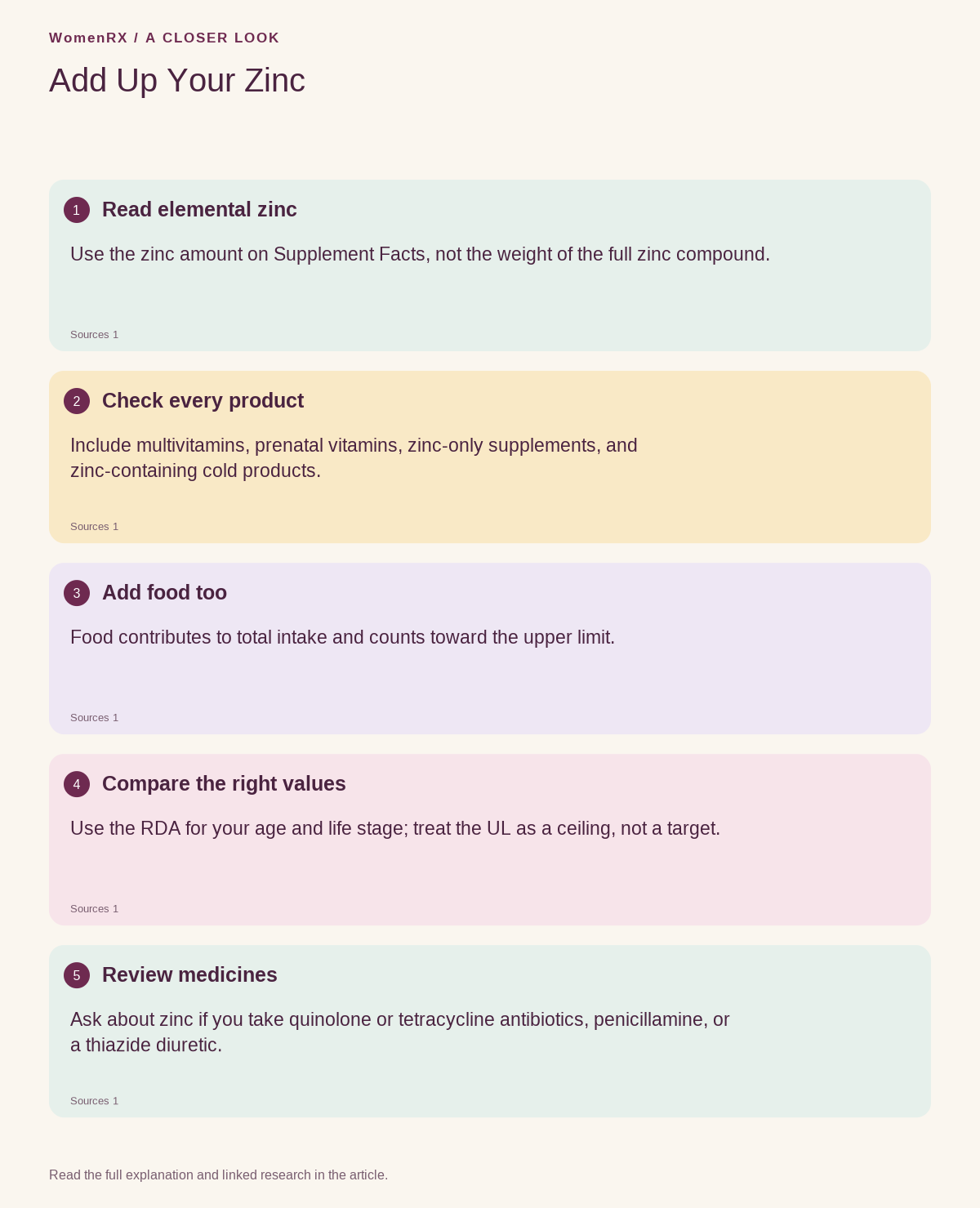
Add Up Your Zinc
Read elemental zinc: Use the zinc amount on Supplement Facts, not the weight of the full zinc compound.1
Check every product: Include multivitamins, prenatal vitamins, zinc-only supplements, and zinc-containing cold products.1
Add food too: Food contributes to total intake and counts toward the upper limit.1
Compare the right values: Use the RDA for your age and life stage; treat the UL as a ceiling, not a target.1
Review medicines: Ask about zinc if you take quinolone or tetracycline antibiotics, penicillamine, or a thiazide diuretic.1
Read the figure as text
Use these label checks to see where supplemental zinc is coming from and how to interpret the total.- Read elemental zinc: Use the zinc amount on Supplement Facts, not the weight of the full zinc compound.1
- Check every product: Include multivitamins, prenatal vitamins, zinc-only supplements, and zinc-containing cold products.1
- Add food too: Food contributes to total intake and counts toward the upper limit.1
- Compare the right values: Use the RDA for your age and life stage; treat the UL as a ceiling, not a target.1
- Review medicines: Ask about zinc if you take quinolone or tetracycline antibiotics, penicillamine, or a thiazide diuretic.1
More questions, answered
Does being a woman mean I need a zinc supplement?
No. The RDA differs by age and life stage, but it is a total intake target, not a recommendation that every woman take a supplement. Zinc is found in foods including seafood, meat, dairy, beans, nuts, and fortified cereals. 1
Can I tell from symptoms whether I have zinc deficiency?
Not reliably. Zinc status tests have limitations, and symptoms can have other causes. A clinician considers risk factors and the broader picture rather than treating a symptom alone as proof of deficiency. 1
Sources you can check
- Zinc - Health Professional Fact SheetAccessed 2026-09-25Return to first citation
- Effect of high-dose iron supplements on fractional zinc absorption and status in pregnant women.Harvey LJ, Dainty JR, Hollands WJ, Bull VJ, Hoogewerff JA, Foxall RJ, McAnena L, Strain JJ, Fairweather-Tait SJ. · The American journal of clinical nutrition · 2007Return to first citation