Oral Zinc for Acne: What’s Worth Considering?
Oral zinc has limited acne evidence, while its dose, duration, and interactions deserve a closer look.
Oral zinc isn’t a proven replacement for acne treatment. An exploratory study reported improvement with a supplement containing zinc and antioxidants, but it couldn’t show how much zinc contributed. If you’re considering it, check your total zinc intake, how long you’d take it, and whether it could interfere with a medicine you use. Prolonged high intake can reduce copper absorption. 45
What the acne evidence can tell you
The most useful question isn’t whether zinc matters to skin. It’s whether taking extra oral zinc will improve your acne enough to justify taking it. This evidence doesn’t establish a reliable answer or a best form of zinc.
In one exploratory study, 48 people with mild to moderate facial acne took a supplement combining methionine-bound zinc and antioxidants for 12 weeks. The report describes improvement, but it doesn’t report a comparison group or separate zinc’s effect from the other ingredients. It also doesn’t report results specifically for adult women. That makes it a reason for further study, not a basis for choosing that formulation or expecting the same result yourself. 4
Acne alone doesn’t establish a zinc deficiency. Breakouts can continue into adulthood, and hormonal changes around the menstrual cycle or pregnancy can trigger episodes. Those patterns may help explain when your acne flares, but they don’t identify a missing nutrient. 1
Compare zinc with care that targets acne
If you have a few spots, a topical acne treatment may be a more direct starting point than a supplement. If acne isn’t responding, or you’re developing painful nodules, cysts, or scarring, it’s worth getting treatment advice rather than waiting to see whether zinc helps. Acne treatments can take months to work, so an early lack of change doesn’t always mean a treatment has failed. 12
Treatment also depends on the kind and severity of acne. Topical treatments are commonly used, sometimes alongside an oral antibiotic for more severe acne; hormonal treatment is another option for some women. These are different choices with different considerations, not evidence that everyone with acne needs a prescription. 2
If you’re pregnant or breastfeeding, bring that up before choosing an acne treatment or adding a zinc supplement. Pregnancy can change which acne medicines are considered: for example, the NHS treatment guidance describes tetracycline antibiotics as a usual oral-antibiotic choice except during pregnancy or breastfeeding. A prenatal vitamin may already contain zinc, so it belongs in the total you review. 23
If you still want to try zinc, review the total
Look at the amount of zinc, in milligrams, on each supplement you take, including a multivitamin or prenatal. Then consider zinc from food as well. For adults, the US tolerable upper intake level is 40 mg a day from food and supplements combined. It isn’t an acne treatment target, and being under it doesn’t establish that extra zinc will help. 5
Duration matters as much as the number on one bottle. The NIH Office of Dietary Supplements reports that 50 mg or more of zinc for weeks can interfere with copper absorption; excess zinc can also cause nausea and other stomach symptoms. Its copper fact sheet explains that regularly taking high-dose zinc supplements can lead to copper deficiency. Don’t assume that adding a copper pill makes a high-zinc routine safe: that isn’t an acne strategy established by these sources. 56
The label’s zinc compound, such as zinc gluconate or zinc sulfate, isn’t enough to identify a winner. The study above used a zinc-and-antioxidant combination, not a head-to-head test of zinc forms. A more useful comparison is the listed amount of zinc, what else is in the product, and whether you’re planning to keep taking it for weeks or longer. 45
Check medicines before combining them
This step is particularly relevant if your acne treatment includes a tetracycline antibiotic. Zinc and tetracycline or quinolone antibiotics can interfere with each other’s absorption when taken at the same time. Zinc can also reduce the absorption and action of penicillamine, a medicine used for other conditions. If one of these is on your medication list, ask your pharmacist how to separate it from zinc rather than guessing from the supplement label. 5
For a useful conversation about zinc, bring the supplement label and the names of your other vitamins and medicines. The decision to pin down is specific: What total daily zinc would this add, for how long, and what acne treatment might you delay or complicate by taking it? That question gives you a better basis for choosing than a “clear skin” claim on a bottle. 245
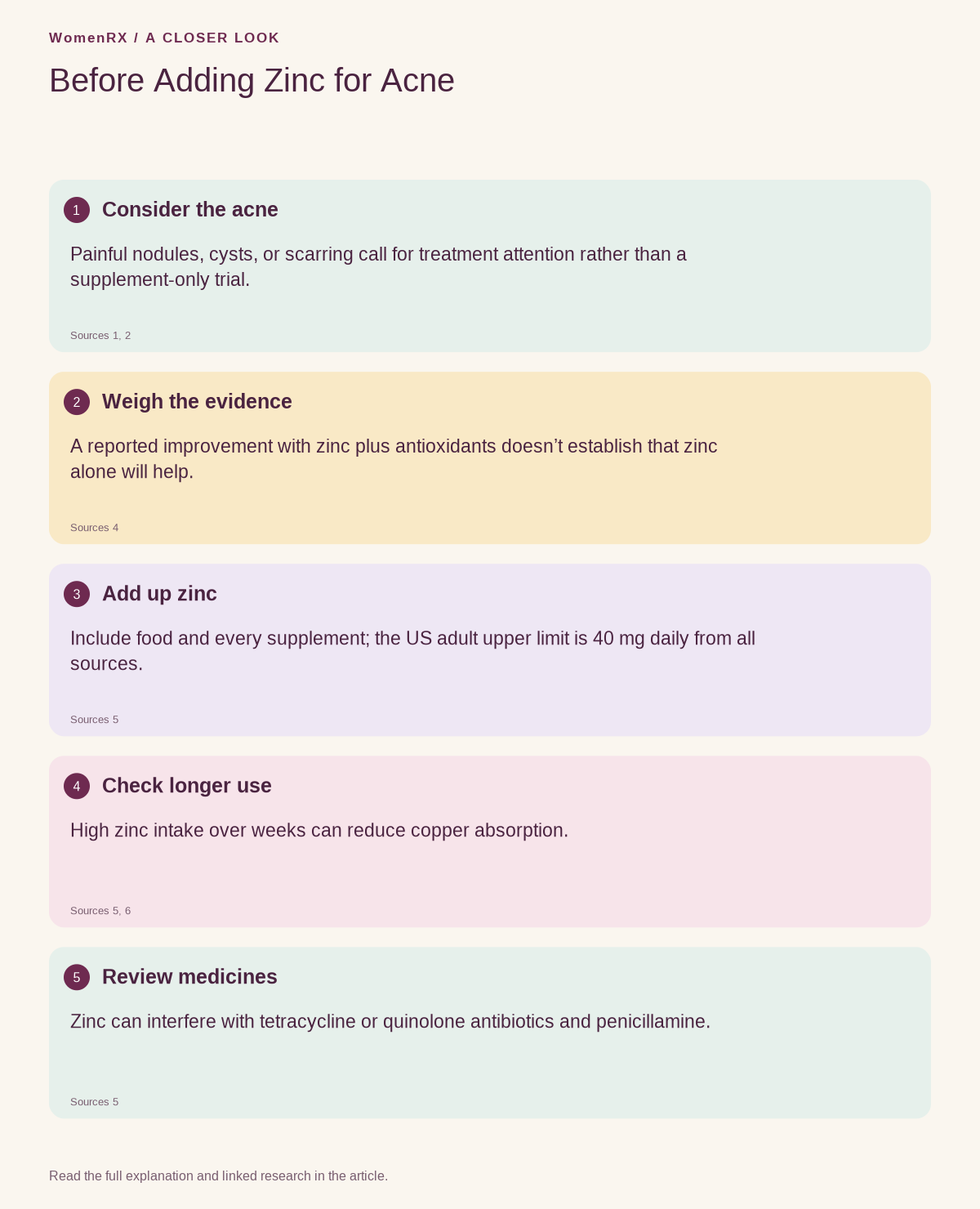
Before Adding Zinc for Acne
Consider the acne: Painful nodules, cysts, or scarring call for treatment attention rather than a supplement-only trial.12
Weigh the evidence: A reported improvement with zinc plus antioxidants doesn’t establish that zinc alone will help.4
Add up zinc: Include food and every supplement; the US adult upper limit is 40 mg daily from all sources.5
Check longer use: High zinc intake over weeks can reduce copper absorption.56
Review medicines: Zinc can interfere with tetracycline or quinolone antibiotics and penicillamine.5
Read the figure as text
A decision path that separates the acne question from the supplement safety checks.- Consider the acne: Painful nodules, cysts, or scarring call for treatment attention rather than a supplement-only trial.12
- Weigh the evidence: A reported improvement with zinc plus antioxidants doesn’t establish that zinc alone will help.4
- Add up zinc: Include food and every supplement; the US adult upper limit is 40 mg daily from all sources.5
- Check longer use: High zinc intake over weeks can reduce copper absorption.56
- Review medicines: Zinc can interfere with tetracycline or quinolone antibiotics and penicillamine.5
More questions, answered
Should I take zinc because my acne flares around my period?
A cycle-related flare doesn’t, by itself, show that you’re low in zinc. Hormonal changes can trigger acne episodes; the pattern is useful to mention when discussing treatment, but it isn’t a reason to assume a supplement will work. 1
Sources you can check
- Acne - NHSAccessed 2026-09-25Return to first citation
- Acne - Treatment - NHSAccessed 2026-09-25Return to first citation
- Could excessive zinc supplementation during pregnancy cause menkes disease? A hypothesis worth investigating.Mugundan UM, Saravanan V, Rajanandh MG. · Frontiers in pediatrics · 2026Return to first citation
- An observational study of methionine-bound zinc with antioxidants for mild to moderate acne vulgaris.Sardana K, Garg VK. · Dermatologic therapy · 2010Return to first citation
- Zinc - Health Professional Fact SheetAccessed 2026-09-25Return to first citation
- Copper - Health Professional Fact SheetAccessed 2026-09-25Return to first citation