Can Zinc Improve Acne or Other Skin Problems?
Zinc has some evidence for acne, but the results depend on the product and don’t show that zinc treats rashes or skin problems generally.
Zinc may help some acne, particularly inflamed spots, but the evidence doesn’t show that taking a zinc supplement alone reliably clears acne. One small trial found improvement with a topical product containing zinc and other ingredients, and a trial in adult women tested zinc only as part of a multi-ingredient supplement alongside a cream. Neither isolates zinc’s effect. The cited review describes evidence for hidradenitis suppurativa as more limited, and acne findings don’t establish zinc as a treatment for rashes or skin problems generally. 4 5 6
The acne evidence depends on what kind of zinc
“Zinc for skin” can mean an oral supplement, a cream containing a zinc compound, or treatment for a diagnosed zinc deficiency. Those are different situations, and evidence for one doesn’t establish benefit from another.
For oral zinc and acne, a 2026 review describes a possible benefit, especially for inflammatory lesions. But it also reports substantial differences among studies in zinc formulations, treatment duration, baseline zinc status, and how outcomes were measured. The review says more randomized trials are needed to identify who might benefit. That makes zinc a possible add-on to consider, not a proven stand-alone acne treatment. 6
The review also notes that zinc has been studied for hidradenitis suppurativa, an inflammatory follicular disorder. Evidence there is more limited and relies largely on small observational or uncontrolled studies. It shouldn’t be treated as evidence that zinc helps an unexplained rash or any other skin condition. 6
What the acne trials can, and can’t, tell you
Some trials studied products applied to the skin. In one double-blind, vehicle-controlled trial, 60 people with mild acne used either a cosmetic treatment containing a seaweed-derived ingredient complexed with zinc or its vehicle for eight weeks. Both groups improved, with a greater reduction in comedones, papules, and pustules in the active-treatment group. Because the product combined ingredients, the study can’t show that zinc alone caused the difference. The abstract doesn’t report results by sex. 5
A 12-week trial enrolled 184 women with adult female acne. Everyone used the same topical cream; one randomized group also took a supplement containing prebiotics, zinc, lactoferrin, and niacinamide. Both groups improved. The combination group had a greater reduction in inflammatory lesions and acne severity scores on some measures, but the supplement had several ingredients, so the result can’t be credited to zinc alone. 4
These findings offer a reason to study zinc further, not a basis for swapping a supplement for acne care that’s working or for prescribed treatment. Acne can be linked to hormonal changes, including changes around the menstrual cycle and pregnancy, but that doesn’t show that women respond differently to zinc. 3 The women-only trial is relevant to adult female acne, but it tested a combination product, not zinc by itself. 4
A rash is not the same question as acne
Acne has recognizable features, including clogged follicles and pimples. “Rash,” by contrast, can describe many different skin problems. A supplement studied for acne shouldn’t be assumed to help a rash, eczema, or another skin condition just because zinc is involved in skin health. 1 3
Correcting a confirmed zinc deficiency is a separate issue from taking zinc to improve skin when you don’t know your zinc status. The acne trials described here don’t establish that correcting a deficiency will clear a particular person’s acne or rash. Zinc inadequacy is more likely in some circumstances, including gastrointestinal disorders, bariatric surgery, and vegetarian or vegan diets; pregnancy and lactation also increase zinc requirements. Those facts don’t diagnose a deficiency or show that extra zinc will improve a skin concern. 2
What to do with the evidence
If acne is your concern, judge a zinc-containing product by the whole product and the evidence for that specific formulation, not by the ingredient name alone. The studies above tested combinations, and their findings don’t establish a reliable effect from zinc alone. Standard acne care remains relevant: acne can be controlled with treatment, and more severe acne, nodules, or cysts warrant medical attention because of scarring risk. 3
If you’re considering an oral supplement, check the full product label and avoid assuming that more is better. The NIH Office of Dietary Supplements warns that chronic, excessive use of zinc-containing denture cream has been linked to zinc toxicity, copper deficiency, and neurologic problems. That report doesn’t tell you the risk of a particular supplement dose, but it does show why prolonged excess zinc exposure isn’t harmless. 2
If the concern is a rash or another skin change, the more useful next step is to identify what condition it might be rather than trying an acne supplement. Zinc evidence for acne doesn’t answer that diagnosis.
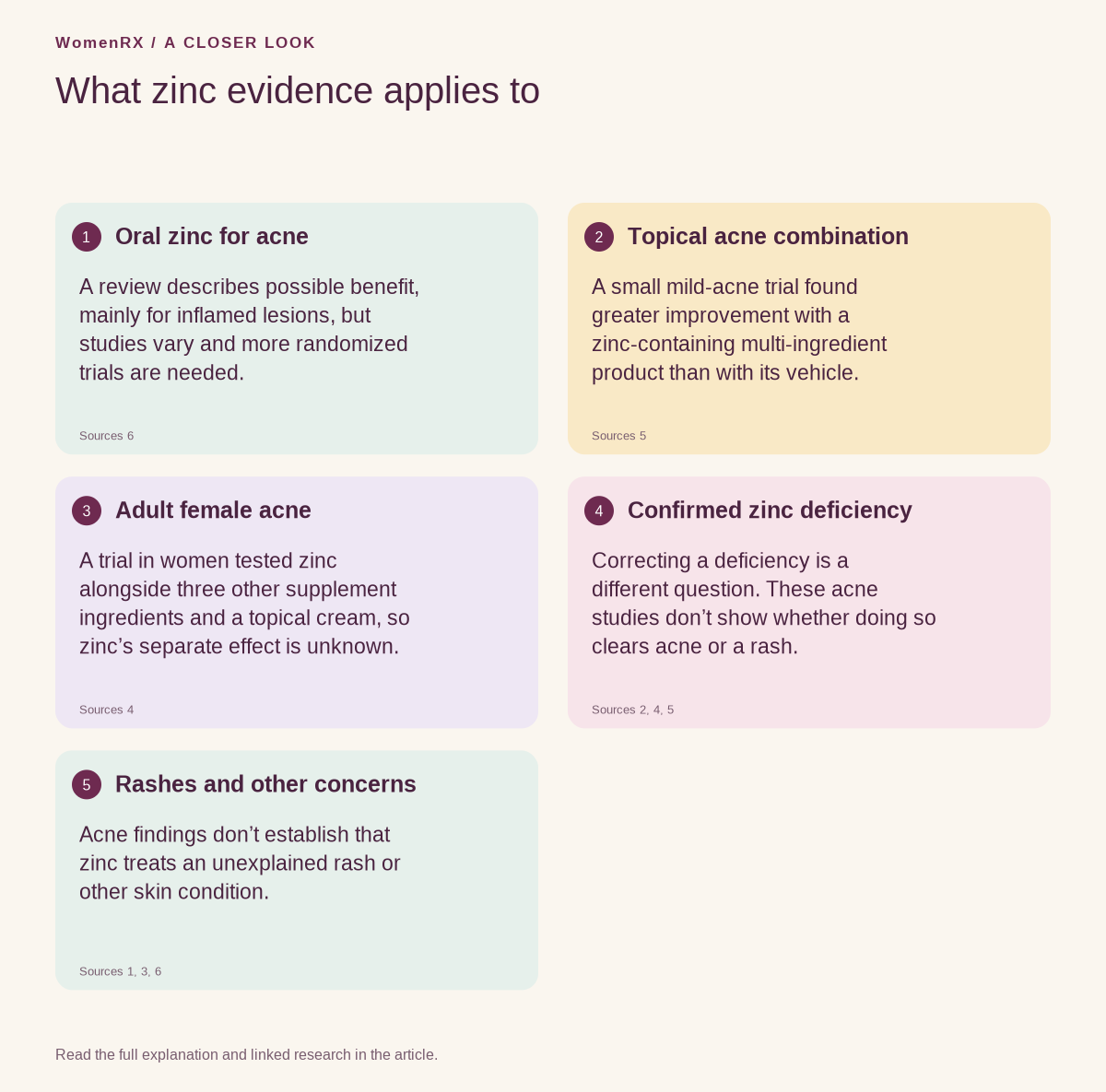
What zinc evidence applies to
Oral zinc for acne: A review describes possible benefit, mainly for inflamed lesions, but studies vary and more randomized trials are needed.6
Topical acne combination: A small mild-acne trial found greater improvement with a zinc-containing multi-ingredient product than with its vehicle.5
Adult female acne: A trial in women tested zinc alongside three other supplement ingredients and a topical cream, so zinc’s separate effect is unknown.4
Confirmed zinc deficiency: Correcting a deficiency is a different question. These acne studies don’t show whether doing so clears acne or a rash.245
Rashes and other concerns: Acne findings don’t establish that zinc treats an unexplained rash or other skin condition.136
Read the figure as text
The evidence changes with the skin concern and the form of zinc studied; combination-product results don’t establish an effect from zinc alone.- Oral zinc for acne: A review describes possible benefit, mainly for inflamed lesions, but studies vary and more randomized trials are needed.6
- Topical acne combination: A small mild-acne trial found greater improvement with a zinc-containing multi-ingredient product than with its vehicle.5
- Adult female acne: A trial in women tested zinc alongside three other supplement ingredients and a topical cream, so zinc’s separate effect is unknown.4
- Confirmed zinc deficiency: Correcting a deficiency is a different question. These acne studies don’t show whether doing so clears acne or a rash.245
- Rashes and other concerns: Acne findings don’t establish that zinc treats an unexplained rash or other skin condition.136
More questions, answered
Does the research show zinc works differently for women?
It doesn’t establish a sex-specific effect. One acne trial enrolled only adult women, but zinc was one of several supplement ingredients and was used alongside a topical cream. Another trial of a zinc-containing topical product didn’t report results by sex in its abstract. 4 5
Is zinc deficiency the same as needing zinc for acne?
No. Treating a confirmed deficiency and taking zinc for acne are different questions. The acne studies discussed here don’t establish that a person without a known deficiency will benefit from a supplement, or that correcting a deficiency will clear a specific skin problem. 2 6
Sources you can check
- Skin Conditions | Hives | Acne | MedlinePlusAccessed 2026-09-25Return to first citation
- Zinc - Health Professional Fact SheetAccessed 2026-09-25Return to first citation
- Acne - NHSAccessed 2026-09-25Return to first citation
- Efficacy of a retinoid complex plus anti-inflammatory component cream alone or in combination with prebiotic food supplement in adult acne: A randomized, assessor-blinded, parallel-group, multicenter trial on 184 women.Kazandjieva J, Dimitrova J, Sankeva M, Yankov D, Bocheva V, Kircheva K, Gincheva V, Gospodinova K, Andasorova R, Milanova M, Jeleva D, Zlateva P, Vasileva I, Yankova R, Gotseva S, ... · Journal of cosmetic dermatology · 2022Return to first citation
- Randomized controlled study of a cosmetic treatment for mild acne.Capitanio B, Sinagra JL, Weller RB, Brown C, Berardesca E. · Clinical and experimental dermatology · 2012Return to first citation
- Oral Zinc Supplementation in Acne Vulgaris and Hidradenitis Suppurativa: An Updated Comprehensive Review.Spiniello S, Termini D, Tavoletti G, Avallone G, Alberti-Violetti S, Marzano AV, Nazzaro G. · Nutrients · 2026Return to first citation