Zinc for Acne: What the Evidence and Label Say
Zinc may help some inflammatory acne, but the dose in a skin supplement can add up quickly when you count a multivitamin, prenatal, and food.
Oral zinc has shown possible benefit for inflammatory acne, but studies vary and it has not been shown to work for every skin concern. One three-month trial found improvement with zinc, though an antibiotic worked better. 5 Before trying a product, add the elemental zinc from every supplement and medicine, check how long you plan to use it, and consider pregnancy or breastfeeding needs. 1
Zinc may help acne, but it isn’t a general skin fix
Zinc is an essential mineral, and it has been studied as an oral supplement for acne. The research suggests it may improve inflammatory lesions for some people, but results have not been consistent enough to treat zinc as a reliable fix for acne, let alone for skin concerns broadly. A review of 12 clinical studies reported improvement in eight and no significant benefit over placebo in four. Differences in study size, zinc forms, amounts, and outcomes make the results hard to compare. 5
One large randomized trial included in a recent review compared zinc gluconate providing 30 mg of elemental zinc daily with minocycline in 332 people with inflammatory acne. After three months, at least a two-thirds reduction in inflammatory lesions occurred in 31.2% of the zinc group and 63.4% of the minocycline group. Both groups improved, but the antibiotic performed better on that measure. This trial does not establish that 30 mg is the right amount for you, or that zinc will help other types of skin problems. 5
Acne is influenced by oil production, blocked hair follicles, bacteria, and inflammation. Hormone shifts, including those around the menstrual cycle and pregnancy, can contribute. 3 The mixed acne evidence does not establish that hormonally influenced acne signals zinc deficiency or that zinc addresses its specific driver. 5
Add up elemental zinc across products
Look at the elemental zinc amount on each Supplement Facts panel. That is the amount to total, not the weight of the zinc compound, such as zinc gluconate or zinc sulfate. Check your acne supplement alongside a multivitamin, prenatal, and any other product containing zinc, including some cold remedies. 1
The adult recommended intake is 8 mg a day for women who aren’t pregnant or breastfeeding, 11 mg during pregnancy, and 12 mg while breastfeeding. These amounts include zinc from food as well as supplements. The adult upper limit is 40 mg a day from all sources. For ages 14-18, the recommended intake is 9 mg for females, 12 mg during pregnancy, and 13 mg while breastfeeding; the upper limit is 34 mg a day. An upper limit is not a target or a recommended acne dose. 1
For example, if a prenatal already provides zinc, adding a separate acne product increases your total. Count what you get from food too. A product’s serving size matters as well: the zinc amount may be listed per serving rather than per pill. If the label doesn’t make the amount clear, don’t assume it’s a small dose.
Duration matters, especially for copper
Too much zinc can cause nausea, dizziness, headache, stomach upset, vomiting, or loss of appetite. Taking 50 mg or more a day for weeks can interfere with copper absorption and affect immune function and HDL cholesterol. The adult upper limit is lower, at 40 mg a day, because it accounts for total intake and is intended to limit risk over time. 1
This is why adding copper to a high-zinc supplement is not a simple safety fix. Zinc can reduce copper absorption, and excessive zinc use can lead to copper deficiency; that doesn’t mean you should add a copper supplement on your own. When reviewing planned or ongoing zinc use, especially if your combined intake is near or above the upper limit, ask a clinician or pharmacist to review the products and plan. 1 2
Write down the zinc amount from each product and how long you expect to use it. That turns “I take zinc for my skin” into a useful review of total exposure, intended duration, and whether you’ve noticed a benefit or side effect. If you aren’t seeing a clear improvement, don’t assume that continuing indefinitely will help; the acne research doesn’t establish a long-term benefit. 5
Pregnancy, breastfeeding, and medicines
Pregnancy and breastfeeding change recommended zinc intake, but they don’t automatically make an extra skin supplement appropriate. Include the zinc in your prenatal or multivitamin when totaling intake. General pregnancy and breastfeeding intake recommendations don’t establish that an acne product is appropriate, so review a standalone product before adding it. 1
Zinc can also bind with certain antibiotics, including tetracyclines and quinolones, and reduce absorption of the antibiotic and zinc when taken together. It can reduce absorption and action of penicillamine as well. If you take one of these medicines, ask a pharmacist how to handle the timing rather than guessing. 1
Put the supplement beside established acne care
Zinc has some clinical evidence for inflammatory acne, but it is not a substitute for treatments with established roles in acne care. Guidance describes topical options such as benzoyl peroxide and retinoids, and other treatments for acne that needs more than a topical approach. Treatment can take time to show results, so a supplement’s promised quick fix deserves particular skepticism. 4
A practical label check is: elemental zinc per serving; zinc from every other supplement or product; life stage; and planned duration. If the product combines zinc with other ingredients, check those amounts too rather than assuming zinc is the only consideration. Evidence about zinc alone cannot establish that a multi-ingredient formula is effective or suitable for you. 6
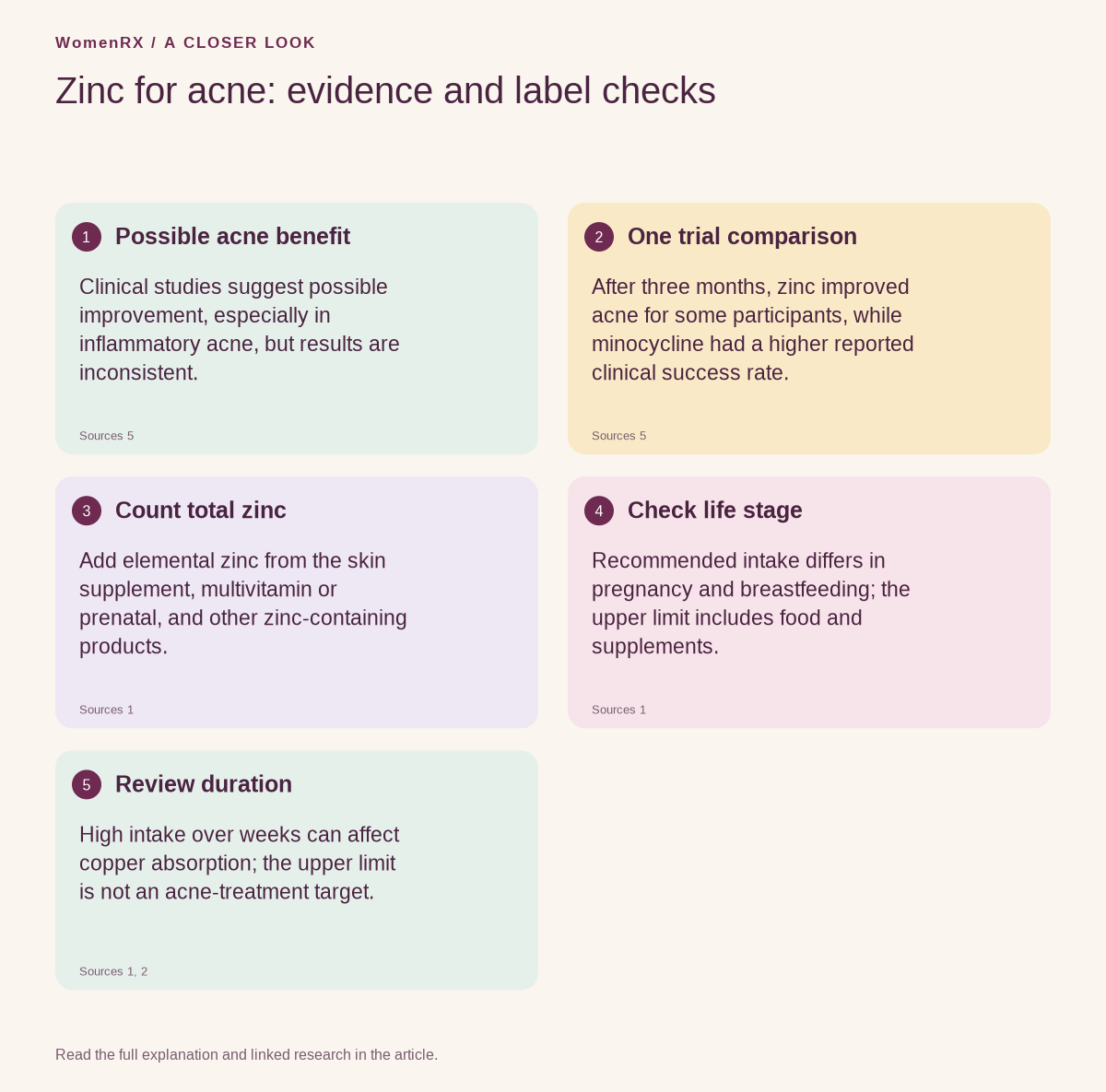
Zinc for acne: evidence and label checks
Possible acne benefit: Clinical studies suggest possible improvement, especially in inflammatory acne, but results are inconsistent.5
One trial comparison: After three months, zinc improved acne for some participants, while minocycline had a higher reported clinical success rate.5
Count total zinc: Add elemental zinc from the skin supplement, multivitamin or prenatal, and other zinc-containing products.1
Check life stage: Recommended intake differs in pregnancy and breastfeeding; the upper limit includes food and supplements.1
Review duration: High intake over weeks can affect copper absorption; the upper limit is not an acne-treatment target.12
Read the figure as text
Compare what acne studies suggest with the practical checks that matter before adding zinc to your routine.- Possible acne benefit: Clinical studies suggest possible improvement, especially in inflammatory acne, but results are inconsistent.5
- One trial comparison: After three months, zinc improved acne for some participants, while minocycline had a higher reported clinical success rate.5
- Count total zinc: Add elemental zinc from the skin supplement, multivitamin or prenatal, and other zinc-containing products.1
- Check life stage: Recommended intake differs in pregnancy and breastfeeding; the upper limit includes food and supplements.1
- Review duration: High intake over weeks can affect copper absorption; the upper limit is not an acne-treatment target.12
More questions, answered
Does zinc help skin conditions other than acne?
A review discusses oral zinc for acne and hidradenitis suppurativa. It describes the evidence for hidradenitis suppurativa as limited and largely observational or uncontrolled, so those findings don’t establish that zinc helps other skin conditions. 5
Sources you can check
- Zinc - Health Professional Fact SheetAccessed 2026-09-25Return to first citation
- Copper - Health Professional Fact SheetAccessed 2026-09-25Return to first citation
- Acne - NHSAccessed 2026-09-25Return to first citation
- Acne - Treatment - NHSAccessed 2026-09-25Return to first citation
- Oral Zinc Supplementation in Acne Vulgaris and Hidradenitis Suppurativa: An Updated Comprehensive Review.Spiniello S, Termini D, Tavoletti G, Avallone G, Alberti-Violetti S, Marzano AV, Nazzaro G. · Nutrients · 2026Return to first citation
- Evaluating Common Ingredients Contained in Dietary Acne Supplements: An Evidence-Based Review.Vaidya T, Hoffman L, Chapas A. · The Journal of clinical and aesthetic dermatology · 2024Return to first citation