Zinc Supplements: When to Consider One and Avoid Excess
The reason you’re considering zinc matters as much as the amount already in your supplements.
Consider a separate zinc supplement when your diet or health history raises a real concern about low intake or absorption, rather than relying on a broad health claim. First, add the elemental zinc listed on every supplement you take. For adults, 40 mg a day is the upper limit, not a goal; regularly taking too much zinc can interfere with copper absorption. 1 2
Start with your reason for considering zinc
A supplement makes more sense when it addresses a specific concern. If you’re wondering whether your diet provides enough zinc, start by looking at what you eat and what’s already in your multivitamin or other supplements. If you have a condition that affects absorption, that’s a different question: you may need an assessment that takes your health history into account.
Inadequate food intake, chronic alcohol use, and digestive diseases that impair absorption are risk factors for zinc deficiency. Zinc inadequacy is also more common with inflammatory bowel disease and after some bariatric surgeries involving removal of gastrointestinal tissue. Those circumstances are a stronger reason to discuss zinc status than a general promise of better immunity. 1
Symptoms alone aren’t a reliable way to settle the question. Neither hair loss nor fatigue, by itself, establishes zinc deficiency. Even a serum zinc result needs context: it can vary with the time of the blood draw, infection, changes in steroid hormones, and illness, and it doesn’t always reflect zinc intake. A clinician assessing possible deficiency considers risk factors alongside test results. 1
Do the label math before adding a product
Check every supplement you take that might contain zinc, including a multivitamin, prenatal, mineral blend, or standalone product. Find zinc on each Supplement Facts panel, check the serving size, and add the amounts for the servings you actually take in a day. That figure is elemental zinc. You don’t need to calculate the weight of zinc gluconate, zinc sulfate, or another zinc compound yourself. 1
Your label total is only the zinc from supplements. Food contributes zinc too, and a food label won’t necessarily list it unless zinc has been added. The adult upper limit is 40 mg of zinc per day from total intake. It’s a ceiling, not an amount to aim for. If your supplements alone approach it, don’t add another zinc product without reviewing the whole routine. 1 2
Why duration belongs in the decision
High zinc intake can interfere with copper absorption, and regular use of high-dose zinc supplements can lead to copper deficiency. Changes in a marker of copper status have been reported at zinc intakes of about 60 mg a day for up to 10 weeks. That finding is not a safe-use threshold: the adult zinc upper limit is lower. 2
This is why a plan for zinc should include both an amount and an end point. If zinc is recommended because you have a deficiency or an absorption problem, ask how the need will be reassessed rather than assuming the supplement should become permanent. Adding copper on your own isn’t a substitute for reviewing excess zinc intake. 2
A separate consideration is iron: taking a supplement with a substantial amount of iron, at least 25 mg, at the same time as a zinc supplement can reduce zinc absorption. If both are part of your routine, raise the combination when you review your supplements. 1
Pregnancy and breastfeeding call for a closer look
Zinc requirements increase during pregnancy and breastfeeding, but that doesn’t mean everyone needs a separate zinc pill. Start by counting what’s already in any prenatal or multivitamin you take. Pregnancy, diet, and conditions that affect absorption can change the question you need to ask about your intake. 1 3
In pregnancy, routine zinc supplementation does not appear to reduce low birthweight, stillbirth, or neonatal death, though it might reduce the risk of preterm birth. Those findings don’t establish a benefit from adding standalone zinc for every pregnant person. If you’re pregnant or breastfeeding, the useful decision is whether your own intake and circumstances call for more zinc, not whether zinc is generally ‘good for women.’ 1 3
Zinc sulfate, acetate, and gluconate are common supplement forms. For this decision, the clearest comparison is the elemental zinc amount on the label, what else you already take, and why you would use the product. 1
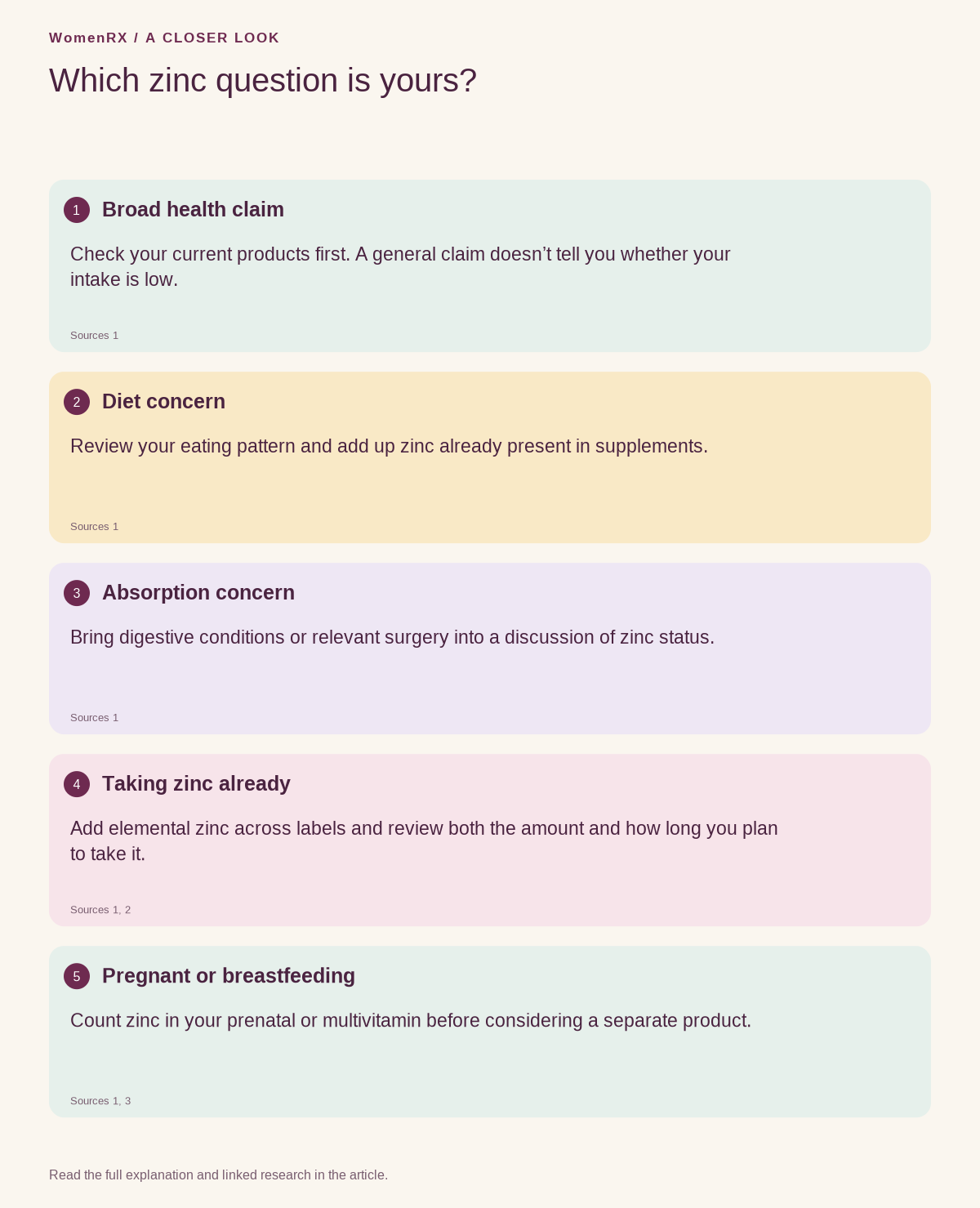
Which zinc question is yours?
Broad health claim: Check your current products first. A general claim doesn’t tell you whether your intake is low.1
Diet concern: Review your eating pattern and add up zinc already present in supplements.1
Absorption concern: Bring digestive conditions or relevant surgery into a discussion of zinc status.1
Taking zinc already: Add elemental zinc across labels and review both the amount and how long you plan to take it.12
Pregnant or breastfeeding: Count zinc in your prenatal or multivitamin before considering a separate product.13
Read the figure as text
Follow the reason you’re considering zinc to a next step, then check any zinc already in your supplements.- Broad health claim: Check your current products first. A general claim doesn’t tell you whether your intake is low.1
- Diet concern: Review your eating pattern and add up zinc already present in supplements.1
- Absorption concern: Bring digestive conditions or relevant surgery into a discussion of zinc status.1
- Taking zinc already: Add elemental zinc across labels and review both the amount and how long you plan to take it.12
- Pregnant or breastfeeding: Count zinc in your prenatal or multivitamin before considering a separate product.13
More questions, answered
Does a blood test give a definite answer about zinc deficiency?
Not by itself. Serum zinc can change with the time of the blood draw, infection, hormone changes, and illness, and it doesn’t always match intake. Risk factors and health history help put the result in context. 1
Should I count zinc gluconate differently from other forms?
No separate conversion is needed for a supplement label. The zinc amount on its Supplement Facts panel is the elemental zinc to count, not the weight of the full compound. 1
Sources you can check
- Zinc - Health Professional Fact SheetAccessed 2026-09-25Return to first citation
- Copper - Health Professional Fact SheetAccessed 2026-09-25Return to first citation
- Zinc and its importance for human health: An integrative review.Roohani N, Hurrell R, Kelishadi R, Schulin R. · Journal of research in medical sciences : the official journal of Isfahan University of Medical Sciences · 2013Return to first citation