Zinc Supplements: When to Take Them and When to Stop
Taking zinc alongside a high-dose iron supplement can reduce absorption, while sustained excess zinc can interfere with copper.
There’s no particular time of day you need to aim for with zinc. The timing issue to check is whether you take it alongside a supplement containing 25 mg or more of elemental iron, which can reduce zinc absorption. Also check your total intake from food and supplements: the adult upper limit is 40 mg of zinc per day, and excessive zinc can lead to copper deficiency. 1 2
Decide why you’re adding zinc
Before choosing a time to take zinc, check whether you need another source of it. Zinc is sold on its own, combined with other ingredients, and included in many multivitamins. The Supplement Facts panel lists elemental zinc: the amount of zinc itself, rather than the weight of the whole zinc compound. If you use more than one product, add up the elemental zinc shown on their labels. 1
Your reason for considering zinc matters, too. For example, zinc inadequacy is more common in people with inflammatory bowel disease and in some people who’ve had bariatric surgery involving removal of part of the gastrointestinal tract. Intake, absorption, and other losses can all play a part. Those situations call for an individual look at your needs, not an automatic high-dose supplement. 1
If you take iron, check whether the doses coincide
Taking zinc at the same time as a supplement containing 25 mg or more of elemental iron can reduce zinc absorption and blood zinc concentrations. If both are part of your routine, check their labels and whether you take them together. The evidence cited for this interaction does not establish a specific number of hours to leave between them. 1
You don’t need to treat iron-fortified food as though it were a high-dose iron pill. Iron added to fortified foods does not significantly interfere with zinc absorption in the same way, largely because the form commonly used in fortification is poorly soluble in the gut. 1
Food composition can affect absorption as well. Phytate, found in plant foods such as grains, can bind zinc and reduce its bioavailability. That doesn’t mean you should avoid those foods: an analysis of dietary phytate in Turkey notes that reducing phytate intake is unnecessary for people without a dietary mineral inadequacy. If your concern is whether your usual diet supplies enough zinc, that broader question is more useful than trying to optimize the hour you take a pill. 3
Check the amount and how long you’ve used it
The adult upper limit is 40 mg of zinc per day from all sources, including food and supplements. It’s a ceiling for total daily intake, not a dose to aim for. Product labels help you identify supplemental zinc and spot duplication, but adding up pills alone is not a complete check of total intake. 2
Why pay attention to a routine you’ve kept up for weeks? High zinc intake can inhibit copper absorption, and excessive use of zinc supplements can lead to copper deficiency. Reductions in a marker of copper status have been reported with zinc intakes of approximately 60 mg a day for up to 10 weeks. That finding is a reason to take sustained high intake seriously, not a safe-use threshold. If you’ve been taking a high-dose product, reassess the amount and why you’re taking it rather than simply continuing it by habit. 2
Pregnancy and breastfeeding change the question, not the timing rule
If you’re pregnant, review your food and supplements together before adding standalone zinc. In U.S. data from 2001 to 2014, 11% of pregnant women had total zinc intakes below the Estimated Average Requirement. Yet routine zinc supplementation during pregnancy did not appear to reduce low birthweight, stillbirth, or neonatal death in the research summarized by the NIH Office of Dietary Supplements; it might lower preterm birth risk. An intake shortfall is worth addressing, but pregnancy alone doesn’t establish that an extra zinc product is needed. 1
If you’re breastfeeding, the evidence is mixed on whether zinc supplementation raises the zinc content of breast milk. Your usual intake and circumstances still matter more than a blanket rule to add zinc. 1
The useful routine check is straightforward: identify your reason for taking zinc, read the elemental amount on every supplement label, consider zinc from food when thinking about total intake, and notice whether zinc and high-dose supplemental iron are taken together. If zinc has become a long-term habit, the amount and copper risk deserve at least as much attention as the time of day. 1 2
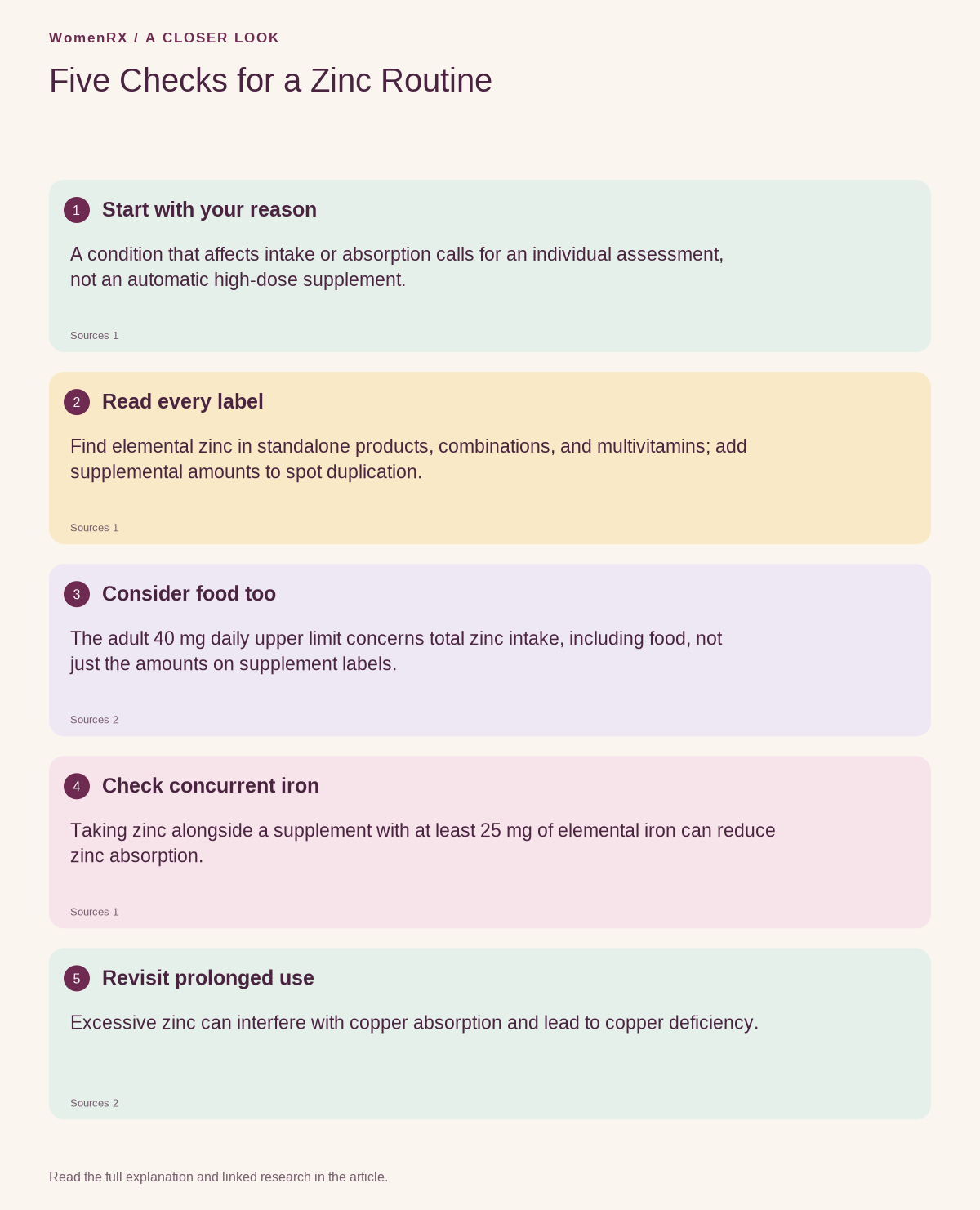
Five Checks for a Zinc Routine
Start with your reason: A condition that affects intake or absorption calls for an individual assessment, not an automatic high-dose supplement.1
Read every label: Find elemental zinc in standalone products, combinations, and multivitamins; add supplemental amounts to spot duplication.1
Consider food too: The adult 40 mg daily upper limit concerns total zinc intake, including food, not just the amounts on supplement labels.2
Check concurrent iron: Taking zinc alongside a supplement with at least 25 mg of elemental iron can reduce zinc absorption.1
Revisit prolonged use: Excessive zinc can interfere with copper absorption and lead to copper deficiency.2
Read the figure as text
Use these checks to separate a timing question from an intake or long-term safety question.- Start with your reason: A condition that affects intake or absorption calls for an individual assessment, not an automatic high-dose supplement.1
- Read every label: Find elemental zinc in standalone products, combinations, and multivitamins; add supplemental amounts to spot duplication.1
- Consider food too: The adult 40 mg daily upper limit concerns total zinc intake, including food, not just the amounts on supplement labels.2
- Check concurrent iron: Taking zinc alongside a supplement with at least 25 mg of elemental iron can reduce zinc absorption.1
- Revisit prolonged use: Excessive zinc can interfere with copper absorption and lead to copper deficiency.2
Sources you can check
- Zinc - Health Professional Fact SheetAccessed 2026-09-25Return to first citation
- Copper - Health Professional Fact SheetAccessed 2026-09-25Return to first citation
- Dietary Phytate Intake and Molar Ratios of Phytate to Zinc and Iron in Turkey.Öğünç YT, Yeniçağ R, Rakıcıoğlu N. · Nutrition bulletin · 2026Return to first citation