When Zinc Supplements Help, and When You Can Skip Them
Zinc can help address a real shortfall or a specific medical need, but taking it routinely isn’t a proven way to improve health when your intake is already adequate.
Zinc supplements make the most sense when a deficiency or a meaningful risk of deficiency has been identified, or when they’re part of a specific treatment plan. For most U.S. adults, food provides enough. Pregnancy and breastfeeding increase zinc needs, but that doesn’t mean every woman needs a separate zinc pill. Too much over time can interfere with copper and cause harm. 1
Start with the reason, not the bottle
Zinc is essential for normal immune function, wound healing, growth, and many other processes. But the fact that your body needs zinc doesn’t mean a supplement improves those processes when you already get enough. For most people in the United States, usual food and supplement intakes are adequate. A supplement is more worth considering when there’s a specific reason to suspect low zinc or a clearly defined clinical use. 1
That distinction matters because a low zinc intake, a low blood zinc result, and a health problem caused by zinc deficiency aren’t interchangeable. Blood zinc is commonly used to assess status, but results vary with factors such as time of day, infection, age, and sex, and don’t always reflect dietary intake. Clinicians consider the result alongside a person’s diet, health, and risk factors. 1
When supplementation may have a clear role
A deficiency or a strong reason to suspect one. Risk can be higher with conditions or circumstances that affect intake or absorption, including inflammatory bowel disease, some bariatric surgeries, celiac disease, alcohol use disorder, and vegetarian or vegan diets. Plant foods such as beans, nuts, and whole grains contain zinc, but phytates in these foods reduce how much the body absorbs. That doesn’t make a plant-based diet inadequate by definition; food choices and preparation affect the picture. 1
A small study in adults on hemodialysis who had low blood zinc found that two zinc products raised zinc levels during a year of treatment. It also found that adverse events requiring dose reduction, including copper deficiency, were more frequent with one product. This is evidence about monitored treatment in a specific group, not a reason for healthy adults to take zinc routinely. 2
A specific condition with a studied zinc-containing treatment. For people with age-related macular degeneration (AMD) who are at high risk of advanced disease, zinc is part of an AREDS supplement formula that also contains other nutrients. The evidence supports that combination for slowing progression in the studied high-risk group; it doesn’t show that a zinc-only supplement prevents AMD or benefits everyone. 1
Zinc lozenges or syrup have also been studied after a cold starts. A 2024 review summarized by the NIH found that zinc may shorten cold symptoms by about two days, but the evidence was low to very low certainty, and zinc appears to make little or no difference in preventing colds. That’s a narrow, uncertain possible use, not evidence that daily zinc prevents illness. 1
Pregnancy and breastfeeding: higher needs, not automatic pills
Adult women need 8 mg of zinc a day from all sources. The recommended amount is 11 mg during pregnancy and 12 mg while breastfeeding. For pregnant teens ages 14-18, it’s 12 mg; for breastfeeding teens, 13 mg. These figures describe total daily intake, not a recommended supplement dose. 1
Pregnancy raises the need for zinc, but routine supplementation has not appeared to reduce low birth weight, stillbirth, or neonatal death. It might lower the risk of preterm birth. During breastfeeding, studies disagree about whether zinc supplements increase the zinc content of breast milk. So the life-stage requirement is clear, while the benefit of adding a separate zinc pill for every pregnant or breastfeeding woman is not. 1
Zinc-containing foods include meat, seafood, eggs, dairy, beans, nuts, and fortified cereal. A prenatal or other supplement may already contain zinc, so check the label before adding another product. The amount listed on a Supplement Facts panel is elemental zinc, the amount to count toward your total. 1
The trade-off: more isn’t better
For adults, the tolerable upper intake level is 40 mg per day from food and supplements combined. It’s a safety boundary for generally healthy people, not a target and not a limit for medically supervised treatment. Nausea, stomach upset, headache, dizziness, vomiting, and loss of appetite can occur with excessive intake. Taking 50 mg or more daily for weeks can interfere with copper absorption and may reduce immune function and HDL cholesterol. 1
Check for zinc in more than one place: a multivitamin, a standalone product, cold remedies, or some denture adhesives. Long-term excessive use of zinc-containing denture adhesive has been linked to copper deficiency and neurological problems. 1
Zinc can also interfere with some medicines. It can reduce absorption of quinolone and tetracycline antibiotics and of penicillamine. Thiazide diuretics can increase zinc loss in urine. If one of these applies to you, ask a pharmacist or prescriber how to handle the interaction rather than adding or rescheduling supplements on your own. 1
Add up existing zinc before adding another product
If you’re considering zinc, first add up the products you already take and look at your usual food sources. If you have a condition that affects absorption, a restricted diet, or a test result suggesting low zinc, the useful next step is to discuss whether the finding fits your overall situation and what the treatment is meant to improve. If you’re considering zinc for a broad benefit such as “immune support” without a specific reason, the evidence doesn’t establish that routine supplementation helps when your intake is already adequate. 1
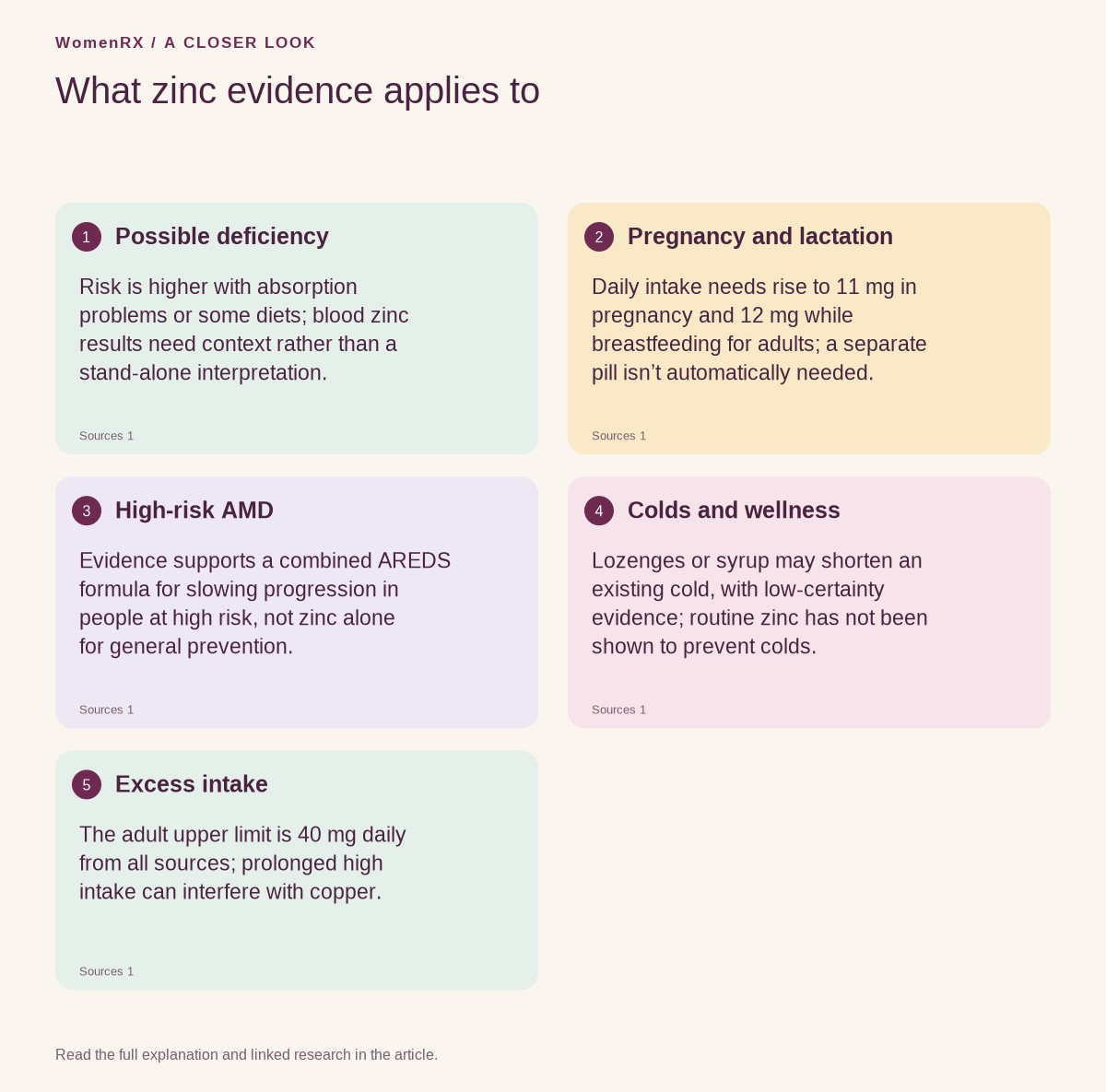
What zinc evidence applies to
Possible deficiency: Risk is higher with absorption problems or some diets; blood zinc results need context rather than a stand-alone interpretation.1
Pregnancy and lactation: Daily intake needs rise to 11 mg in pregnancy and 12 mg while breastfeeding for adults; a separate pill isn’t automatically needed.1
High-risk AMD: Evidence supports a combined AREDS formula for slowing progression in people at high risk, not zinc alone for general prevention.1
Colds and wellness: Lozenges or syrup may shorten an existing cold, with low-certainty evidence; routine zinc has not been shown to prevent colds.1
Excess intake: The adult upper limit is 40 mg daily from all sources; prolonged high intake can interfere with copper.1
Read the figure as text
The relevance of a zinc supplement depends on why it’s being considered: correcting low status, using a studied condition-specific formula, or seeking general wellness.- Possible deficiency: Risk is higher with absorption problems or some diets; blood zinc results need context rather than a stand-alone interpretation.1
- Pregnancy and lactation: Daily intake needs rise to 11 mg in pregnancy and 12 mg while breastfeeding for adults; a separate pill isn’t automatically needed.1
- High-risk AMD: Evidence supports a combined AREDS formula for slowing progression in people at high risk, not zinc alone for general prevention.1
- Colds and wellness: Lozenges or syrup may shorten an existing cold, with low-certainty evidence; routine zinc has not been shown to prevent colds.1
- Excess intake: The adult upper limit is 40 mg daily from all sources; prolonged high intake can interfere with copper.1
More questions, answered
Does a low blood zinc result always mean I need a supplement?
Not by itself. Blood zinc is useful but can be affected by factors such as infection and the time of the blood draw, and it doesn’t always match dietary intake. The result is more meaningful when considered with your health, diet, and risk factors. 1
Can zinc interact with antibiotics?
Yes. Zinc can interfere with absorption of quinolone and tetracycline antibiotics. If you take one, ask your pharmacist or prescriber how to manage the timing rather than guessing. 1
Sources you can check
- Zinc - Health Professional Fact SheetAccessed 2026-09-25Return to first citation
- Zinc Acetate Hydrate Supplementation versus Polaprezinc Supplementation for Improving Hypozincemia in Hemodialysis Patients: A Randomized Clinical Trial.Kumagai E, Furumachi K, Kurihara A, Hosokawa K, Hosohata K, Takai S, Takai S. · International journal of nephrology · 2023Return to first citation