Which Nutrients Deserve a Closer Look After 50?
The calcium target rises for women after 50, while questions about vitamin D and B12 depend more on age and eating pattern.
Calcium is the clearest age-related change: women over 50 are advised to get 1,200 mg a day from food and supplements combined. Vitamin D intake guidance varies by age, but dietary intake and vitamin D status aren’t the same thing. A vegetarian diet may make B12 worth a closer look. Review what you eat, your health concerns, and medicines or antacids before choosing a supplement. 1 2 3
The age-related change is calcium
A supplement labeled “for women over 50” can make several nutrients look equally urgent. They aren’t. The clearest change in recommended intake for women at this age is calcium. Women ages 51 to 70 are advised to get 1,200 mg daily, up from 1,000 mg at ages 19 to 50. The target stays at 1,200 mg after 70. Those amounts refer to total intake, not an amount to take in a pill. 2
Menopause is part of the reason calcium deserves attention. As estrogen declines, the body absorbs less calcium, loses more in urine, and draws more from bone. That makes your usual intake worth reviewing, but it doesn’t mean you automatically need a calcium supplement. 2
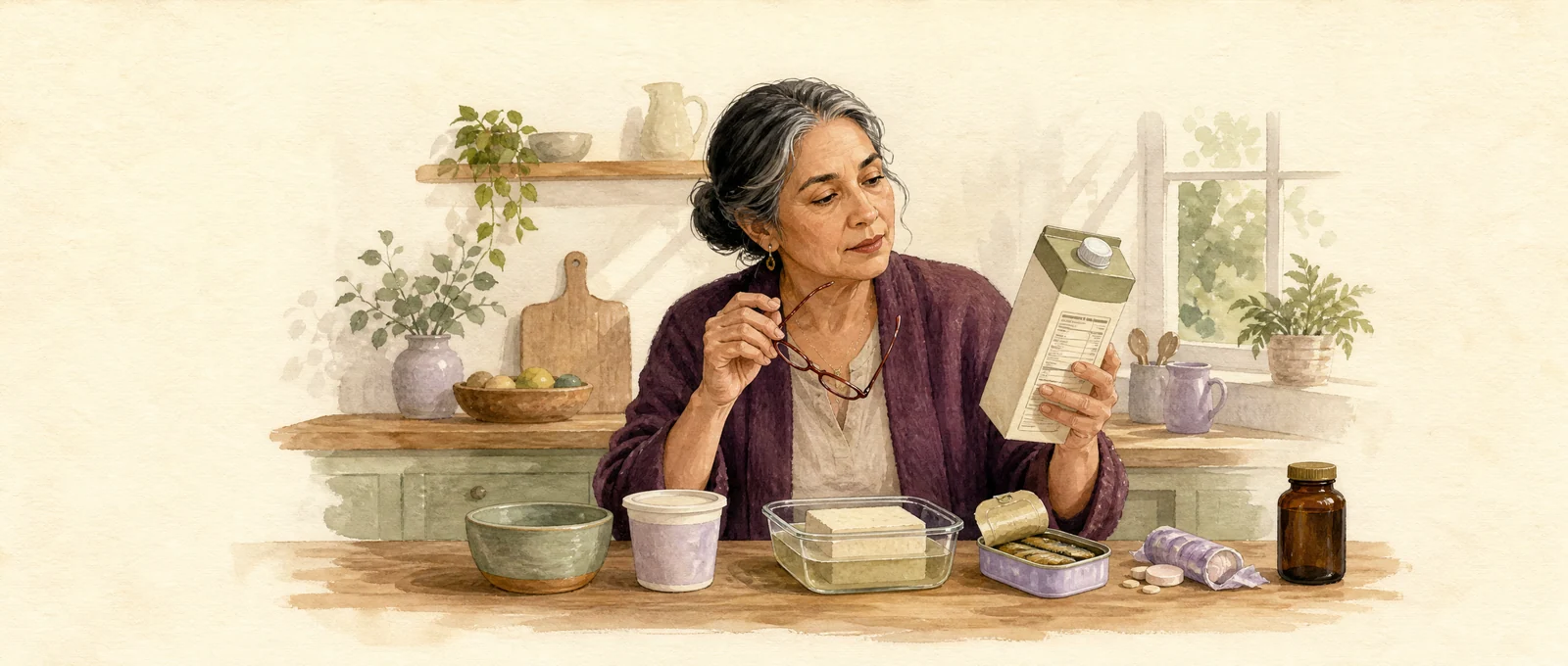
Look at foods you eat regularly, not just foods you occasionally buy. Milk, yogurt, cheese, calcium-fortified drinks, tofu made with calcium sulfate, and canned sardines or salmon with bones can all contribute. If you avoid dairy, check whether fortified foods or other calcium sources have taken its place. For example, a fortified soy drink may contribute calcium, but the label tells you how much is in the one you actually use. 2
If you’re considering a supplement, check what you already take. Some antacids contain calcium, and calcium supplements can cause gas, bloating, or constipation. Counting all sources is more useful than choosing a product because its front label mentions bone health. 2
Vitamin D: intake is not the same as status
Vitamin D status affects calcium absorption, and recommended vitamin D intake for adults varies with age within a range of 15 to 20 mcg (600 to 800 IU) daily. This target concerns dietary intake, including supplements, not vitamin D made through sun exposure. It isn’t a recommendation that every woman over 50 take a vitamin D pill. 2 3
Few foods naturally contain much vitamin D. Fatty fish is one source; fortified milk, some plant-based drinks, and certain cereals are others. Fortification varies, so check the foods you use. Older adults make less vitamin D from sunlight, but season and skin pigmentation also affect production. More sun exposure isn’t a simple nutrition plan because ultraviolet radiation can damage skin. 3
Food intake and vitamin D status aren’t the same thing: sunlight also contributes, so a food record alone doesn’t establish your vitamin D level. If you’re concerned about your status, ask whether a blood test is relevant to your situation and what you’d do differently based on the result. The question is about a specific concern, not a test or supplement automatically required by age. 3
B12 is a food-pattern question
If you eat little or no animal-derived food, vitamin B12 deserves a specific look. MedlinePlus notes that people eating a vegetarian diet may need a B12 supplement. That’s a diet-related consideration, not a change tied to menopause. 1
Make the supplement question specific
Before buying anything, name the nutrient and the reason you’re considering it. A woman who rarely eats dairy or fortified alternatives has a different calcium question from someone whose usual foods provide several sources. Someone eating a vegetarian diet has a more specific B12 question than someone shopping for a general “energy” multivitamin. These examples point to what to review; they aren’t diagnoses. 1 2
Your medicines and health situation belong in that review, too. Check the labels of supplements and antacids you already use, since some antacids contain calcium. If you take regular medicines, have a health concern that affects your food choices, or have been told a nutrient is low, ask about that specific nutrient and product rather than adding a broad supplement by default. High doses of some vitamins can cause problems. 1 2
For calcium, stomach acid can matter when choosing a supplement: calcium carbonate is less easily absorbed when stomach acid is low, while calcium citrate is less dependent on stomach acid. That’s a reason to ask whether a particular form fits your circumstances, not a reason to change or stop a medicine on your own. 2
A useful next step is to bring your usual food pattern and the labels of products you take to the conversation. For a vitamin D concern, ask whether testing would answer a real question; for calcium, compare your regular food sources with the age-based total target. Either way, a targeted question is more useful than assuming menopause calls for a multivitamin. 1 2 3
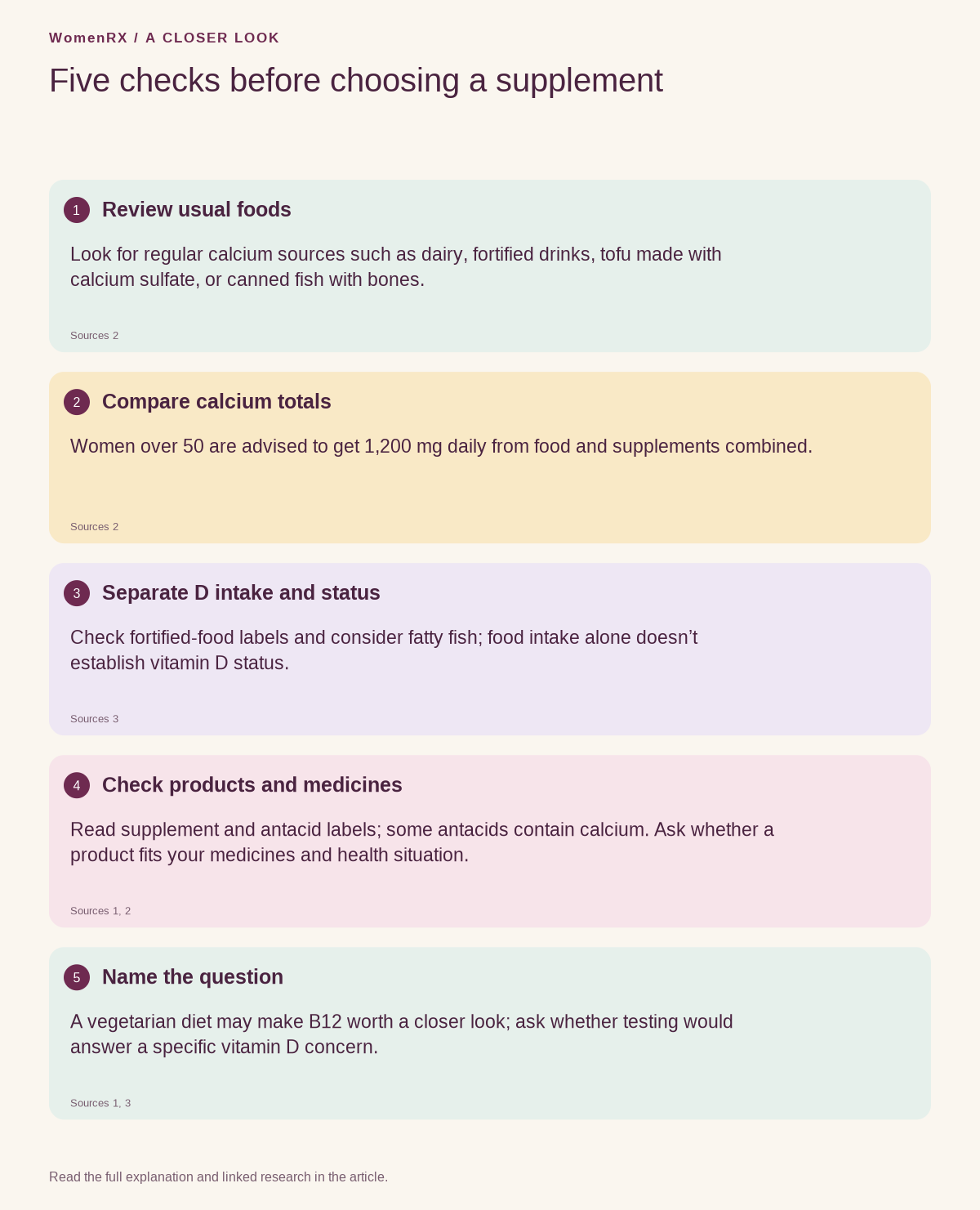
Five checks before choosing a supplement
Review usual foods: Look for regular calcium sources such as dairy, fortified drinks, tofu made with calcium sulfate, or canned fish with bones.2
Compare calcium totals: Women over 50 are advised to get 1,200 mg daily from food and supplements combined.2
Separate D intake and status: Check fortified-food labels and consider fatty fish; food intake alone doesn’t establish vitamin D status.3
Check products and medicines: Read supplement and antacid labels; some antacids contain calcium. Ask whether a product fits your medicines and health situation.12
Name the question: A vegetarian diet may make B12 worth a closer look; ask whether testing would answer a specific vitamin D concern.13
Read the figure as text
Use these prompts to identify the nutrient question you’re trying to answer. They aren’t a diet score or a diagnosis.- Review usual foods: Look for regular calcium sources such as dairy, fortified drinks, tofu made with calcium sulfate, or canned fish with bones.2
- Compare calcium totals: Women over 50 are advised to get 1,200 mg daily from food and supplements combined.2
- Separate D intake and status: Check fortified-food labels and consider fatty fish; food intake alone doesn’t establish vitamin D status.3
- Check products and medicines: Read supplement and antacid labels; some antacids contain calcium. Ask whether a product fits your medicines and health situation.12
- Name the question: A vegetarian diet may make B12 worth a closer look; ask whether testing would answer a specific vitamin D concern.13
More questions, answered
Does menopause mean I need a calcium supplement?
No. Menopause changes how the body handles calcium, and the recommended intake for women rises to 1,200 mg daily after age 50. Food and supplements both count toward that total, so first look at what your usual foods provide. 2
If I get little vitamin D from food, does that mean I’m deficient?
Not necessarily. Sunlight also affects vitamin D status, so food intake alone doesn’t establish your level. If you’re concerned, ask whether a blood test would answer a useful question and whether the result would change what you do. 3
Sources you can check
- Vitamins: MedlinePlusAccessed 2026-09-25Return to first citation
- Calcium - Health Professional Fact SheetAccessed 2026-09-25Return to first citation
- Vitamin D - Health Professional Fact SheetAccessed 2026-09-25Return to first citation