Calcium After 40: Do You Need a Supplement?
Turning 40 doesn’t change your calcium target, but your diet and bone history may change what you do next.
No. Turning 40 alone isn’t a reason to start a calcium supplement. The recommended daily total is 1,000 mg for women through age 50 and 1,200 mg from ages 51 to 70. Those totals include food and supplements. Check what you usually eat first; if you’ve had a fracture after minor trauma or have osteoporosis, consider calcium as one part of your bone-health care, not the whole plan. 14
Forty isn’t a calcium cutoff
The recommended daily calcium intake for women stays at 1,000 mg from ages 19 through 50. It rises to 1,200 mg at 51. These are total intake targets, not amounts to take as supplements. If food already supplies enough, turning 40 doesn’t create a new gap for a pill to fill. 1
Menopause follows a different clock from those age-based targets. You might still have periods at 51, or you might be postmenopausal before then; neither changes the age category used for the calcium recommendation. After menopause, lower estrogen reduces calcium absorption and increases calcium loss in urine and the release of calcium from bone. That makes bone health worth attention, but it doesn’t mean a supplement is automatically the right response. 1
See what your usual food adds up to
Start with a few ordinary days, rather than your most calcium-conscious day. Include drinks, snacks, fortified foods, and any supplement you already take. For example, a cup of milk or calcium-fortified soy milk provides about 300 mg in the NIH Office of Dietary Supplements food table, while an 8-ounce serving of plain low-fat yogurt provides 415 mg. Products and portions can differ, so check the label on what you actually use. 1
Dairy isn’t the only route. Calcium-fortified drinks and cereals, tofu made with calcium sulfate, and canned sardines or salmon with edible bones can contribute. Some greens do too, although the amount per serving and how much your body absorbs vary. If you avoid dairy, it’s especially useful to check whether your regular alternatives are fortified: tofu made without calcium salts, for instance, may provide little calcium. 1
If that review shows a consistent shortfall, you can weigh food changes against a supplement that fills the gap. A full supplement on top of an already adequate diet answers a different question and may add side effects without addressing another cause of bone risk. Calcium supplements can cause gas, bloating, or constipation. 12
Enough calcium isn’t the same as fracture protection
Calcium helps maintain bone, but studies of supplements and fractures don’t support a promise that calcium pills alone will prevent fractures for a woman in her 40s. A review of seven randomized trials found fewer hip fractures with calcium plus vitamin D in adults over 65. Those trials studied an older population and a combined intervention; the review did not report a women-in-their-40s result. 13
A 2013 U.S. Preventive Services Task Force statement reached a more cautious conclusion for routine primary prevention in community-dwelling postmenopausal women without a fracture history. It recommended against lower-dose combined calcium and vitamin D for that purpose and found insufficient evidence to judge the balance of benefits and harms at higher doses. That doesn’t conflict neatly with the older-adult review: the populations and questions differ. The statement also did not address treatment for osteoporosis or vitamin D deficiency. 4
Choose the next step by the question you have
If you’re wondering whether your diet covers your needs: Compare a few typical days with your age-based total. Look at food labels before deciding you need a supplement, particularly if you use fortified drinks or already take a multivitamin containing calcium. Supplement Facts labels list the amount of calcium a product supplies. 1
If you’re postmenopausal: Pay attention to calcium intake, but keep intake and fracture risk separate. The changes after menopause affect bone even when a birthday hasn’t changed your calcium target. Whether a supplement helps fill a dietary gap is not the same question as whether you need care for bone loss. 14
If you’ve had a fracture after a small fall or have osteoporosis: Don’t use the general supplement advice for people without a fracture history as your whole plan. A fracture after minor trauma, such as a fall from standing height, is a fragility fracture; the Task Force’s primary-prevention statement doesn’t apply to people with prior fractures or to osteoporosis treatment. Ask how your calcium intake fits the bone-health care you need. 14
That distinction is the useful one: age sets a general intake target, your meals show whether there’s a gap, and your bone history may raise a question that a supplement purchase can’t settle. 14
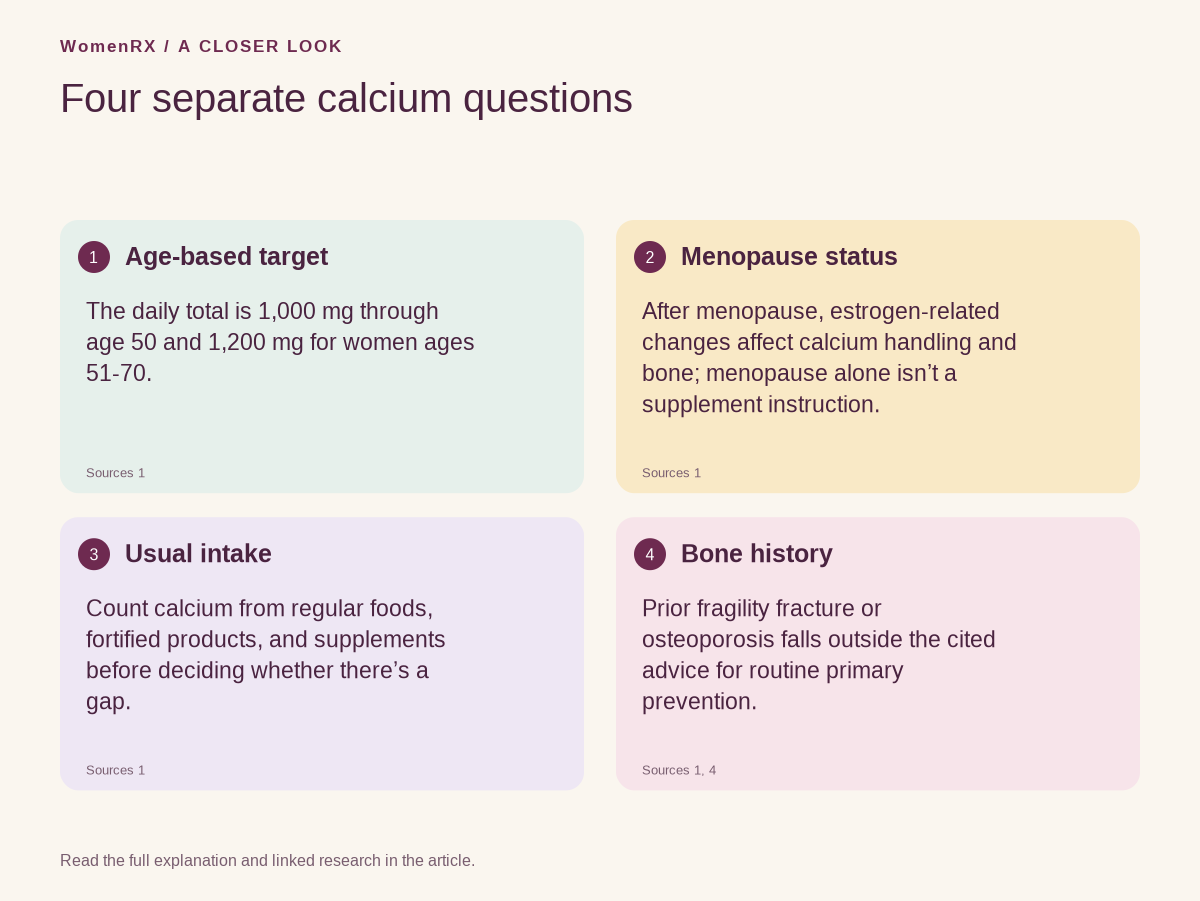
Four separate calcium questions
Age-based target: The daily total is 1,000 mg through age 50 and 1,200 mg for women ages 51-70.1
Menopause status: After menopause, estrogen-related changes affect calcium handling and bone; menopause alone isn’t a supplement instruction.1
Usual intake: Count calcium from regular foods, fortified products, and supplements before deciding whether there’s a gap.1
Bone history: Prior fragility fracture or osteoporosis falls outside the cited advice for routine primary prevention.14
Read the figure as text
These considerations relate to one another, but none can stand in for the others.- Age-based target: The daily total is 1,000 mg through age 50 and 1,200 mg for women ages 51-70.1
- Menopause status: After menopause, estrogen-related changes affect calcium handling and bone; menopause alone isn’t a supplement instruction.1
- Usual intake: Count calcium from regular foods, fortified products, and supplements before deciding whether there’s a gap.1
- Bone history: Prior fragility fracture or osteoporosis falls outside the cited advice for routine primary prevention.14
More questions, answered
Does menopause raise my calcium target before age 51?
The recommended total remains 1,000 mg a day through age 50. After menopause, changes in calcium absorption and bone loss deserve attention, but menopause itself does not change the age-based intake category. 1
Sources you can check
- Calcium - Health Professional Fact SheetAccessed 2026-09-25Return to first citation
- Calcium | MedlinePlusAccessed 2026-09-25Return to first citation
- What is the impact of daily oral supplementation of vitamin D3 (cholecalciferol) plus calcium on the incidence of hip fracture in older people? A systematic review and meta-analysis.Manoj P, Derwin R, George S. · International journal of older people nursing · 2023Return to first citation
- Vitamin D and calcium supplementation to prevent fractures in adults: U.S. Preventive Services Task Force recommendation statement.Moyer VA, U.S. Preventive Services Task Force*. · Annals of internal medicine · 2013Return to first citation