When Might Menopause Hormone Therapy Start Easing Symptoms?
Hot flashes may ease over the first few weeks, but the timing depends on the symptom and treatment, so compare changes with your own starting point.
There’s no exact day when you should expect to feel a difference. In a study of postmenopausal women with frequent, moderate-to-severe hot flashes, specific oral hormone treatments worked better than placebo at weeks 4 and 12. 12 Track each symptom over the first few weeks, and contact your prescriber if relief is limited or side effects are troublesome. You don’t need to wait until week 12.
What the hot-flash studies can tell you
The clearest timing evidence comes from the HOPE study. Its hot-flash analysis included postmenopausal women who had at least seven moderate-to-severe hot flashes a day, or at least 50 a week, before treatment. Specific oral conjugated-estrogen treatments, with or without medroxyprogesterone, reduced hot-flash frequency and severity more than placebo at weeks 4 and 12. 12
Those were the weeks researchers measured results, not the first days participants felt better. The findings don’t give a reliable onset date for an individual, or establish the same timeline for a patch, gel, or other formulation. They also don’t provide a separate timeline for someone still in perimenopause. 12
Look for change in the symptom you’re treating
Hot flashes and night sweats are worth tracking together, but sleep deserves its own note. If you’re waking less often drenched in sweat yet still lying awake, that’s useful information: sleep problems around menopause can have several contributors. A review finds that hormone therapy’s benefits for sleep are less consistent than its benefits for hot flashes. 3
Keep vaginal dryness or discomfort separate, too. The HOPE results measured hot flashes; they can’t tell you when vaginal symptoms should improve. 12 One symptom getting better doesn’t mean you have to describe the whole treatment as working, or not working.
A practical check-in plan
At the start of treatment, or when your prescription changes, jot down the treatment name and route. Then make a short note of your main symptoms: for example, how often hot flashes interrupt your day, whether night sweats wake you, and whether vaginal discomfort affects daily life or sex. Note new or bothersome effects alongside them. A phone note is enough.
Over the first few weeks, compare with that starting point. Are episodes less frequent, less disruptive, or much the same? You’re looking for a pattern, not judging the treatment by one unusually good or bad day.
If you’re approaching four weeks with little meaningful relief, arrange a routine conversation with your prescriber. Week four is a useful point to take stock because it was an assessment point in the oral-treatment study, not because everyone should have improved by then. You can discuss which symptom remains troublesome, whether the treatment or formulation needs reassessment, and whether something else might explain it. Don’t treat the study’s week-12 assessment as a reason to put off that conversation. 12
Reach out sooner if side effects are troublesome or symptoms are difficult to manage. Don’t adjust a prescription on your own while trying to work out whether it’s helping. If you’re postmenopausal and have unusual vaginal bleeding while using estrogen, report it promptly so the cause can be checked. 1
A suspected stroke or blood clot is different from a routine treatment concern: seek urgent medical care rather than waiting for a follow-up. The prescribing information for these estrogen products calls for immediate discontinuation if either occurs or is suspected. 12
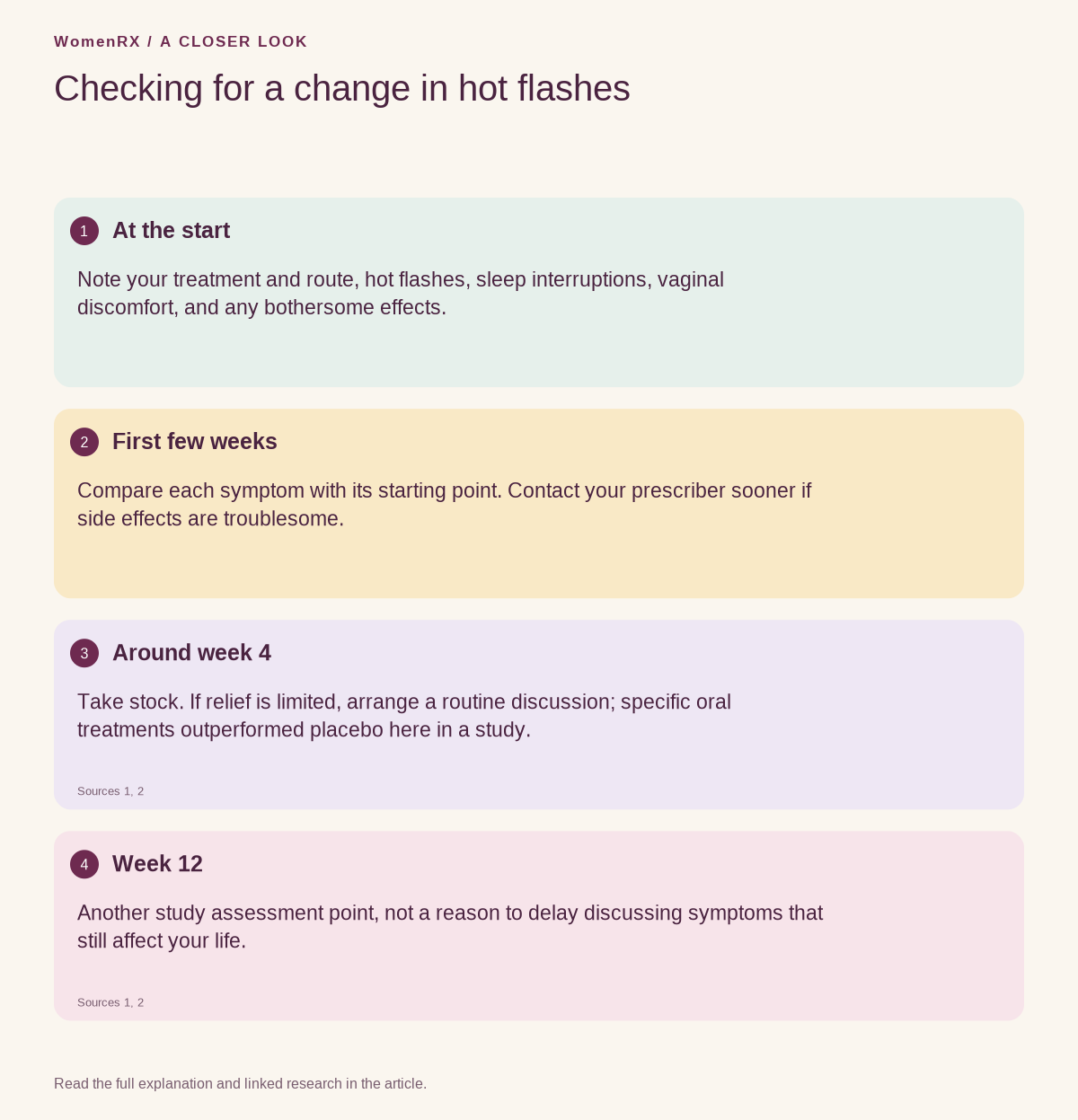
Checking for a change in hot flashes
At the start: Note your treatment and route, hot flashes, sleep interruptions, vaginal discomfort, and any bothersome effects.
First few weeks: Compare each symptom with its starting point. Contact your prescriber sooner if side effects are troublesome.
Around week 4: Take stock. If relief is limited, arrange a routine discussion; specific oral treatments outperformed placebo here in a study.12
Week 12: Another study assessment point, not a reason to delay discussing symptoms that still affect your life.12
Read the figure as text
A personal check-in plan alongside the assessment points from a study of specific oral treatments. The plan is not a guaranteed response timeline.- At the start: Note your treatment and route, hot flashes, sleep interruptions, vaginal discomfort, and any bothersome effects.
- First few weeks: Compare each symptom with its starting point. Contact your prescriber sooner if side effects are troublesome.
- Around week 4: Take stock. If relief is limited, arrange a routine discussion; specific oral treatments outperformed placebo here in a study.12
- Week 12: Another study assessment point, not a reason to delay discussing symptoms that still affect your life.12
More questions, answered
Would a hormone blood test show whether treatment is working?
Not reliably for symptom management. Prescribing information says FSH and estradiol blood levels have not been shown useful for managing moderate-to-severe hot flashes or vulvar and vaginal atrophy symptoms. What you’re experiencing is more useful to describe at a symptom-relief review. 12
Sources you can check
- PREMARIN (ESTROGENS, CONJUGATED) TABLET, FILM COATED [WYETH PHARMACEUTICALS LLC, A SUBSIDIARY OF PFIZER INC.] | US prescribing information and patient instructionsAccessed 2026-09-25Return to first citation
- PREMPHASE (CONJUGATED ESTROGENS AND MEDROXYPROGESTERONE ACETATE) KIT PREMPRO (CONJUGATED ESTROGENS AND MEDROXYPROGESTERONE ACETATE) TABLET, SUGAR COATED [WYETH PHARMACEUTICALS LLC, A SUBSIDIARY OF PFIZER INC.] | US prescribing information and patient instructionsAccessed 2026-09-25Return to first citation
- Sleep Disturbances during Menopause: Mechanisms and Management Approaches.Terauchi M. · Journal of menopausal medicine · 2026Return to first citation