Night Sweats: When Menopause May Not Be the Whole Story
Menopause can cause night sweats, but repeated soaking sweats or other symptoms deserve a closer look.
Night sweats can happen during perimenopause and menopause, especially alongside hot flashes, but sweating alone doesn’t establish the cause. If you regularly wake with soaking-wet clothes or bedding in a cool room, or the sweats concern you, arrange a medical assessment. Feverish chills, cough, diarrhea, or unexplained weight loss are additional reasons to get checked. 1 2
Night sweats can fit the menopause transition, but the pattern matters. Occasional sweating in a warm room or under heavy bedding is different from repeatedly waking with soaked clothes or sheets when your room is cool. Menopause is one possible explanation, not a diagnosis you can make from sweating alone. 1 2
What a menopause-related pattern can look like
Perimenopause is the transition before menopause. Hormonal fluctuations during this time can bring vasomotor symptoms, including hot flashes and night sweats; these symptoms can continue around menopause. 2 3
A pattern that occurs with hot flashes during the menopause transition may be compatible with menopause. But context helps: consider whether your periods have become irregular, whether you also have hot flashes, and whether the sweating is part of a broader change rather than a single unexplained symptom. These clues can help describe the pattern, but they don’t prove the cause. 2 3
When to look beyond menopause
It’s worth arranging an assessment if you regularly wake because your clothes or bedding are soaking wet, even when the room is cool. The same goes if the sweats worry you, or if they occur with a very high temperature, feeling hot and cold or shivery, a cough, diarrhea, or weight loss you can’t explain. 1
These symptoms don’t identify one particular illness. They do mean it’s sensible to review the whole picture rather than assume the sweats are hormonal. A clinician may ask when the sweating began, how often it happens, whether you have other symptoms, and what medicines you take. Medicines can sometimes be considered as a possible contributor; don’t change a prescription on your own. 1
Other common reasons listed for night sweats include anxiety, alcohol or drug use, and hyperhidrosis, a condition that causes excessive sweating more generally. Sometimes no cause is identified. A broader assessment can help sort through possibilities without treating every night sweat as a sign of something serious. 1
A practical way to decide what to do
First, consider the setting: are you too warm because of the room or bedding, or are you soaking through clothes and sheets despite a cool sleeping space? Then look at frequency and context: is this recurring, concerning, or happening alongside hot flashes and changes associated with perimenopause? Finally, check for accompanying symptoms such as feverish chills, cough, diarrhea, or unexplained weight loss. 1 2
If the sweats are regular, disruptive, or worrying, make an appointment to discuss them. If they come with the additional symptoms above, mention those when you arrange care. You don’t need to decide in advance whether menopause is responsible. A clear description of the pattern and any medicines you take gives the clinician a useful place to start. 1
What an assessment can help clarify
The point of getting checked isn’t to assume the worst. It’s to consider whether the pattern fits the menopause transition, whether another common factor could be involved, and whether other symptoms need attention. If a medicine seems like a possible cause, a clinician can assess that and discuss whether a change is appropriate. 1
Menopause may be part of the explanation, particularly when night sweats occur with hot flashes during the transition. But repeated soaking sweats, especially with other symptoms, are a good reason to keep the explanation open until you’ve had a review. 1 2
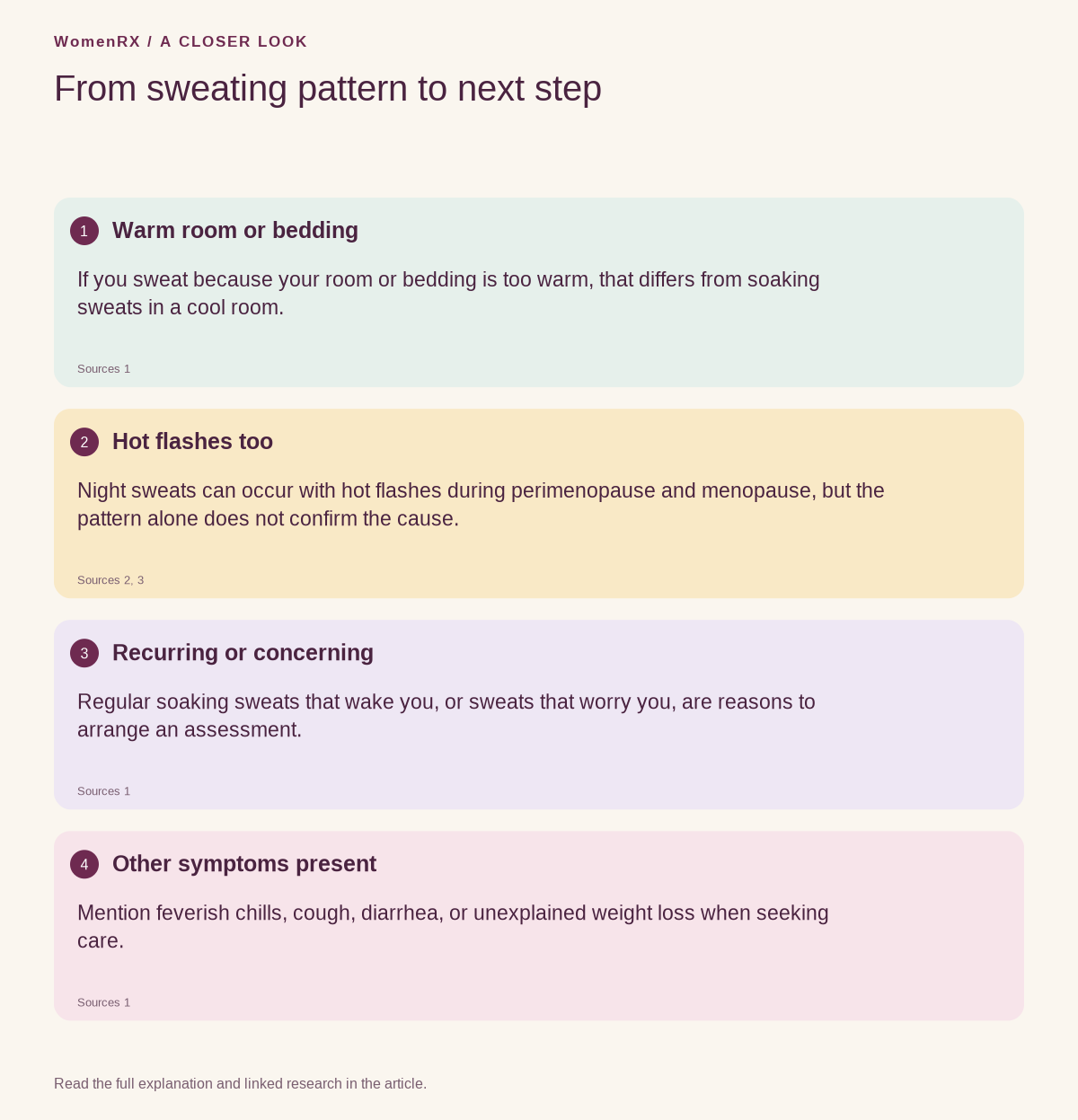
From sweating pattern to next step
Warm room or bedding: If you sweat because your room or bedding is too warm, that differs from soaking sweats in a cool room.1
Hot flashes too: Night sweats can occur with hot flashes during perimenopause and menopause, but the pattern alone does not confirm the cause.23
Recurring or concerning: Regular soaking sweats that wake you, or sweats that worry you, are reasons to arrange an assessment.1
Other symptoms present: Mention feverish chills, cough, diarrhea, or unexplained weight loss when seeking care.1
Read the figure as text
Use the setting, recurrence, and accompanying symptoms to decide whether to arrange an assessment.- Warm room or bedding: If you sweat because your room or bedding is too warm, that differs from soaking sweats in a cool room.1
- Hot flashes too: Night sweats can occur with hot flashes during perimenopause and menopause, but the pattern alone does not confirm the cause.23
- Recurring or concerning: Regular soaking sweats that wake you, or sweats that worry you, are reasons to arrange an assessment.1
- Other symptoms present: Mention feverish chills, cough, diarrhea, or unexplained weight loss when seeking care.1
Sources you can check
- Night sweats - NHSAccessed 2026-09-25Return to first citation
- Perimenopause and Lifestyle Medicine: A Window of Opportunity.Pangalangan JML, Tollefson M. · American journal of lifestyle medicine · 2026Return to first citation
- A systematic review of community pharmacy interventions to improve peri- and post-menopausal health.Chow H, Righton O, Berry H, Bell Z, Flynn AC. · Post reproductive health · 2024Return to first citation