Night Sweats: When Menopause May Be the Cause
Menopause can bring hot flashes that wake you sweaty, but repeated soaking sweats deserve attention even when menopause seems likely.
Menopause is one common cause of night sweats, especially when episodes feel like hot flashes, but a warm room, medicines, anxiety, alcohol or other causes may also play a part. If you regularly wake with soaking clothes or bedding in a cool room, or have fever, cough, diarrhea or unexplained weight loss, arrange a medical assessment. 1
Start with the pattern, not the assumption
Sweating because your room or bedding is too warm is different from night sweats that soak your clothes or sheets even when the room is cool. Menopause-related hot flashes are a common cause of the latter, but they aren’t the only one. Anxiety, alcohol or drug use, and a condition called hyperhidrosis, which causes excessive sweating more generally, are also among the recognized possibilities. Sometimes no cause is identified. 1
A menopause connection is more plausible when the sweating comes in episodes that feel like hot flashes during the menopausal transition. Still, a menopause stage by itself doesn’t explain every sleep problem. In a small five-year study of 81 women, sleep quality differed only marginally between menopause groups, and sleep disturbance was also associated with factors such as depressive symptoms, general health, and medicines affecting the central nervous system. That study can’t establish the cause of an individual woman’s symptoms, but it’s a reminder to look at the whole pattern. 4
What to notice when you wake
For a short stretch, notice whether the room or bedding feels unusually warm, whether you’re waking soaked despite a cool room, and whether the episodes feel like hot flashes. Also note any new medicines or changes in what you take, and whether you have other symptoms. These observations can help distinguish simple overheating from a recurring symptom that needs assessment; they aren’t a way to diagnose the cause yourself.
If the room or bedding seems to be making you too hot, adjusting it so you’re more comfortable is a sensible first step. That may address environmental overheating, but it shouldn’t be mistaken for a treatment for menopause-related hot flashes. Cooling techniques haven’t been recommended as a treatment for menopausal vasomotor symptoms in the North American Menopause Society’s evidence review. 13
When to arrange an assessment
Make an appointment if soaking night sweats regularly wake you or worry you, particularly when they happen in a cool room. Mention medicines you take, since a medicine may be a contributor and a clinician can consider whether it needs to be changed. Don’t stop a prescribed medicine on your own. 1
Arrange an assessment if the sweats come with a very high temperature, feeling hot and cold or shivery, a cough, diarrhea, or unexplained weight loss. These symptoms don’t identify a specific cause by themselves, but they’re reasons not to assume the sweating is menopause. 1
If hot flashes are disrupting sleep
When the pattern fits bothersome menopause-related hot flashes, there are treatments that target the hot flashes themselves, rather than relying on sleep habits alone. Menopausal hormone therapy is the most effective treatment for vasomotor symptoms. Its potential benefits and risks vary with factors including age, timing, type, route, and whether a progestogen is used, so treatment decisions are individualized. 2
For women who prefer not to use hormone therapy or aren’t good candidates for it, evidence-supported nonhormonal options include cognitive behavioral therapy and certain prescription treatments. Cognitive behavioral therapy can reduce how bothersome hot flashes and night sweats feel and can also improve sleep outcomes; it isn’t the same as claiming that ordinary sleep-hygiene changes will stop the sweats. 35
The practical distinction is this: make the room comfortable if it’s too warm, but treat recurring soaking episodes in a cool room as a symptom worth understanding. If hot flashes seem to be the reason, ask about options that address them; if the pattern or accompanying symptoms point elsewhere, assessment can help check for another cause.
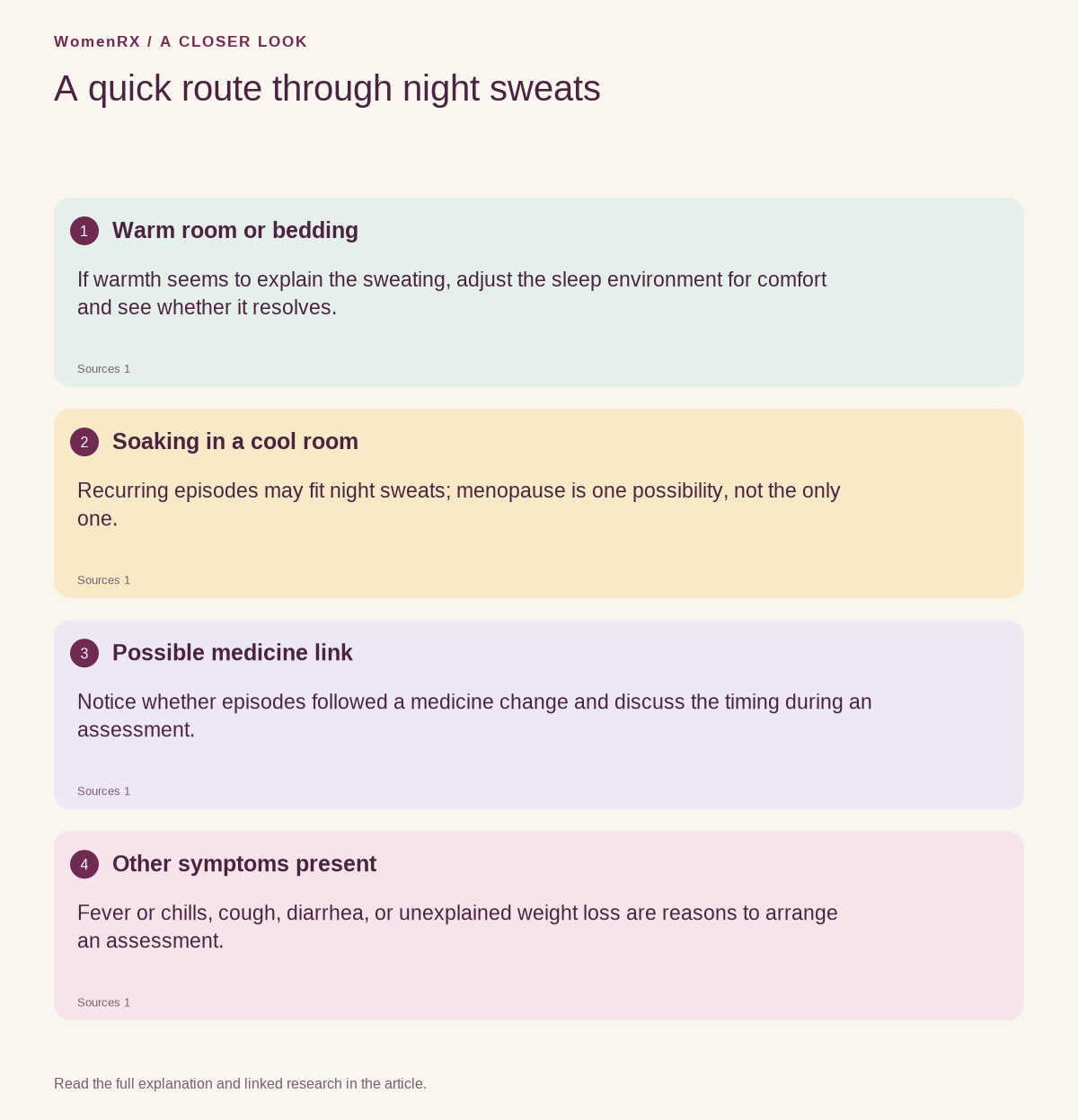
A quick route through night sweats
Warm room or bedding: If warmth seems to explain the sweating, adjust the sleep environment for comfort and see whether it resolves.1
Soaking in a cool room: Recurring episodes may fit night sweats; menopause is one possibility, not the only one.1
Possible medicine link: Notice whether episodes followed a medicine change and discuss the timing during an assessment.1
Other symptoms present: Fever or chills, cough, diarrhea, or unexplained weight loss are reasons to arrange an assessment.1
Read the figure as text
Use the pattern and any accompanying symptoms to choose a sensible next step; this flow can guide attention but cannot identify a diagnosis.- Warm room or bedding: If warmth seems to explain the sweating, adjust the sleep environment for comfort and see whether it resolves.1
- Soaking in a cool room: Recurring episodes may fit night sweats; menopause is one possibility, not the only one.1
- Possible medicine link: Notice whether episodes followed a medicine change and discuss the timing during an assessment.1
- Other symptoms present: Fever or chills, cough, diarrhea, or unexplained weight loss are reasons to arrange an assessment.1
More questions, answered
Can a medicine cause night sweats?
Yes. Medicines are one possible contributor. If the sweating began after starting or changing a medicine, mention the timing during an assessment; don’t stop a prescribed medicine without advice. 1
Will cooling techniques stop menopause-related night sweats?
A comfortable room can help if heat or bedding is making you sweat, but cooling techniques aren’t recommended as a treatment for menopausal vasomotor symptoms in the North American Menopause Society’s evidence review. 13
Sources you can check
- Night sweats - NHSAccessed 2026-09-25Return to first citation
- The 2022 hormone therapy position statement of The North American Menopause Society.“The 2022 Hormone Therapy Position Statement of The North American Menopause Society” Advisory Panel. · Menopause (New York, N.Y.) · 2022Return to first citation
- The 2023 nonhormone therapy position statement of The North American Menopause Society.Menopause (New York, N.Y.) · 2023Return to first citation
- Predictors of sleep disturbance in menopausal transition.Lampio L, Saaresranta T, Engblom J, Polo O, Polo-Kantola P. · Maturitas · 2016Return to first citation
- The effectiveness of psychosocial interventions on physiological symptoms of menopause: a systematic review and meta-analysis.Robinson K, Hardy R, Melville M, Saidel S, Desai R, Spector A. · BMC women's health · 2026Return to first citation