Night Sweats: When Might Menopause Be the Cause?
A familiar wave of heat followed by sweating may fit a menopause-related hot flash, but recurring soaking sweats or other symptoms are worth checking.
Night sweats can be part of menopause-related hot flashes, including during perimenopause, but sweating at night doesn’t confirm a hormonal cause. Notice whether it comes with a familiar wave of heat, whether your room or bedding is warm, and whether you have other symptoms or a recent medication change. If you regularly wake with soaking clothes or sheets, arrange a check. 1 2
When sweating may fit a hot flash
Night sweats can be one part of a vasomotor symptom, the clinical term used for hot flashes and related episodes of sweating. If you wake during a familiar wave of heat and then feel sweaty, menopause is one plausible explanation. This can apply during perimenopause as well as after menopause; a small trial included peri- and postmenopausal women experiencing hot flashes and night sweats. That pattern can be a clue, not a diagnosis. 1 2
Menopause is only one possibility. A warm room or heavy bedding can make you sweat without a hot flash. Anxiety, alcohol or drug use, and hyperhidrosis, which causes excessive sweating more generally, are other possibilities. Some medicines may contribute too. A primary-care review also lists mood disorders, reflux, an overactive thyroid and obesity among conditions associated with persistent night sweats. 1 3
Compare the whole pattern, not just the word “sweats”
People may use “night sweats” to describe anything from feeling warm to waking with soaked clothes. The NHS describes night sweats as sweating enough to soak nightclothes or bedding even though the sleeping space is cool. How often it happens, whether it comes with a recognizable hot-flash feeling, and whether you feel unwell in other ways all add context. None of these details can identify the cause by themselves. 1
A quick mental check can help sort the possibilities:
- Hot-flash-like episode: Does a wave of heat come before or alongside the sweating? That can fit a vasomotor symptom.
- Warm sleep setting: Is the room, bedding or sleepwear making you too hot?
- A broader pattern: Do you sweat heavily at other times, or has a medicine recently started or changed?
- Other symptoms: Are you also feeling hot, cold or shivery, coughing, having diarrhea, or losing weight without trying?
These are useful observations to share, not a home test. 1 3
When to arrange a check
Arrange a medical check if you regularly wake with soaking-wet clothes or bedding, or if the sweating worries you. It also merits a check if it comes with a very high temperature, feeling hot, cold or shivery, a cough, diarrhea, or unexplained weight loss. These features don’t prove that something serious is wrong, but they make it unwise to assume menopause is the explanation. 1
Persistent night sweats can have several causes, and a primary-care review reports that most people who report them in that setting do not have a serious underlying disorder. A clinician can use your symptoms and health history to decide whether further evaluation is needed. 3
Make a medication review more specific
If you suspect a medicine may be involved, note when the sweating began and whether it followed a start or change. Bring a current medication list to your appointment and ask whether any item could contribute. NHS guidance says a clinician may consider a different medicine if they think one is causing the sweats. 1
For a short period before a visit, you could also jot down whether you woke with soaked clothes or sheets, whether you felt a wave of heat, how warm the room seemed, and any other symptoms. This isn’t a validated tracking tool; it’s a practical way to describe the pattern clearly. The aim is not to label the cause on your own, but to give the conversation useful details.
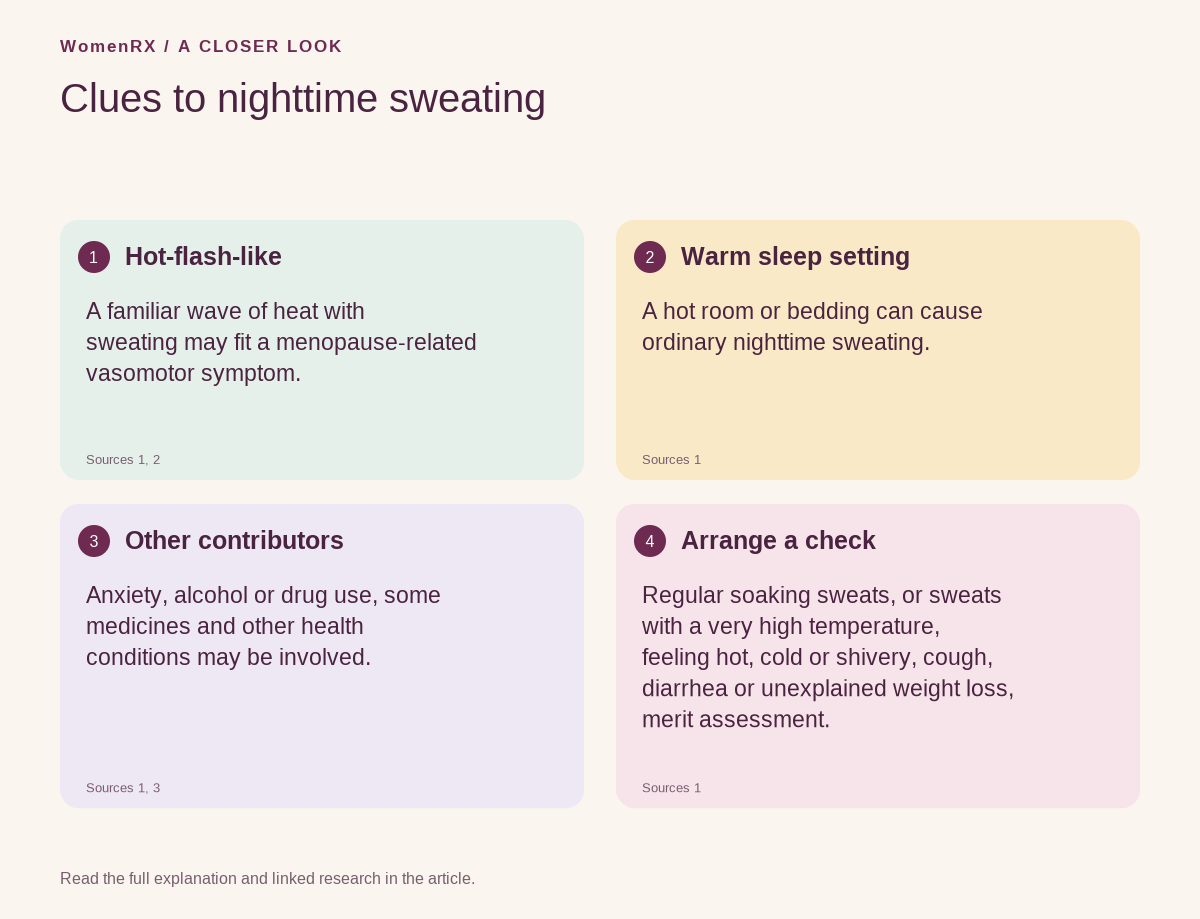
Clues to nighttime sweating
Hot-flash-like: A familiar wave of heat with sweating may fit a menopause-related vasomotor symptom.12
Warm sleep setting: A hot room or bedding can cause ordinary nighttime sweating.1
Other contributors: Anxiety, alcohol or drug use, some medicines and other health conditions may be involved.13
Arrange a check: Regular soaking sweats, or sweats with a very high temperature, feeling hot, cold or shivery, cough, diarrhea or unexplained weight loss, merit assessment.1
Read the figure as text
Compare the setting, the sensation and any accompanying symptoms. These clues can guide a conversation but cannot diagnose the cause.- Hot-flash-like: A familiar wave of heat with sweating may fit a menopause-related vasomotor symptom.12
- Warm sleep setting: A hot room or bedding can cause ordinary nighttime sweating.1
- Other contributors: Anxiety, alcohol or drug use, some medicines and other health conditions may be involved.13
- Arrange a check: Regular soaking sweats, or sweats with a very high temperature, feeling hot, cold or shivery, cough, diarrhea or unexplained weight loss, merit assessment.1
Sources you can check
- Night sweats - NHSAccessed 2026-09-25Return to first citation
- The effect of Chinese herbal medicines (CHM) on menopausal symptoms compared to hormone replacement therapy (HRT) and placebo.Kwee SH, Tan HH, Marsman A, Wauters C. · Maturitas · 2007Return to first citation
- Persistent Night Sweats: Diagnostic Evaluation.Bryce C. · American family physician · 2020Return to first citation