Night Sweats Around Menopause: What Pattern Fits?
Repeated episodes of sudden heat and sweating can be menopause-related, but soaking sweats have other possible causes too.
Menopause-related night sweats are often episodes of sudden heat and sweating that wake you, sometimes alongside hot flashes while you’re awake. They can happen during perimenopause or after menopause, and their frequency and impact vary. A warm room can also cause sweating; regularly waking with soaking clothes or sheets, especially with other symptoms, deserves medical assessment rather than an assumption that it’s menopause.
The pattern matters more than the name
A menopause-related night sweat is a vasomotor symptom: a sudden feeling of warmth, often around the face, neck, or chest, with sweating. The same type of episode can happen as a hot flash while you’re awake or disturb your sleep at night. Changes in estrogen around menopause are linked with these symptoms. They can occur during perimenopause and continue after menopause, but how often they happen and how disruptive they feel differ from woman to woman. 2 3 4
A single sweaty night after sleeping in a warm room or under heavy bedding is different from repeated episodes that wake you in a cool room. Night sweats can also have causes other than menopause, including anxiety, alcohol or drug use, a tendency to sweat excessively, and sometimes an unknown cause. Medicines can be another possibility, so mention any medicines you take when discussing a new or persistent pattern. 1
Compare the pattern and what comes with it
| What you notice | What it may suggest | A useful next step |
|---|---|---|
| Occasional sweating when the room or bedding is hot | The sleep environment may be making you too warm. | See whether adjusting the room or bedding changes the pattern. |
| Repeated sudden episodes of warmth and sweating around perimenopause or after menopause | Vasomotor symptoms are one possible explanation, particularly if episodes also happen as hot flashes while awake. | Notice whether the episodes recur and disrupt sleep; discuss bothersome symptoms and care options. |
| Regular soaking of sleepwear or sheets in a cool room | This meets a common description of night sweats and shouldn’t automatically be put down to menopause. | Arrange medical assessment, especially if the sweating is worrying or comes with other symptoms. |
| Sweating with feverishness or chills, cough, diarrhea, or unexplained weight loss | Another cause may need checking. | Seek medical assessment and describe the accompanying symptoms. 1 |
The table offers clues, not a way to diagnose the cause at home. A menopause-related pattern can still be worth addressing if it repeatedly breaks up your sleep; a different pattern can also warrant attention even if you’re at an age when menopause is possible.
When to get another cause checked
Consider contacting a healthcare professional if soaking sweats regularly wake you, worry you, or persist without a clear explanation. Do the same if they occur with feverishness or chills, a cough, diarrhea, or weight loss you can’t explain. These features don’t identify one particular illness, but they make it sensible to look beyond menopause. If a medicine might be contributing, the clinician can review it; don’t stop a prescribed medicine on your own. 1
If the pattern fits vasomotor symptoms, care has choices
If the episodes are affecting your sleep or quality of life, you don’t have to treat them as something you simply need to endure. Menopausal hormone therapy is the most effective treatment for vasomotor symptoms in the North American Menopause Society’s position statement. Whether it’s an appropriate option depends on individual factors, including age, time since menopause, and health risks; treatment decisions should be individualized and reviewed over time. 4
There are also nonhormonal approaches with evidence for vasomotor symptoms. The Society’s 2023 statement recommends cognitive behavioral therapy, clinical hypnosis, certain prescription antidepressants (SSRIs or SNRIs), gabapentin, and fezolinetant; it also supports oxybutynin with a somewhat lower evidence rating. These are options to discuss, not interchangeable treatments or a list of medicines that are right for everyone. 5
Fezolinetant is a nonhormonal prescription option for moderate to severe vasomotor symptoms due to menopause. In two 12-week placebo-controlled trials, postmenopausal participants taking it had fewer moderate-to-severe symptoms than participants taking placebo. The study population had at least seven such symptoms per day at the outset, so the findings don’t describe every woman with occasional night sweats. The US prescribing information calls for liver blood tests during treatment, making monitoring part of the decision. 2
A useful conversation can start with what is happening to you: whether episodes recur, whether they wake you, whether you also have hot flashes while awake, and how much sleep or daily life they interrupt. Then ask which options fit your health history and preferences, and what benefits, tradeoffs, and follow-up each would involve.
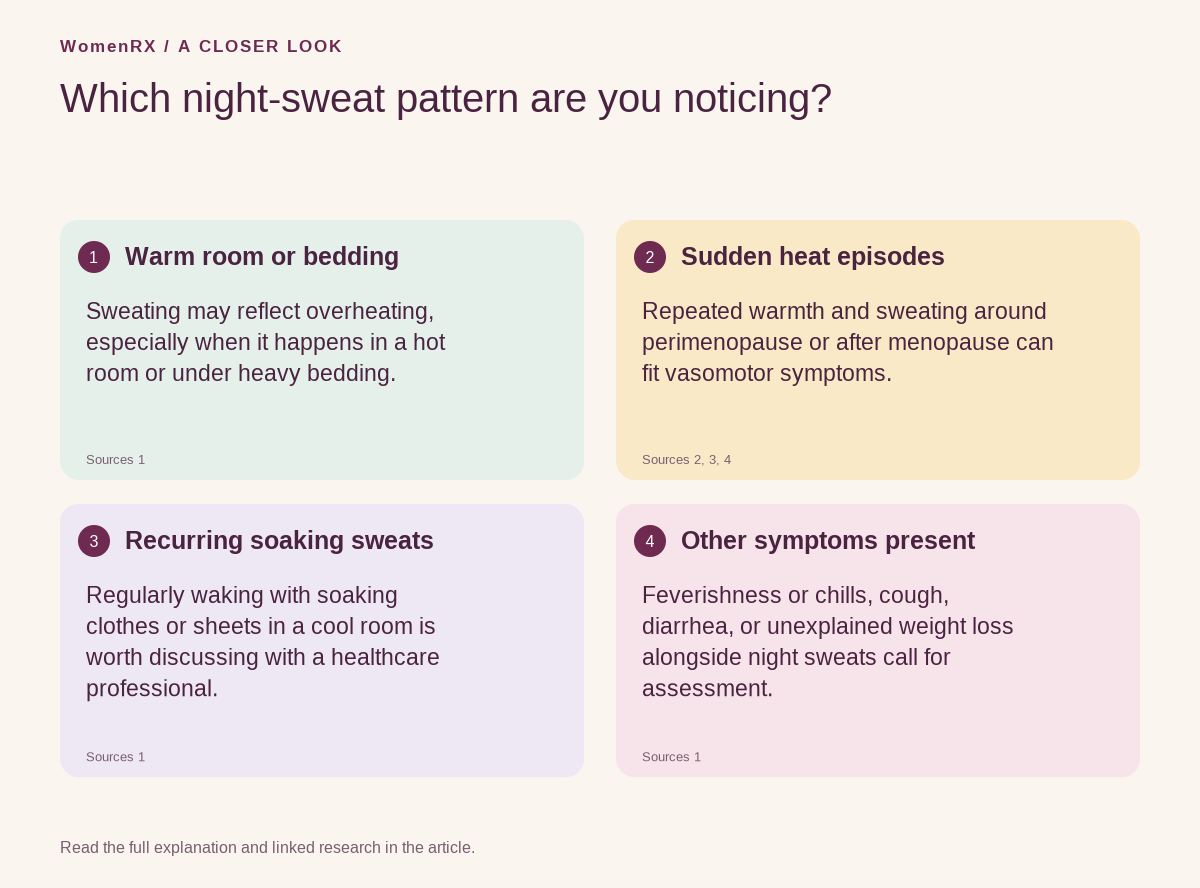
Which night-sweat pattern are you noticing?
Warm room or bedding: Sweating may reflect overheating, especially when it happens in a hot room or under heavy bedding.1
Sudden heat episodes: Repeated warmth and sweating around perimenopause or after menopause can fit vasomotor symptoms.234
Recurring soaking sweats: Regularly waking with soaking clothes or sheets in a cool room is worth discussing with a healthcare professional.1
Other symptoms present: Feverishness or chills, cough, diarrhea, or unexplained weight loss alongside night sweats call for assessment.1
Read the figure as text
Compare the sleep setting, recurrence, and accompanying symptoms. These are clues for deciding whether to discuss vasomotor symptoms or get another cause checked, not a diagnosis.- Warm room or bedding: Sweating may reflect overheating, especially when it happens in a hot room or under heavy bedding.1
- Sudden heat episodes: Repeated warmth and sweating around perimenopause or after menopause can fit vasomotor symptoms.234
- Recurring soaking sweats: Regularly waking with soaking clothes or sheets in a cool room is worth discussing with a healthcare professional.1
- Other symptoms present: Feverishness or chills, cough, diarrhea, or unexplained weight loss alongside night sweats call for assessment.1
More questions, answered
Do menopause-related night sweats have to happen with daytime hot flashes?
Not necessarily. Night sweats and hot flashes are both vasomotor symptoms, but the pattern can differ. Night sweats on their own don’t prove menopause is the cause, so consider how often they happen, the sleep environment, and any accompanying symptoms. 1 2
Can menopause-related night sweats still matter after menopause?
Yes. Vasomotor symptoms are associated with menopause, and treatment guidance includes bothersome symptoms after menopause as well as during the transition. How disruptive they are and which care option fits can vary. 4 5
Sources you can check
- Night sweats - NHSAccessed 2026-09-25Return to first citation
- VEOZAH (FEZOLINETANT) TABLET, FILM COATED [ASTELLAS PHARMA US, INC.] | US prescribing information and patient instructionsAccessed 2026-09-25Return to first citation
- CLIMARA PRO (ESTRADIOL AND LEVONORGESTREL) PATCH [BAYER HEALTHCARE PHARMACEUTICALS INC.] | US prescribing information and patient instructionsAccessed 2026-09-25Return to first citation
- The 2022 hormone therapy position statement of The North American Menopause Society.“The 2022 Hormone Therapy Position Statement of The North American Menopause Society” Advisory Panel. · Menopause (New York, N.Y.) · 2022Return to first citation
- The 2023 nonhormone therapy position statement of The North American Menopause Society.Menopause (New York, N.Y.) · 2023Return to first citation