Hot Flashes and Night Sweats: Causes and Treatment Choices
Menopause is a common cause of sudden heat and sweating, but repeated soaking night sweats can have other causes worth checking.
Hot flashes and night sweats often occur during perimenopause and after menopause, when changing estrogen levels can bring sudden warmth and sweating. But sweating at night isn’t automatically a menopause symptom: anxiety, alcohol or drug use, some medicines, and other conditions can also play a part. Treatment choices include hormone therapy, evidence-supported nonhormonal treatments, and approaches such as cognitive behavioral therapy; the best fit depends on your symptoms and health history. 1 2 3 5
When the pattern fits menopause
A hot flash is a sudden feeling of heat, often across the face, neck, and chest, sometimes with sweating. At night, it can wake you up feeling overheated or sweaty. These symptoms are common during perimenopause and after menopause, though their timing and intensity vary. A menopause connection is more likely when the episodes come with other changes around the transition, such as changes in menstrual periods. The pattern can be a clue, not proof of the cause. 2 3
Ordinary warmth from a hot room or heavy bedding can also make you sweat. Night sweats generally means soaking your clothes or bedding even when the room is cool. Other possible contributors include anxiety, alcohol or drug use, excessive sweating that also happens at other times, and medicines. 1
When to get the episodes checked
If you regularly wake with soaking night sweats, or they worry you, arrange an assessment. It’s especially useful to get checked when sweating comes with a very high temperature or chills, a cough, diarrhea, or unexplained weight loss. A clinician can review the whole pattern, including medicines that could be contributing, rather than assuming every episode is menopause. 1
For example, sweating in a warm bedroom that stops after changing the bedding is different from repeatedly waking with soaked sheets in a cool room. That distinction doesn’t diagnose the cause, but it helps describe what’s happening.
Treatment choices depend on what you want to improve
Hormone therapy: The North American Menopause Society identifies hormone therapy as the most effective treatment for bothersome menopausal hot flashes and night sweats. Its benefit-risk balance depends on factors including age, time since menopause, treatment type, route, and whether a progestogen is used. The statement describes the balance as generally favorable for people younger than 60 or within 10 years of menopause onset who have no contraindications; it appears less favorable when treatment starts later. Treatment calls for an individualized discussion and periodic review, not a one-size-fits-all choice. 4
Nonhormonal prescription options: Evidence-supported options include certain antidepressants (SSRIs and SNRIs), gabapentin, fezolinetant, and, with somewhat less consistent evidence, oxybutynin. These can be relevant if you prefer not to use hormones or they aren’t a suitable choice. The best option depends on your health and other medicines; ask about likely benefits and trade-offs for the specific treatment, rather than assuming all nonhormonal options work the same way. 5
Fezolinetant is a nonhormonal prescription medicine indicated for moderate to severe vasomotor symptoms due to menopause. Its prescribing information calls for liver blood tests before treatment, monthly during the first three months, and at months six and nine. It also warns about serious liver problems and says it should not be used with certain medicines called CYP1A2 inhibitors. Those requirements make medication review and the blood-test schedule part of the decision. 2
Behavioral approaches: Cognitive behavioral therapy and clinical hypnosis are recommended nonhormonal options. They may be worth discussing if you want an approach that doesn’t rely on hormone therapy or a prescription medicine. By contrast, the menopause society statement does not recommend supplements and herbal remedies, paced respiration, or cooling techniques as treatments for reducing vasomotor symptoms. Cooling the room or bedding may still make you more comfortable, but it shouldn’t be mistaken for a proven way to reduce the episodes themselves. 5
A useful way to compare options
When you discuss treatment, focus on the problem you most want to change: how often episodes happen, how severe they feel, or how much they disrupt sleep and daily life. Then weigh whether hormone therapy is appropriate for you, whether you prefer a nonhormonal medicine or behavioral approach, and any specific monitoring or medication considerations. No single option is right for everyone, and the available recommendations don’t make every treatment interchangeable. 4 5
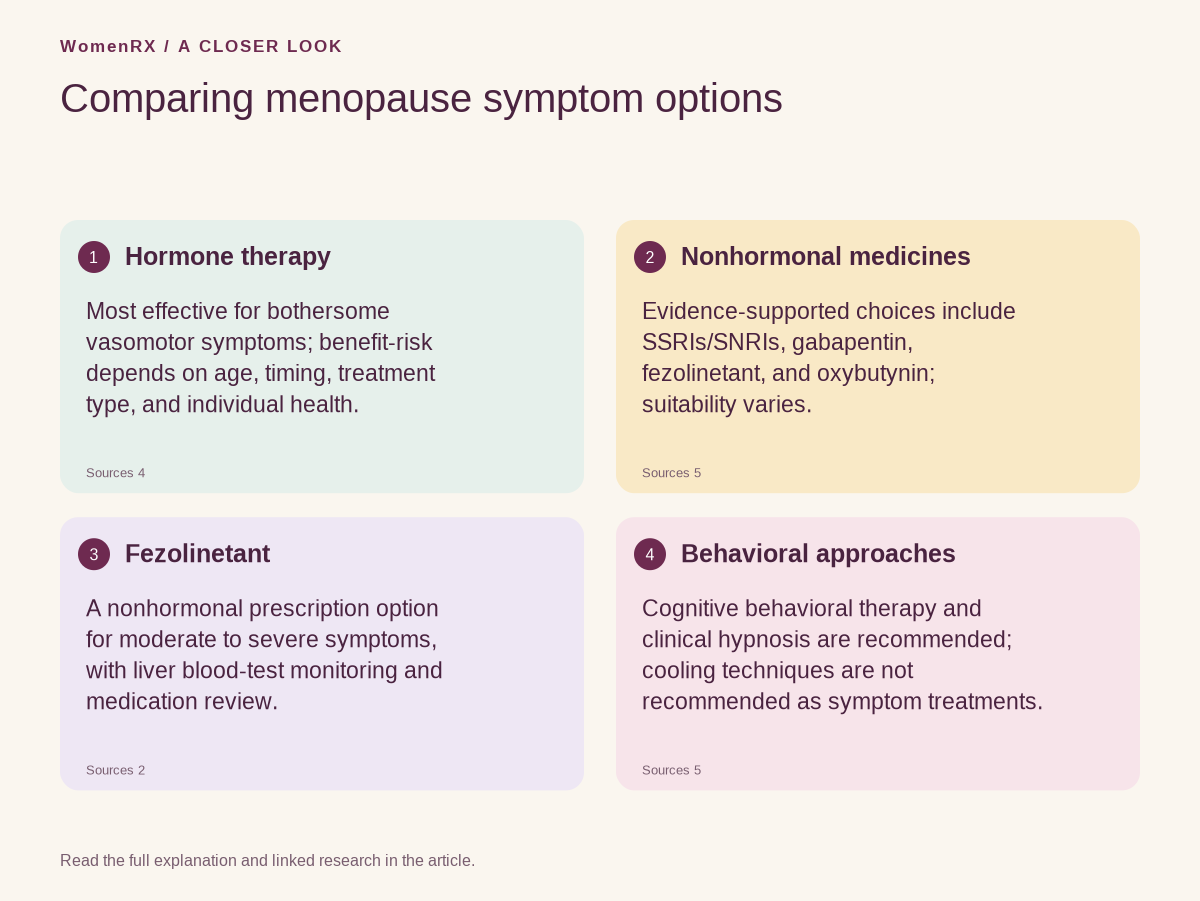
Comparing menopause symptom options
Hormone therapy: Most effective for bothersome vasomotor symptoms; benefit-risk depends on age, timing, treatment type, and individual health.4
Nonhormonal medicines: Evidence-supported choices include SSRIs/SNRIs, gabapentin, fezolinetant, and oxybutynin; suitability varies.5
Fezolinetant: A nonhormonal prescription option for moderate to severe symptoms, with liver blood-test monitoring and medication review.2
Behavioral approaches: Cognitive behavioral therapy and clinical hypnosis are recommended; cooling techniques are not recommended as symptom treatments.5
Read the figure as text
These categories differ in their role, evidence, and practical considerations. They are not interchangeable, and the right fit depends on personal health factors and preferences.- Hormone therapy: Most effective for bothersome vasomotor symptoms; benefit-risk depends on age, timing, treatment type, and individual health.4
- Nonhormonal medicines: Evidence-supported choices include SSRIs/SNRIs, gabapentin, fezolinetant, and oxybutynin; suitability varies.5
- Fezolinetant: A nonhormonal prescription option for moderate to severe symptoms, with liver blood-test monitoring and medication review.2
- Behavioral approaches: Cognitive behavioral therapy and clinical hypnosis are recommended; cooling techniques are not recommended as symptom treatments.5
More questions, answered
Are supplements a proven treatment for menopausal hot flashes?
The North American Menopause Society’s evidence review does not recommend supplements or herbal remedies for menopausal vasomotor symptoms. That doesn’t mean every product has been studied equally, but it does mean supplements aren’t a well-supported substitute for treatments with evidence behind them. 5
Does a night sweat always mean menopause?
No. A warm room or bedding can cause ordinary nighttime sweating, and other possible causes include anxiety, alcohol or drug use, some medicines, and excessive sweating that occurs at other times. Repeated soaking sweats, especially with other concerning symptoms, are worth getting checked. 1
Sources you can check
- Night sweats - NHSAccessed 2026-09-25Return to first citation
- VEOZAH (FEZOLINETANT) TABLET, FILM COATED [ASTELLAS PHARMA US, INC.] | US prescribing information and patient instructionsAccessed 2026-09-25Return to first citation
- CLIMARA PRO (ESTRADIOL AND LEVONORGESTREL) PATCH [BAYER HEALTHCARE PHARMACEUTICALS INC.] | US prescribing information and patient instructionsAccessed 2026-09-25Return to first citation
- The 2022 hormone therapy position statement of The North American Menopause Society.“The 2022 Hormone Therapy Position Statement of The North American Menopause Society” Advisory Panel. · Menopause (New York, N.Y.) · 2022Return to first citation
- The 2023 nonhormone therapy position statement of The North American Menopause Society.Menopause (New York, N.Y.) · 2023Return to first citation