Gabapentin for Menopause Hot Flashes and Night Sweats
Gabapentin has strong guideline support for menopausal hot flashes, but its possible drowsiness deserves a separate look when sleep is the goal.
Gabapentin is a recommended nonhormonal option for menopausal hot flashes and night sweats, with Level I evidence in the 2023 North American Menopause Society guidance. It’s worth discussing when hormone therapy isn’t a good fit or isn’t your preference. Gabapentin may also cause sleepiness, tiredness, or dizziness, so nighttime relief and next-day functioning both matter. 6 2 3
What gabapentin can treat
If a wave of heat wakes you and leaves your clothes damp, the question isn’t simply whether a medicine makes you sleepy. It’s whether it reduces the hot flashes or night sweats interrupting your night. These are vasomotor symptoms, and the 2023 North American Menopause Society guidance recommends gabapentin as a nonhormonal treatment for them. The guidance grades the evidence for this recommendation as Level I, its category for good and consistent scientific evidence. 6
Gabapentin is also used for epilepsy and nerve pain. Those uses are separate from its menopause use, which is described as off-label in US clinical practice. Being off-label doesn’t mean the hot-flash benefit is unsupported; the menopause recommendation addresses that benefit directly. 3 7 6
It isn’t the only choice. Hormone therapy remains the most effective treatment for vasomotor symptoms, but health circumstances and personal preference can make a nonhormonal option more appealing. The same menopause guidance recommends other nonhormonal approaches, including cognitive behavioral therapy, clinical hypnosis, certain antidepressants, and fezolinetant. 5 6
Why nighttime symptoms make the tradeoff personal
Gabapentin can cause sleepiness, tiredness, and dizziness. If night sweats are waking you, sleepiness might sound useful. But a side effect isn’t the same thing as evidence that a medicine treats a sleep problem unrelated to hot flashes. Consider both parts of your day: whether you’re waking less because of heat and whether you feel steady and alert enough for the morning drive, work, or caregiving. Don’t drive or use machinery while gabapentin is making you dizzy or sleepy. 2 3 6
The comparison evidence adds some perspective without predicting your result. A network meta-analysis of trials in postmenopausal women found that fezolinetant reduced the frequency of moderate-to-severe vasomotor symptoms more than the extended-release gabapentin regimen it evaluated. That result came from comparing trials indirectly, not from a head-to-head trial of those two treatments. It also doesn’t erase gabapentin’s guideline-supported benefit. 7 6
Menopause stage is another limit to keep in mind. That network comparison studied postmenopausal women, while a review of menopause guidelines found relatively little perimenopause-specific guidance. Neither of those findings supplies a gabapentin benefit estimate comparing perimenopause with postmenopause. If you’re still having periods, that’s useful context for a treatment conversation, not a reason to assume gabapentin won’t help. 7 8
Make the medicine conversation about your actual nights
For example, you might be waking from a hot flash twice in a night but falling back asleep easily, or waking once and then lying awake for hours. Those situations call for a different discussion about what improvement would mean. Tell the prescriber what wakes you, how your mornings feel, and whether dizziness or daytime sleepiness would interfere with things you need to do. Ask how gabapentin compares with your other suitable options for reducing the hot flashes themselves. 6 2
Review the medicines and substances you use rather than treating gabapentin as an isolated decision. In particular, mention recreational opioid use if it applies: gabapentin can intensify the effects of drugs such as heroin and other opioids. If you already take gabapentin for another reason, don’t stop it suddenly; withdrawal symptoms can occur, so discuss a stopping plan with your prescriber. 4
Finally, don’t assume every drenching night sweat is menopause. If you regularly wake with soaking bedding despite a cool room, or the sweating comes with fever or unexplained weight loss, seek medical assessment for other possible causes. 1
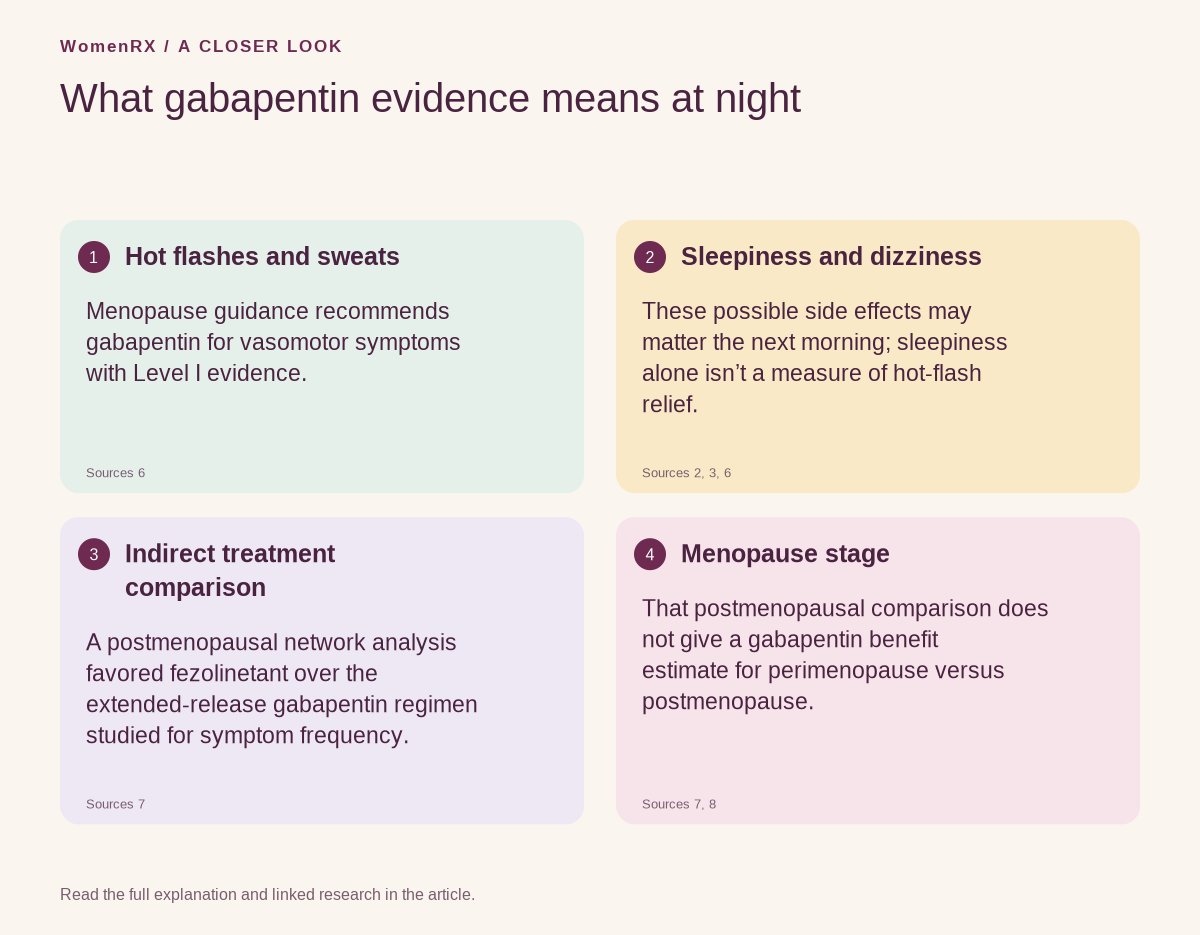
What gabapentin evidence means at night
Hot flashes and sweats: Menopause guidance recommends gabapentin for vasomotor symptoms with Level I evidence.6
Sleepiness and dizziness: These possible side effects may matter the next morning; sleepiness alone isn’t a measure of hot-flash relief.236
Indirect treatment comparison: A postmenopausal network analysis favored fezolinetant over the extended-release gabapentin regimen studied for symptom frequency.7
Menopause stage: That postmenopausal comparison does not give a gabapentin benefit estimate for perimenopause versus postmenopause.78
Read the figure as text
A quick separation of the treated symptom, the possible side effects, and the limits of treatment comparisons.- Hot flashes and sweats: Menopause guidance recommends gabapentin for vasomotor symptoms with Level I evidence.6
- Sleepiness and dizziness: These possible side effects may matter the next morning; sleepiness alone isn’t a measure of hot-flash relief.236
- Indirect treatment comparison: A postmenopausal network analysis favored fezolinetant over the extended-release gabapentin regimen studied for symptom frequency.7
- Menopause stage: That postmenopausal comparison does not give a gabapentin benefit estimate for perimenopause versus postmenopause.78
More questions, answered
Does gabapentin’s sleepiness mean it will fix my sleep?
Not necessarily. Sleepiness is a possible side effect; the menopause recommendation is for reducing hot flashes and night sweats. If you also wake for reasons unrelated to heat, describe those separately when discussing treatment. 2 6
Sources you can check
- Night sweats - NHSAccessed 2026-09-25Return to first citation
- Side effects of gabapentin - NHSAccessed 2026-09-25Return to first citation
- About gabapentin - NHSAccessed 2026-09-25Return to first citation
- Common questions about gabapentin - NHSAccessed 2026-09-25Return to first citation
- The 2022 hormone therapy position statement of The North American Menopause Society.“The 2022 Hormone Therapy Position Statement of The North American Menopause Society” Advisory Panel. · Menopause (New York, N.Y.) · 2022Return to first citation
- The 2023 nonhormone therapy position statement of The North American Menopause Society.Menopause (New York, N.Y.) · 2023Return to first citation
- Systematic review and network meta-analysis comparing the efficacy of fezolinetant with hormone and nonhormone therapies for treatment of vasomotor symptoms due to menopause.Morga A, Ajmera M, Gao E, Patterson-Lomba O, Zhao A, Mancuso S, Siddiqui E, Kagan R. · Menopause (New York, N.Y.) · 2024Return to first citation
- A systematic review and critical appraisal of menopause guidelines.Hemachandra C, Taylor S, Islam RM, Fooladi E, Davis SR. · BMJ sexual & reproductive health · 2024Return to first citation