What Causes Hot Flashes and Night Sweats?
Menopause is a common cause, but the sleep setting, medicines, and other factors can also contribute.
Hot flashes and night sweats can occur during perimenopause, menopause, and postmenopause. Changing reproductive hormones are associated with a temperature-control response that triggers heat and sweating, though the exact mechanism isn’t fully understood. A warm room, anxiety, alcohol or drug use, hyperhidrosis, or a medicine can also contribute. Regular soaking night sweats, especially with other symptoms, deserve medical attention. 1 2
A wave of heat or a sweaty night can fit with menopause, but it isn’t the only explanation. The setting and pattern offer useful clues, though neither can confirm the cause by itself.
When menopause may be the explanation
Hot flashes and night sweats, together called vasomotor symptoms, can happen during perimenopause, menopause, and postmenopause. A review describes them as exaggerated heat-loss responses: the body’s temperature-control system reacts in a way that brings on heat and sweating. Changing reproductive hormones are linked to this response, but exactly how they affect the temperature-control system isn’t fully understood. 2
The reproductive stage can make menopause a plausible explanation, not a certainty. A hormonal change can also be more abrupt after both ovaries are removed than during natural menopause. 3
When the setting or another factor may matter
Sweating during sleep doesn’t always mean you’re having a menopausal night sweat. A warm room or bedding can make you too hot. “Night sweats” usually refers to sweating enough to soak nightclothes or bedding even when the sleeping space is cool. 1
Other possible contributors include anxiety, alcohol or drug use, hyperhidrosis (a condition involving excessive sweating), and some medicines. If episodes recur, consider whether they happen in a warm setting or around a change in medicines or other circumstances. These are clues to mention, not a way to diagnose the cause on your own. 1
Causes can overlap. For example, someone in perimenopause might have menopause-related heat episodes and also sleep in a room that is too warm. Considering both possibilities is more useful than assuming every episode has one explanation.
When not to assume it’s menopause
Get medical advice if soaking night sweats happen regularly, wake you, or worry you. Seek advice as well if they come with a very high temperature, feeling hot, cold, or shivery, a cough, diarrhea, or unexplained weight loss. These symptoms don’t identify one particular cause, but they are reasons to look beyond a menopause explanation. 1
When describing recurring episodes, it can help to say whether they happen during the day or night, whether clothes or bedding are soaked, and what else is happening at the same time. Mention relevant changes in your sleep setting and the medicines you take. That information gives a fuller picture without treating a symptom pattern as a diagnosis.
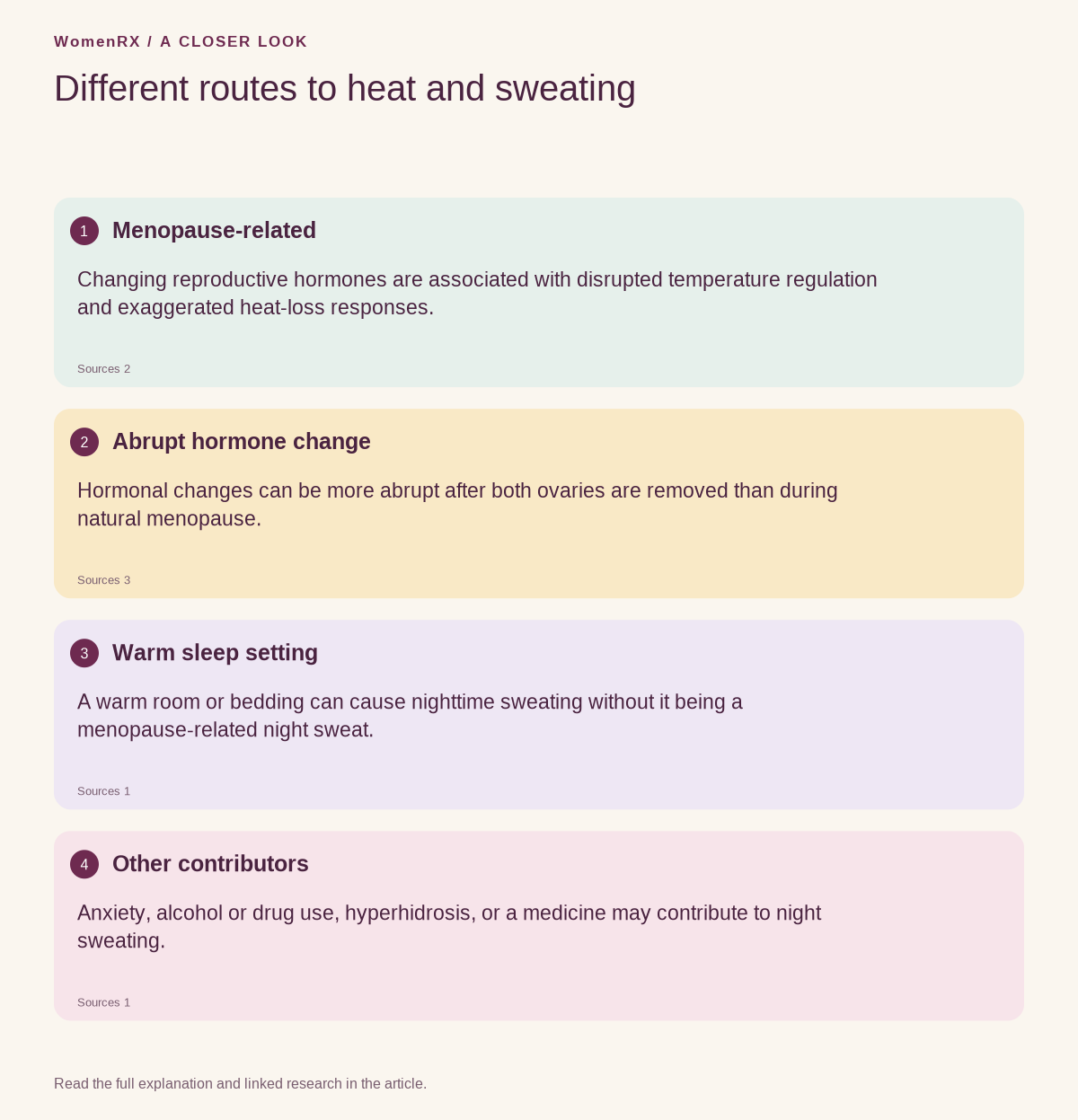
Different routes to heat and sweating
Menopause-related: Changing reproductive hormones are associated with disrupted temperature regulation and exaggerated heat-loss responses.2
Abrupt hormone change: Hormonal changes can be more abrupt after both ovaries are removed than during natural menopause.3
Warm sleep setting: A warm room or bedding can cause nighttime sweating without it being a menopause-related night sweat.1
Other contributors: Anxiety, alcohol or drug use, hyperhidrosis, or a medicine may contribute to night sweating.1
Read the figure as text
Menopause-related temperature responses are one explanation; the sleep setting and other contributors can also lead to sweating.- Menopause-related: Changing reproductive hormones are associated with disrupted temperature regulation and exaggerated heat-loss responses.2
- Abrupt hormone change: Hormonal changes can be more abrupt after both ovaries are removed than during natural menopause.3
- Warm sleep setting: A warm room or bedding can cause nighttime sweating without it being a menopause-related night sweat.1
- Other contributors: Anxiety, alcohol or drug use, hyperhidrosis, or a medicine may contribute to night sweating.1
More questions, answered
Does sweating at night always mean you’re having a hot flash?
No. A warm room or bedding can make you sweat. Night sweats usually means soaking clothes or bedding despite a cool sleeping space. 1
Can a medicine contribute to night sweats?
Yes. Medicines are one possible contributor. If episodes recur, mention the medicines you take and any relevant changes when you seek advice. 1
Sources you can check
- Night sweats - NHSAccessed 2026-09-25Return to first citation
- Understanding the pathophysiology of vasomotor symptoms (hot flushes and night sweats) that occur in perimenopause, menopause, and postmenopause life stages.Deecher DC, Dorries K. · Archives of women's mental health · 2007Return to first citation
- Efficacy and safety of fezolinetant, a neurokinin-3 antagonist, in treating vasomotor symptoms in postmenopausal women: A systematic review and meta-analysis.Rahman UA, Kashif TB, Usman M, Rana M, Hasanain M, Anjum MU, Cheema HA, Jaffar H, Bhattarai P. · Medicine · 2023Return to first citation