Are Night Sweats a Sign of Perimenopause?
They can be: night sweats are one kind of menopausal hot flash, but the episode pattern and other symptoms matter.
Night sweats can be a perimenopause symptom, especially when they feel like sudden waves of heat and occur alongside other hot flashes. But sweating at night isn’t automatically hormonal: a warm room, some medicines, anxiety, alcohol or drug use, and other causes can play a role. Notice how often episodes happen, how they affect sleep, and whether other symptoms accompany them. 1 3 4
When night sweats fit a menopausal pattern
Hot flashes and night sweats are grouped as vasomotor symptoms. A night sweat may feel like a sudden wave of heat followed by sweating; these symptoms can occur during perimenopause, menopause, or after menopause. Hormone changes are associated with disruptions in the body’s temperature regulation, although the underlying mechanism isn’t fully understood. 3 4
Your menstrual pattern can offer useful context. If your periods have changed as these episodes began, make a note of that connection. It doesn’t prove that the sweating is hormonal, though. The timing and the rest of the picture matter too.
First, distinguish sweating from a hot room
It’s normal to sweat if your room or bedding is too warm. NHS guidance describes night sweats as soaking wet nightclothes or bedding despite sleeping in a cool place. If you wake damp in a warm room, try noting the room and bedding conditions before assuming the cause is a hot flash. 1
When the room is cool, pay attention to whether the episode comes with a sudden feeling of heat or flushing, and whether similar hot flashes happen during the day. That pattern may fit vasomotor symptoms, but it isn’t enough on its own to identify the cause. 3 4
Keep a short, useful record
For a week or two, jot down a few details after an episode. This isn’t a diagnostic test; it’s a way to make the pattern easier to explain if you seek care.
- The episode: when it happened, how much you sweated, and whether you felt a sudden wave of heat.
- Sleep and surroundings: whether you woke up, how long it affected your sleep, and whether the room or bedding felt warm.
- Cycle and other symptoms: where you are in your menstrual pattern, if you know, and any other symptoms around the same time.
- Recent changes: new or changed medicines, alcohol or drug use, or other changes that might be relevant. Some medicines can contribute to night sweats, so include them in the conversation rather than changing them on your own. 1
A pattern can help describe what’s happening, but it can’t rule out other causes. Night sweats can also be associated with anxiety, alcohol or drug use, and hyperhidrosis, a condition that causes excessive sweating. Sometimes a cause isn’t identified. 1
When to get the sweating checked
Arrange a medical assessment if night sweats regularly wake you or worry you, especially if they’re new or continuing without a clear explanation. Also get checked if they come with a very high temperature, feeling hot and cold or shivery, a cough, diarrhea, or unexplained weight loss. These features don’t identify a cause by themselves, but they’re reasons not to assume the sweating is perimenopause. 1
If you’re taking medicine, mention when the sweating started and any recent medication changes. A clinician can consider whether a medicine may be contributing and review what to do next. 1
If the episodes do fit a menopausal pattern and are disrupting sleep, you don’t have to simply put up with them. Menopause guidance recognizes both hormone and evidence-supported nonhormone treatment options for bothersome vasomotor symptoms; the right discussion depends on your health and preferences. 2 3
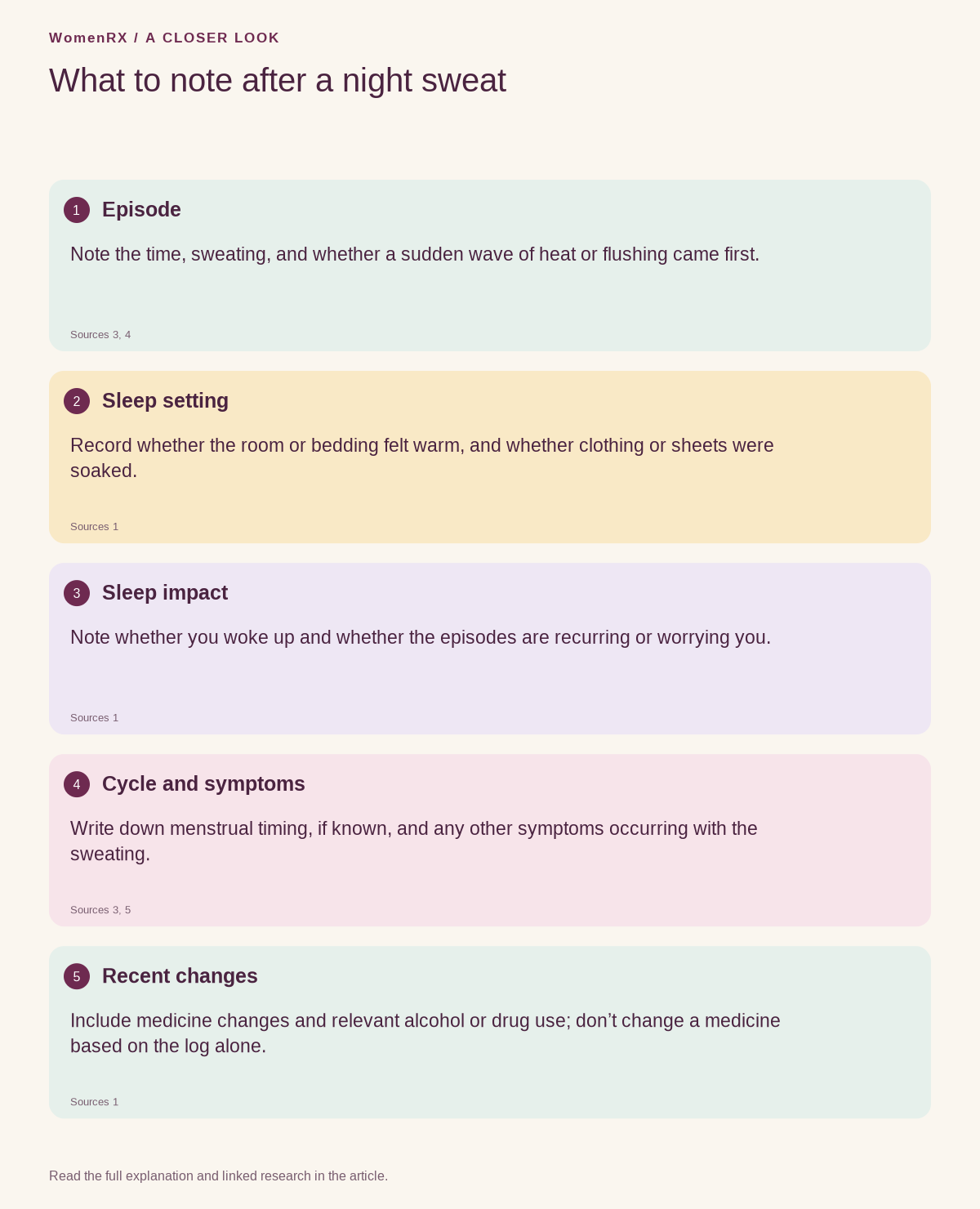
What to note after a night sweat
Episode: Note the time, sweating, and whether a sudden wave of heat or flushing came first.34
Sleep setting: Record whether the room or bedding felt warm, and whether clothing or sheets were soaked.1
Sleep impact: Note whether you woke up and whether the episodes are recurring or worrying you.1
Cycle and symptoms: Write down menstrual timing, if known, and any other symptoms occurring with the sweating.35
Recent changes: Include medicine changes and relevant alcohol or drug use; don’t change a medicine based on the log alone.1
Read the figure as text
These details can make it easier to describe the pattern and possible context. They don’t diagnose the cause.- Episode: Note the time, sweating, and whether a sudden wave of heat or flushing came first.34
- Sleep setting: Record whether the room or bedding felt warm, and whether clothing or sheets were soaked.1
- Sleep impact: Note whether you woke up and whether the episodes are recurring or worrying you.1
- Cycle and symptoms: Write down menstrual timing, if known, and any other symptoms occurring with the sweating.35
- Recent changes: Include medicine changes and relevant alcohol or drug use; don’t change a medicine based on the log alone.1
More questions, answered
Does waking up sweaty always mean I’m having a hot flash?
No. A warm room or bedding can make you sweat, and night sweats have other possible causes. A sudden wave of heat in a cool room may fit a hot flash, but the pattern alone can’t confirm the cause. 1 3 4
Sources you can check
- Night sweats - NHSAccessed 2026-09-25Return to first citation
- The 2022 hormone therapy position statement of The North American Menopause Society.“The 2022 Hormone Therapy Position Statement of The North American Menopause Society” Advisory Panel. · Menopause (New York, N.Y.) · 2022Return to first citation
- The 2023 nonhormone therapy position statement of The North American Menopause Society.Menopause (New York, N.Y.) · 2023Return to first citation
- Understanding the pathophysiology of vasomotor symptoms (hot flushes and night sweats) that occur in perimenopause, menopause, and postmenopause life stages.Deecher DC, Dorries K. · Archives of women's mental health · 2007Return to first citation
- Cyclicity of breast tenderness and night-time vasomotor symptoms in mid-life women: information collected using the Daily Perimenopause Diary.Hale GE, Hitchcock CL, Williams LA, Vigna YM, Prior JC. · Climacteric : the journal of the International Menopause Society · 2003Return to first citation