Menopause Night Sweats: Relief Options and When to Get Checked
Hormone therapy is the most effective treatment for menopause-related hot flashes and night sweats, but nonhormonal options can help too, and the right choice depends on your health history and preferences.
If night sweats are disrupting your sleep, you can discuss menopausal hormone therapy or evidence-supported nonhormonal treatments with a clinician. Hormone therapy is the most effective option, but its benefits and risks depend on factors such as your age, time since menopause, and health history. Cognitive behavioral therapy may lessen the distress and disruption, even if it doesn’t reduce how often sweats happen. Regular soaking sweats or other concerning symptoms deserve evaluation. 2 3 4 1
First, distinguish overheating from a hot flash
A warm room or heavy bedding can make anyone sweat at night. Menopause-related night sweats are part of vasomotor symptoms, which also include hot flashes. If you’re waking repeatedly and your sleep is suffering, you don’t have to wait for symptoms to become unbearable before bringing up treatment. 1 3
Cooling the room or changing bedding may make an overheated sleep space more comfortable. But cooling techniques haven’t been shown to be a reliable treatment for menopausal vasomotor symptoms in the North American Menopause Society’s evidence review. So it’s reasonable to try a more comfortable sleep setup, while recognizing that it may not stop menopause-related sweats. 1 3
Match treatment to what you want help with
If you want the option most likely to reduce hot flashes and night sweats: Menopausal hormone therapy is the most effective treatment for vasomotor symptoms. For women younger than 60 or within 10 years of menopause onset who have no contraindications, the North American Menopause Society describes the benefit-risk balance as generally favorable for bothersome symptoms. That isn’t a one-size-fits-all recommendation: risks differ by factors including treatment type, route, duration, timing, and whether a progestogen is used. Your health history and preferences belong in the decision. 2
If hormone therapy isn’t a fit, or you’d rather not use it: Evidence-supported prescription options include certain antidepressants in the SSRI or SNRI groups, gabapentin, fezolinetant, and oxybutynin. The 2023 position statement rates the evidence differently across these options; they aren’t interchangeable, and the best fit depends on your circumstances and the medicine’s potential effects. Ask which choices are appropriate for you rather than assuming that a “nonhormonal” option is automatically right for everyone. 3
If the sleep disruption and distress are a major part of the problem: Menopause-focused cognitive behavioral therapy can help reduce how much vasomotor symptoms interfere with daily life and the distress associated with them. It isn’t the non-drug equivalent of hormone therapy: it may help you cope with symptoms without reducing their frequency or severity. 4
Supplements, herbal remedies, acupuncture, and several commonly suggested lifestyle or mind-body approaches weren’t recommended as treatments for vasomotor symptoms in the 2023 position statement, based on the evidence it reviewed. That doesn’t mean a personal comfort habit has no value to you; it means these approaches shouldn’t be presented as proven ways to stop menopause-related night sweats. 3
When to get checked
Arrange a medical evaluation if you regularly wake with soaking-wet clothes or bedding, or if the sweats worry you. Seek advice sooner if they come with a very high temperature, feeling hot and cold or shivery, a cough, diarrhea, or unexplained weight loss. Night sweats can have causes besides menopause, and a clinician can review your other symptoms and health history. 1
If the sweats began after starting a medicine, mention that when you seek advice. Some medicines may contribute, and a prescriber can consider whether a change is appropriate. Don’t change or stop a prescribed medicine on your own. 1
A useful next step is to describe what the night sweats are doing to your sleep and daily life, then ask which treatment options fit your health history and what each is meant to improve. If you’re considering hormone therapy, ask how your timing and personal risk factors affect the balance of benefits and risks. 2 3 4
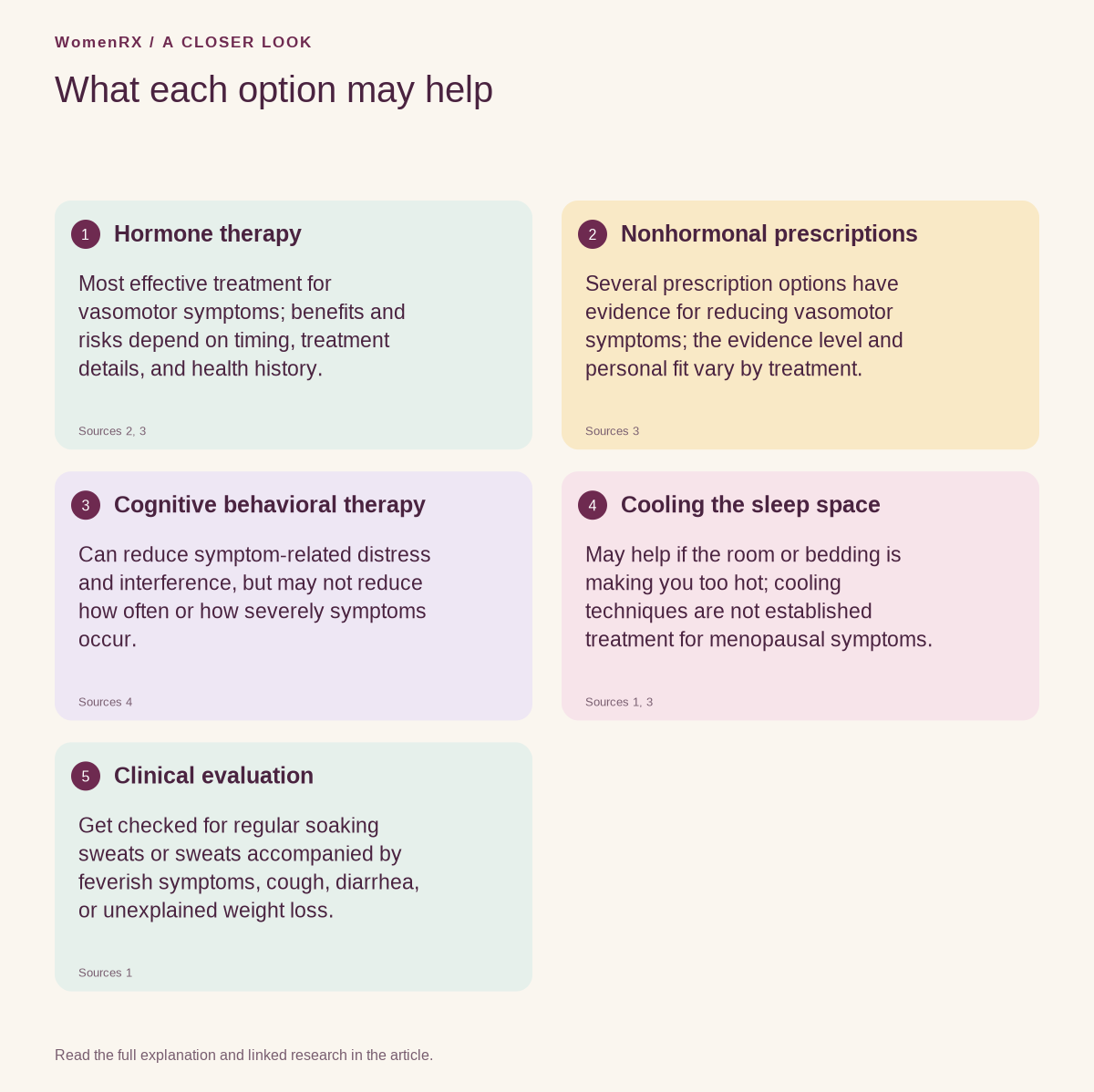
What each option may help
Hormone therapy: Most effective treatment for vasomotor symptoms; benefits and risks depend on timing, treatment details, and health history.23
Nonhormonal prescriptions: Several prescription options have evidence for reducing vasomotor symptoms; the evidence level and personal fit vary by treatment.3
Cognitive behavioral therapy: Can reduce symptom-related distress and interference, but may not reduce how often or how severely symptoms occur.4
Cooling the sleep space: May help if the room or bedding is making you too hot; cooling techniques are not established treatment for menopausal symptoms.13
Clinical evaluation: Get checked for regular soaking sweats or sweats accompanied by feverish symptoms, cough, diarrhea, or unexplained weight loss.1
Read the figure as text
These options differ in whether they target vasomotor symptoms themselves, symptom-related distress, or a possible cause that needs evaluation.- Hormone therapy: Most effective treatment for vasomotor symptoms; benefits and risks depend on timing, treatment details, and health history.23
- Nonhormonal prescriptions: Several prescription options have evidence for reducing vasomotor symptoms; the evidence level and personal fit vary by treatment.3
- Cognitive behavioral therapy: Can reduce symptom-related distress and interference, but may not reduce how often or how severely symptoms occur.4
- Cooling the sleep space: May help if the room or bedding is making you too hot; cooling techniques are not established treatment for menopausal symptoms.13
- Clinical evaluation: Get checked for regular soaking sweats or sweats accompanied by feverish symptoms, cough, diarrhea, or unexplained weight loss.1
More questions, answered
Can cognitive behavioral therapy stop night sweats?
It may reduce the distress and disruption linked to hot flashes and night sweats, but it isn’t necessarily designed to reduce how often or how severely they occur. 4
Should I assume night sweats are from menopause?
No. Menopause is a common cause, but other causes are possible. Regular soaking sweats, unexplained weight loss, feverish symptoms, cough, or diarrhea are reasons to get checked. 1
Sources you can check
- Night sweats - NHSAccessed 2026-09-25Return to first citation
- The 2022 hormone therapy position statement of The North American Menopause Society.“The 2022 Hormone Therapy Position Statement of The North American Menopause Society” Advisory Panel. · Menopause (New York, N.Y.) · 2022Return to first citation
- The 2023 nonhormone therapy position statement of The North American Menopause Society.Menopause (New York, N.Y.) · 2023Return to first citation
- Wait one hot minute: what exactly is cognitive behavioral therapy for menopause?Weitlauf JC, Miles-McLean HA, Millheiser LS. · Current opinion in obstetrics & gynecology · 2026Return to first citation