Hot Flashes: When to Seek Care and What to Discuss
Hot flashes are worth discussing when they disrupt your life, while drenching night sweats or bleeding after menopause deserve their own evaluation.
You don’t need to reach a certain number of hot flashes before asking for help. If they’re interrupting sleep or daily life, a visit can focus on relief and treatment preferences. Arrange an evaluation for regular night sweats that soak your bedding, especially with fever, cough, diarrhea, or unexplained weight loss. Any vaginal bleeding after menopause needs checking, even once. 12
When hot flashes are reason enough to make an appointment
A hot flash doesn’t have to be dangerous to be disruptive. If you’re waking repeatedly, changing what you do during the day, or feeling worn down by the next night, that’s enough reason to discuss relief. Hot flashes and night sweats are common during the menopausal transition, and hormone therapy has long been used as an effective treatment. Nonhormonal options have also been studied, though their evidence and potential side effects differ. 54
There’s no need to wait until you’ve counted a particular number of episodes. The useful question is what the symptoms are costing you. For example, an occasional daytime flush you can live with calls for a different conversation than repeated episodes that wake you and leave you tired at work. You can bring that distinction to a primary care or gynecology visit, along with whether you want to consider treatment now.
When something alongside the sweating needs attention
Not every sweaty night is a menopausal night sweat. A warm room or heavy bedding can make you sweat. But if you regularly wake with nightclothes or sheets soaking wet even though the room is cool, arrange a medical visit. The same advice applies if night sweats regularly wake you or worry you. Mention a fever or feeling hot and shivery, a cough, diarrhea, or weight loss you can’t explain. These details can change what needs to be checked rather than simply how to manage hot flashes. 1
Vaginal bleeding after menopause is a separate reason to be checked. If you’ve gone more than a year without a period and then have bleeding, contact a clinician even if it happens only once or looks like a little spotting, pink discharge, or brown discharge. It’s usually not serious, but it can sometimes signal cancer, so don’t put it down to hot flashes. 2
Menopause is one possible explanation for night sweats, not the only one. Anxiety, alcohol or drug use, and excessive sweating from other causes can also be involved; sometimes the cause isn’t clear. A medicine may contribute to night sweats, too. That’s why new or changing symptoms are worth describing rather than automatically labeling them menopause. 1
What to bring to a useful conversation
You don’t need an elaborate symptom diary. A few notes can help you explain the pattern and decide what you want from the visit:
- Frequency and timing: Are the episodes occasional or happening repeatedly? Do they occur during the day, at night, or both? Hot-flash frequency is one way treatment studies measure symptoms, but your own count isn’t a diagnostic cutoff. 5
- Sleep impact: Do you wake up, and are your clothes or sheets damp or soaking wet? Is the room cool when it happens? That distinction matters when describing night sweats. 1
- Other changes: Mention fever or shivering, cough, diarrhea, unexplained weight loss, or any bleeding after menopause. Don’t wait to finish tracking symptoms before seeking care for regular drenching sweats or postmenopausal bleeding. 12
- Possible contributors: Note any medicines you take and whether the sweating seems connected with alcohol or anxiety. These details may help the clinician consider causes besides menopause. 1
- Your treatment preference: Would you rather talk first about hormone therapy, nonhormonal prescription options, or what’s known about supplements? Say which symptom you most want to improve, such as interrupted sleep. 54
What to ask about treatment
You might start with: “Do these episodes sound like menopausal hot flashes, or is there something else we should check?” Then ask which options fit your health history and what improvement you could reasonably expect. That keeps the conversation focused on both the cause and the disruption you’re experiencing.
Hormone therapy is an effective treatment for menopausal hot flashes, but it isn’t the only approach. A review of randomized trials found evidence of benefit from some nonhormonal prescription medicines, including certain antidepressants and gabapentin, while noting that side effects matter. It’s a reason to compare options, not to assume one medicine suits everyone. 54
If you’re considering red clover, ask about the uncertainty rather than assuming “plant-based” means proven. A 2026 review of nine randomized trials found a modest reduction in hot-flash frequency compared with placebo. An earlier, broader Cochrane review found no conclusive evidence that phytoestrogen supplements reliably reduced hot flashes or night sweats; its pooled analysis of one red clover extract did not show a clear difference from placebo. The reviews examined different sets of studies and products, so they don’t give a simple promise about the supplement on a store shelf. 35
The right next move may be a treatment discussion, an evaluation of drenching sweats or another symptom, or both. You can ask for help with hot flashes because they’re making life harder, without having to prove they’ve crossed a numerical threshold.
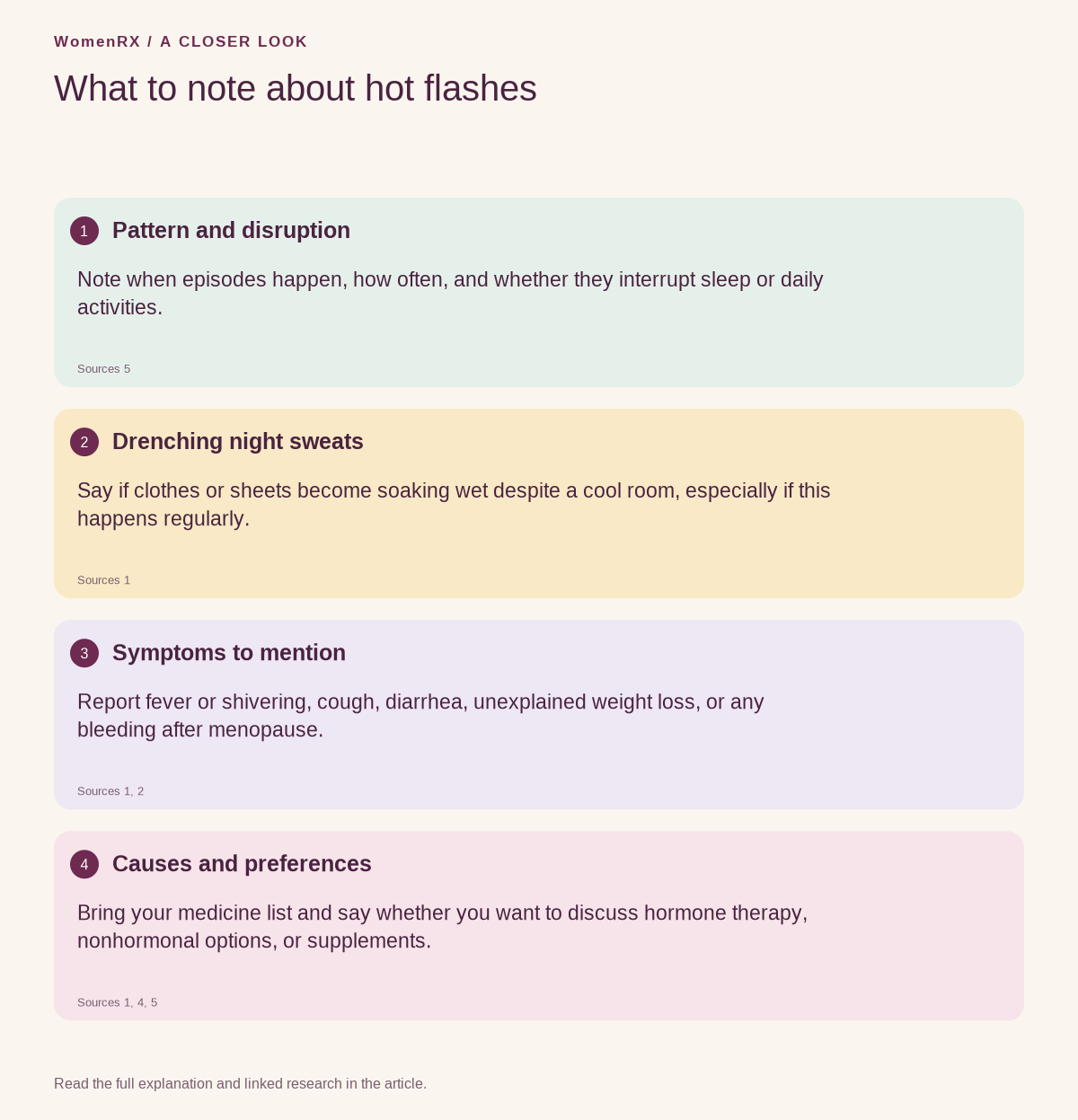
What to note about hot flashes
Pattern and disruption: Note when episodes happen, how often, and whether they interrupt sleep or daily activities.5
Drenching night sweats: Say if clothes or sheets become soaking wet despite a cool room, especially if this happens regularly.1
Symptoms to mention: Report fever or shivering, cough, diarrhea, unexplained weight loss, or any bleeding after menopause.12
Causes and preferences: Bring your medicine list and say whether you want to discuss hormone therapy, nonhormonal options, or supplements.145
Read the figure as text
Use these prompts to describe the pattern, flag symptoms that need checking, and explain what you want from a visit. They are not a diagnostic score.- Pattern and disruption: Note when episodes happen, how often, and whether they interrupt sleep or daily activities.5
- Drenching night sweats: Say if clothes or sheets become soaking wet despite a cool room, especially if this happens regularly.1
- Symptoms to mention: Report fever or shivering, cough, diarrhea, unexplained weight loss, or any bleeding after menopause.12
- Causes and preferences: Bring your medicine list and say whether you want to discuss hormone therapy, nonhormonal options, or supplements.145
Sources you can check
- Night sweats - NHSAccessed 2026-09-25Return to first citation
- Postmenopausal bleeding - NHSAccessed 2026-09-25Return to first citation
- The effectiveness of red clover on hot-flash in menopausal women: a GRADE-assessed systematic review and meta-analysis.Jiang W, Wu K. · European journal of obstetrics, gynecology, and reproductive biology · 2026Return to first citation
- Non-hormonal therapy of post-menopausal vasomotor symptoms: a structured evidence-based review.Cheema D, Coomarasamy A, El-Toukhy T. · Archives of gynecology and obstetrics · 2007Return to first citation
- Phytoestrogens for menopausal vasomotor symptoms.Lethaby A, Marjoribanks J, Kronenberg F, Roberts H, Eden J, Brown J. · The Cochrane database of systematic reviews · 2013Return to first citation