Supplements After 50: Start With What You Actually Need
Your menopause status, diet, medicines, and health history matter more than your age alone when deciding whether a supplement makes sense.
There isn’t one supplement plan for everyone over 50. For bone health, compare your usual food intake with the calcium target for your age, and consider vitamin D in light of deficiency risks. B12 and iron are more relevant when diet, medicines, symptoms, or test results point to a possible shortfall. Supplements can correct a gap, but calcium and vitamin D aren’t a guaranteed way to prevent fractures. 1 3 4
Your age is a starting point, not a supplement plan
Turning 50 doesn’t automatically mean you need a multivitamin, calcium, vitamin D, B12, and iron. The more useful question is whether your food intake, menopause stage, medicines, or health conditions make a particular nutrient gap likely.
Menopause matters for bone health because falling estrogen is linked with faster bone remodeling and bone loss. But not everyone over 50 is postmenopausal, and menopause doesn’t by itself show that you’re low in calcium or vitamin D. 3
Calcium: check the food gap first
For women ages 51 and older, the recommended calcium intake is 1,200 mg a day from food and supplements combined. That’s a planning target, not an instruction to take a 1,200 mg pill. Many foods contribute: for example, milk, yogurt, calcium-fortified drinks, and tofu made with calcium sulfate. Food labels can help you estimate what you usually get. 3
If your usual intake falls short, a supplement may help fill part of the gap. But routine calcium pills aren’t a proven fracture-prevention plan for everyone after menopause. Research on fractures has been mixed; the USPSTF found that lower-dose calcium and vitamin D combinations do not prevent fractures in postmenopausal women, and evidence on higher doses was insufficient to determine benefit. 3
Check the whole picture before adding calcium. Some antacids contain it, so their calcium counts too. Supplements can cause gas, bloating, or constipation. Calcium can also interfere with absorption of levothyroxine and certain antibiotics, and it can reduce dolutegravir levels. If you take one of these medicines, check the specific timing instructions with your prescriber or pharmacist before starting calcium. 3
Vitamin D: focus on risk, not hype
Vitamin D helps your body absorb calcium. A shortage can contribute to loss of bone density, but taking extra vitamin D isn’t a general substitute for assessing your needs. Older age, problems absorbing nutrients, some chronic conditions, and certain medicines can raise deficiency risk. A blood test can measure vitamin D status, so if one of these applies, ask whether testing is useful for you. Too much vitamin D from supplements can be harmful. 1
Vitamin D helps your body absorb calcium, and deficiency can contribute to bone-density loss. Those facts explain why vitamin D status matters, but they don’t by themselves tell you whether you need a supplement. 1
B12 and iron depend on the reason
B12 is worth considering when your diet provides little of it, absorption may be impaired, or you take a medicine such as metformin or a proton pump inhibitor. Older age is also a risk factor. A review of adult care in the United States does not recommend universal B12 screening; it describes testing when a person has both a risk factor and a relevant clinical feature. 4
Iron isn’t an automatic supplement after 50 either. Heavy periods can contribute to anemia, but anemia can also have other causes, including low iron, low B12 or folate, blood loss, or blood disorders. If you still have periods, especially heavy ones, or you’ve been told you have anemia, the cause matters: taking iron without knowing whether iron is the problem may miss what needs attention. 2
A quick review before you buy
Write down what you eat and drink on a typical day, including fortified foods. Note whether you’re still having periods, what medicines and antacids you take, and any known deficiency or absorption condition. Then focus the conversation on a specific question: “Am I getting enough calcium from food?” or “Do my medicines or health history make B12 or vitamin D testing relevant?” That’s more useful than choosing a broad supplement just because it says “50+.” 1 3 4
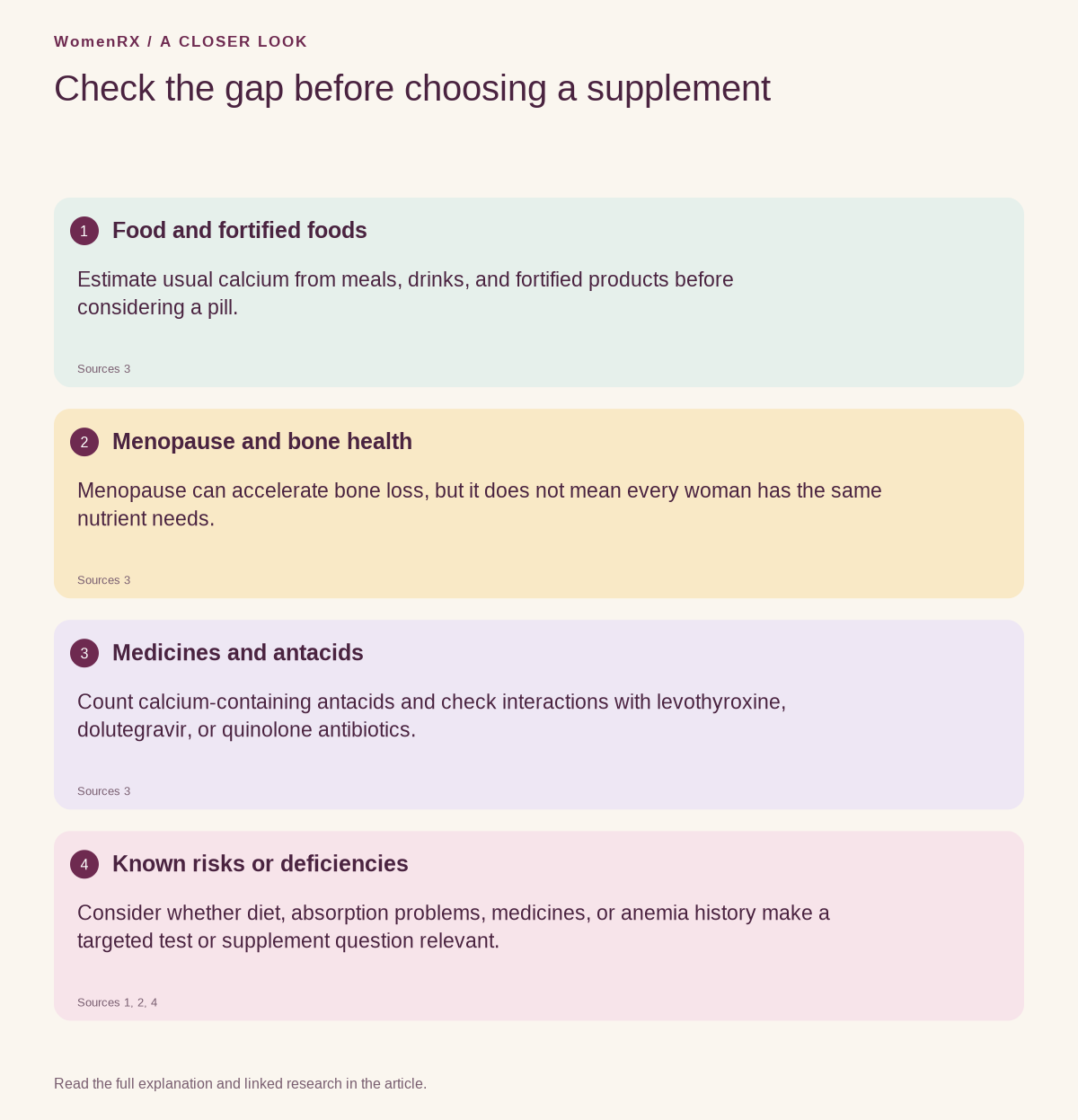
Check the gap before choosing a supplement
Food and fortified foods: Estimate usual calcium from meals, drinks, and fortified products before considering a pill.3
Menopause and bone health: Menopause can accelerate bone loss, but it does not mean every woman has the same nutrient needs.3
Medicines and antacids: Count calcium-containing antacids and check interactions with levothyroxine, dolutegravir, or quinolone antibiotics.3
Known risks or deficiencies: Consider whether diet, absorption problems, medicines, or anemia history make a targeted test or supplement question relevant.124
Read the figure as text
Review these four areas to make a supplement question specific to your diet, menopause stage, medicines, and health history.- Food and fortified foods: Estimate usual calcium from meals, drinks, and fortified products before considering a pill.3
- Menopause and bone health: Menopause can accelerate bone loss, but it does not mean every woman has the same nutrient needs.3
- Medicines and antacids: Count calcium-containing antacids and check interactions with levothyroxine, dolutegravir, or quinolone antibiotics.3
- Known risks or deficiencies: Consider whether diet, absorption problems, medicines, or anemia history make a targeted test or supplement question relevant.124
More questions, answered
Should every woman over 50 take a multivitamin?
Age alone doesn’t establish that you need one. A better starting point is to check specific nutrients against your diet, risks, and medicines rather than assuming one multivitamin fits everyone. 1 3 4
Does calcium with vitamin D prevent fractures after menopause?
Not reliably for everyone. Findings from studies have been mixed, and the USPSTF found insufficient evidence to assess fracture-prevention benefit from higher-dose combinations in postmenopausal women. 3
Sources you can check
- Vitamin D Deficiency: MedlinePlusAccessed 2026-09-25Return to first citation
- Anemia | MedlinePlusAccessed 2026-09-25Return to first citation
- Calcium - Health Professional Fact SheetAccessed 2026-09-25Return to first citation
- Vitamin B12 Deficiency: Common Questions and Answers.Patel H, McGuirk R. · American family physician · 2025Return to first citation