Starting Estradiol: When to Review Symptoms and Treatment Response
The useful question at follow-up is whether the symptom you meant to treat has changed, alongside any side effects or bleeding.
When you start or change estradiol, agree on a check-in with your prescriber and track the symptoms it’s meant to help. At that review, compare each symptom with your starting point and discuss side effects, treatment changes, and bleeding. The timing should fit your symptoms and formulation rather than a universal results deadline. If you’re using the Climara patch, report unusual vaginal bleeding right away. 1 2
Start with the symptom, not the calendar
Estradiol may be prescribed for different menopause concerns, so decide what you’ll use to judge whether your treatment is helping. If hot flashes are the target, you might note how often they happen, how intense they feel, and whether they wake you. Participants in a Climara estradiol-patch study recorded hot-flash frequency and severity in diaries. You don’t need to copy a research diary to make a useful comparison; a few consistent notes can show what changed from your starting point. 1
If vaginal symptoms are the target, keep those separate. For example, note whether dryness or discomfort during sex has changed rather than assuming that fewer hot flashes means every symptom has improved. The treatment form matters here: menopause guidance recommends considering low-dose vaginal estrogen for bothersome genitourinary symptoms that haven’t improved with over-the-counter options when systemic hormone therapy isn’t otherwise indicated. Climara’s product information likewise suggests discussing a topical vaginal product if the patch is being used only for vaginal symptoms. 1 2
Agree on when and how to check in
When treatment starts or changes, ask when you’ll review it and whether that review will be a visit, a call, or another form of contact. Individualized treatment and periodic reassessment of benefits and risks are part of menopause hormone therapy guidance. 2
There’s no need to treat a study assessment date as the day your treatment must work. For context, an observational study of estradiol spray in postmenopausal women assessed symptoms at 3, 6, and 12 months and found improvement from baseline at those assessments. Because it followed women using one spray without a comparison treatment, it can’t tell you when you will first notice a change on a different product. 3
Bring a before-and-after picture to the review
For each symptom you hoped to improve, compare your recent experience with what was happening before you started or changed estradiol. Has it become less frequent, less disruptive, or stayed much the same? If hot flashes were waking you, for example, mention both the flashes and the interrupted sleep. If dryness was the concern, describe whether the discomfort you wanted to address has changed.
Add the details that help put that comparison in context: which estradiol product you’re using, when it was started or changed, any dose changes, and side effects you’ve noticed. Note any bleeding separately, including when it happened and whether it was unusual for you. That gives you and your prescriber something more useful to discuss than a single answer to “Is it working?”
Side effects belong in the same conversation as benefits. In an observational estradiol-spray study, reported adverse drug reactions included headache, nausea, dizziness, and itching. That doesn’t mean those symptoms are caused by estradiol every time they occur, but new or troublesome symptoms are worth describing rather than leaving out of the review. 3
Don’t save unusual bleeding for a routine review
If you’re using the Climara estradiol patch, its patient information says to report unusual vaginal bleeding right away. It also notes that bleeding after menopause may need evaluation to find the cause. Raise that concern sooner instead of waiting for the planned symptom check-in. 1
Your estradiol response review
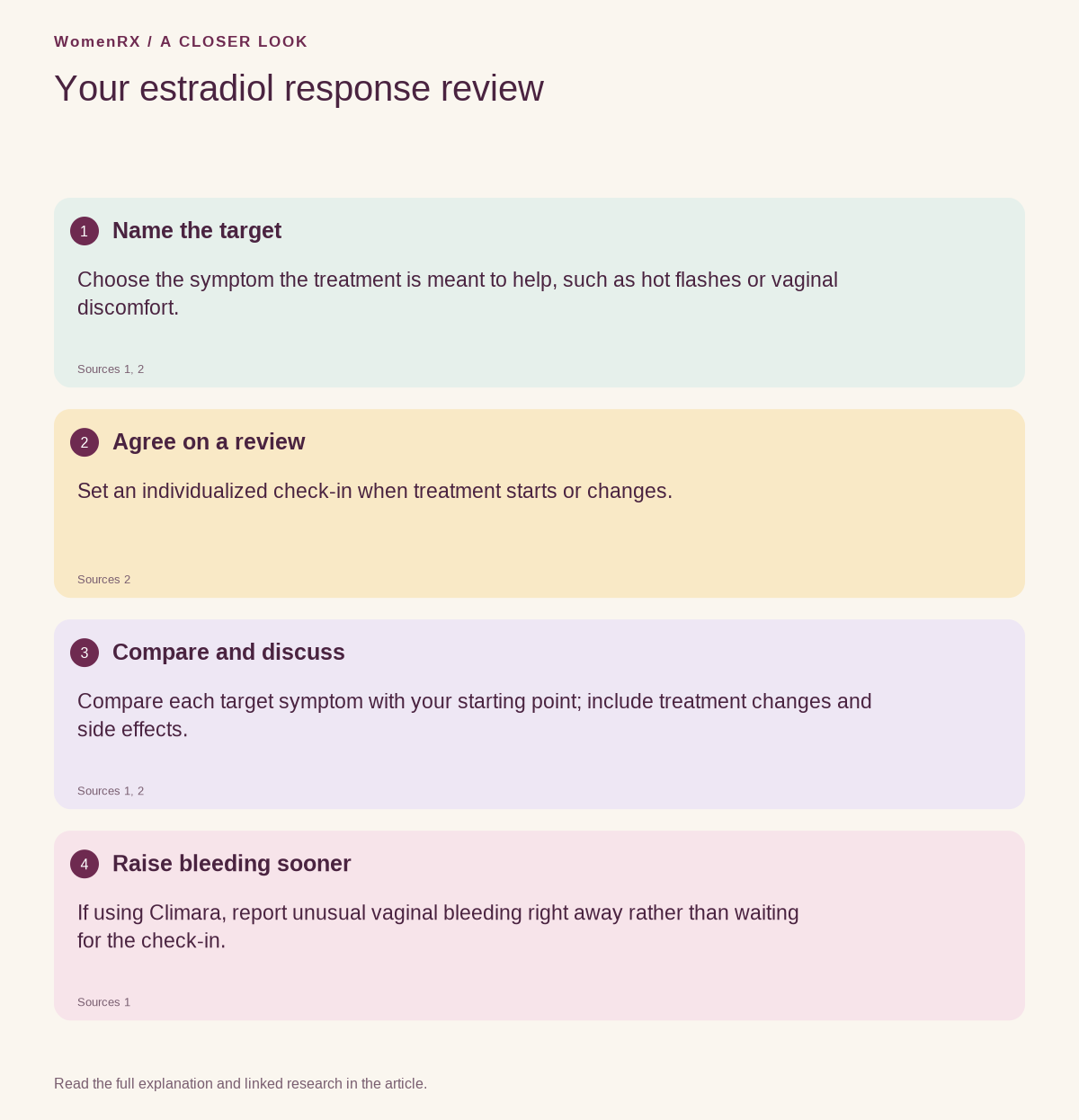
Name the target: Choose the symptom the treatment is meant to help, such as hot flashes or vaginal discomfort.12
Agree on a review: Set an individualized check-in when treatment starts or changes.2
Compare and discuss: Compare each target symptom with your starting point; include treatment changes and side effects.12
Raise bleeding sooner: If using Climara, report unusual vaginal bleeding right away rather than waiting for the check-in.1
Read the figure as text
A simple path from choosing a target symptom to discussing what changed.- Name the target: Choose the symptom the treatment is meant to help, such as hot flashes or vaginal discomfort.12
- Agree on a review: Set an individualized check-in when treatment starts or changes.2
- Compare and discuss: Compare each target symptom with your starting point; include treatment changes and side effects.12
- Raise bleeding sooner: If using Climara, report unusual vaginal bleeding right away rather than waiting for the check-in.1
More questions, answered
What if my hot flashes improve but vaginal dryness doesn’t?
Review those as separate outcomes. Systemic hormone therapy and low-dose vaginal estrogen can have different roles in menopause care. If vaginal symptoms remain bothersome, describe what persists and ask whether your current treatment form fits that symptom. 1 2
Sources you can check
- CLIMARA (ESTRADIOL) PATCH [BAYER HEALTHCARE PHARMACEUTICALS INC.] | US prescribing information and patient instructionsAccessed 2026-09-25Return to first citation
- The 2022 hormone therapy position statement of The North American Menopause Society.“The 2022 Hormone Therapy Position Statement of The North American Menopause Society” Advisory Panel. · Menopause (New York, N.Y.) · 2022Return to first citation
- Use of an estradiol transdermal spray in women with menopausal symptoms: a non-interventional study.Hadji P, Schmeißer JO, Peters K, Göckeler-Leopold E. · Climacteric : the journal of the International Menopause Society · 2024Return to first citation