Starting an estradiol patch: when to review symptoms and treatment response
Judge the patch by the symptoms you hoped to ease, and bring persistent symptoms or hard-to-tolerate changes into the conversation.
There’s no single day when an estradiol patch should feel effective. At your planned review, discuss whether the symptoms you wanted to treat are still bothersome; contact your prescriber sooner if symptoms worsen or new effects are hard to tolerate. If you use Climara, report unusual vaginal bleeding after menopause right away. Hormone therapy calls for individualized, periodic review. 12
Start with the symptom you wanted to change
If you started a patch for hot flashes and night sweats, ask yourself whether those episodes are becoming less disruptive. You might notice, for example, whether night sweats still wake you or whether a hot flash still interrupts what you’re doing. Choose a few observations you can describe at your review rather than trying to score every day.
A patch’s wear schedule won’t tell you when you should feel better. Climara, one estradiol patch, releases estradiol continuously over its seven-day wear period, but that describes drug delivery, not a guaranteed date for symptom relief. Follow the directions for your particular patch. 1
Match your next move to what’s happening
Symptoms are still bothersome, but nothing is getting worse: Bring that up at the review you’ve planned with your prescriber. If you don’t have a review arranged, ask when to discuss your response. You don’t need to decide on your own that a particular number of weeks proves the treatment has or hasn’t worked. Menopause hormone therapy is meant to be individualized and periodically reevaluated, including its benefits and risks. 2
Symptoms are worsening, or a new effect is hard to tolerate: Contact your prescriber before the planned review. Explain what changed and when you noticed it, rather than changing your patch treatment on your own.
You have unusual vaginal bleeding after menopause: Don’t save it for a routine symptom review. Climara’s patient information says to report it right away so the cause can be checked. 1
A short note can make these conversations easier: the symptom you hoped to improve, what it’s doing now, anything new that bothers you, and whether you’ve been able to use the patch as directed. This is a memory aid, not a test that determines whether treatment is working.
When the answer may not be “give it more time”
Tell your prescriber if you’ve started a new medicine or supplement. Climara’s prescribing information says that St. John’s wort, carbamazepine, and rifampin, among other drugs, may lower estrogen levels and potentially reduce treatment effects or change bleeding patterns. Don’t stop a prescribed medicine on that basis; the point is to make sure your prescriber has the full picture when reviewing your response. 1
It also helps to name which symptom hasn’t improved. If vaginal dryness or discomfort is your main remaining concern, that may call for a different treatment discussion than persistent hot flashes. The North American Menopause Society recommends considering local vaginal therapies for bothersome genitourinary symptoms that haven’t improved with over-the-counter options when there’s no indication for systemic hormone therapy. That recommendation doesn’t mean you should change an existing patch treatment yourself, but it gives you a more specific question to raise. 2
The useful question at review is not simply “Has enough time passed?” It’s “Are the symptoms I wanted to treat improving enough to make this treatment worthwhile for me, and are its effects tolerable?” That keeps the decision grounded in your goals and the periodic benefit-and-risk review recommended for hormone therapy. 2
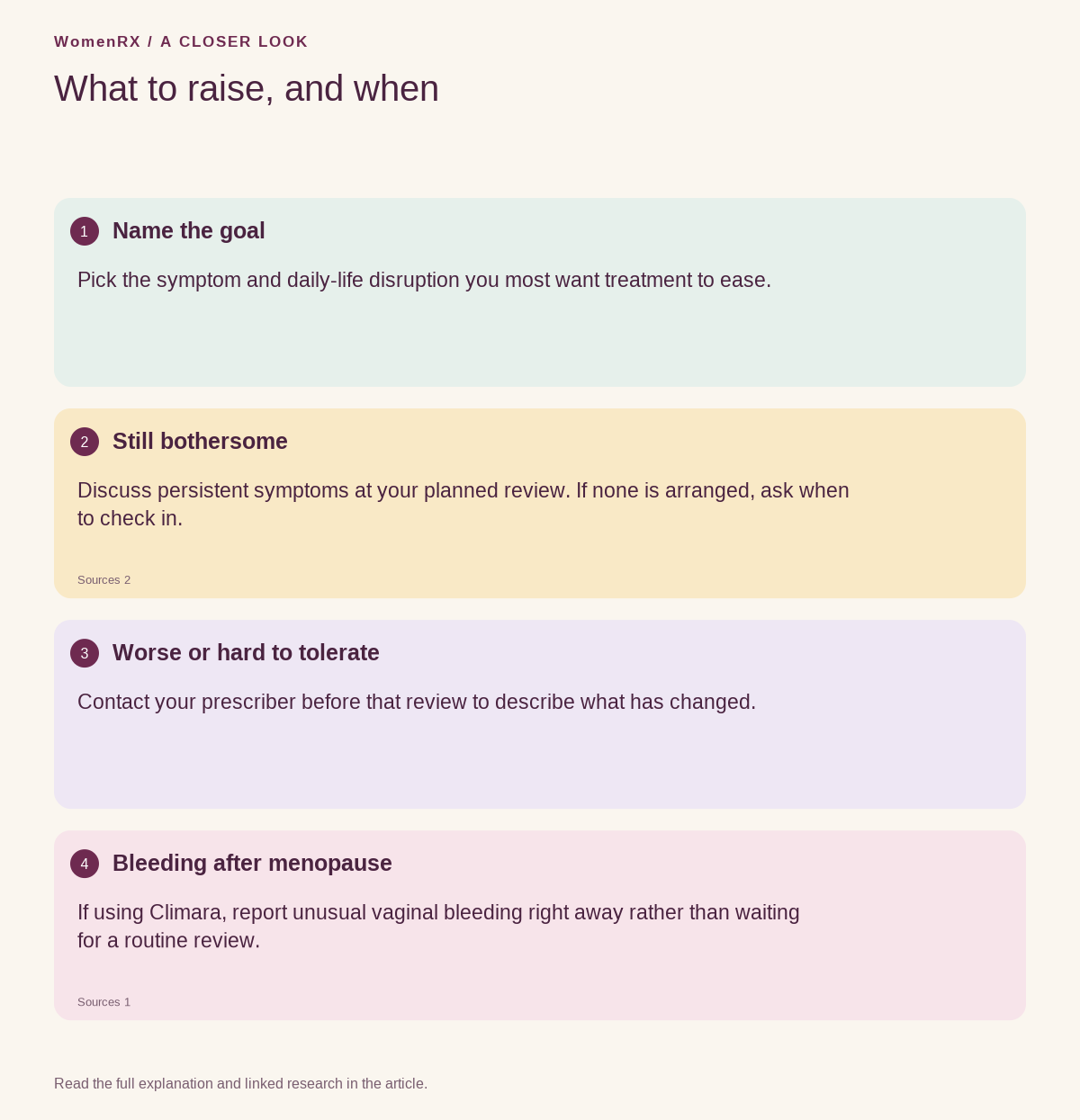
What to raise, and when
Name the goal: Pick the symptom and daily-life disruption you most want treatment to ease.
Still bothersome: Discuss persistent symptoms at your planned review. If none is arranged, ask when to check in.2
Worse or hard to tolerate: Contact your prescriber before that review to describe what has changed.
Bleeding after menopause: If using Climara, report unusual vaginal bleeding right away rather than waiting for a routine review.1
Read the figure as text
A flexible way to sort symptom changes after starting a patch, without treating its wear schedule as a deadline for relief.- Name the goal: Pick the symptom and daily-life disruption you most want treatment to ease.
- Still bothersome: Discuss persistent symptoms at your planned review. If none is arranged, ask when to check in.2
- Worse or hard to tolerate: Contact your prescriber before that review to describe what has changed.
- Bleeding after menopause: If using Climara, report unusual vaginal bleeding right away rather than waiting for a routine review.1
Sources you can check
- CLIMARA (ESTRADIOL) PATCH [BAYER HEALTHCARE PHARMACEUTICALS INC.] | US prescribing information and patient instructionsAccessed 2026-09-25Return to first citation
- The 2022 hormone therapy position statement of The North American Menopause Society.“The 2022 Hormone Therapy Position Statement of The North American Menopause Society” Advisory Panel. · Menopause (New York, N.Y.) · 2022Return to first citation