Bupropion Safety: What to Review Before Starting
Seizure and eating-disorder history, medication changes, and other prescriptions can change whether bupropion is a suitable choice.
Before taking bupropion for mood, tell your prescriber about any seizure or eating-disorder history, abrupt withdrawal from alcohol or certain medicines, and everything else you take. These aren’t all the same kind of warning: some are contraindications, while other combinations need individual review. Mention pregnancy or breastfeeding, too, and make sure you both know which bupropion product is being considered. 1 2
Start with the history that matters most
Bupropion can cause seizures. The risk is affected not only by the medicine itself but also by a person’s health history, circumstances, and other medicines. That’s why a prescribing conversation needs more than a list of current symptoms. 1 2
Any seizure history: Tell the prescriber if you’ve ever had a seizure or been diagnosed with a seizure disorder. A bupropion safety review identifies preexisting seizure risk as a contraindication, and the US prescribing information for Contrave, which contains bupropion plus naltrexone, specifically lists a seizure disorder as a contraindication. Don’t leave out an event just because it happened years ago or you’re unsure what caused it. 1 2
An eating-disorder history: Mention a current or past diagnosis, particularly anorexia nervosa or bulimia. This isn’t merely a technical rule for one combination product: a bupropion safety review identifies eating disorders as a contraindication because of seizure risk. Contrave’s label explicitly names current or past anorexia nervosa and bulimia. A past diagnosis still belongs in the conversation, even if you’re doing well now. 1 2
Abrupt withdrawal: Say if you’re stopping alcohol or a medicine that affects the central nervous system. The bupropion safety review identifies withdrawal from alcohol or central nervous system depressants as a contraindication. Contrave’s label specifically names abrupt discontinuation of alcohol, benzodiazepines, barbiturates, and antiepileptic medicines. This is about a potentially risky change, not a reason to stop one of those medicines on your own. 1 2
Bring the complete medicine list, including combination products
Check the names of all your prescription medicines rather than relying on what each one is for. Bupropion appears in products used for different purposes, including standalone antidepressants and combination medicines. Contrave’s prescribing information says it must not be used alongside another bupropion-containing product. If more than one clinician prescribes for you, make sure the prescriber assessing bupropion sees the full list. 1 2
Also flag a current or recently used MAOI antidepressant. Taking an MAOI and bupropion together is contraindicated in the Contrave prescribing information, which specifies a 14-day separation when switching in either direction. The prescriber needs to manage that timing for the exact products involved; it isn’t an instruction to stop or switch a medicine yourself. 1
Some medicines call for a different kind of review rather than an automatic no. The Contrave label names antipsychotics, tricyclic antidepressants, theophylline, and systemic steroids as examples of drugs that may lower the seizure threshold. Tell the prescriber if you take one of them so they can assess the combination in context. Bring over-the-counter products and supplements on your list as well, rather than guessing which entries matter. 1
Include pregnancy and breastfeeding in the decision
If you’re pregnant, planning a pregnancy, or breastfeeding, say so before treatment is chosen. Pregnancy and breastfeeding are separate questions; neither should be treated as an automatic answer to whether bupropion is suitable for you.
Pregnancy data summarized in the Contrave label concern bupropion exposure: studies did not identify an increased risk of birth defects overall, while findings about one specific type of heart defect were inconsistent. That doesn’t establish the safety of every bupropion-containing product in pregnancy, and it doesn’t answer the breastfeeding question. Discuss the exact medicine and your circumstances with the prescriber. 1
Know which situations cannot wait
If you have a seizure while taking bupropion, get emergency medical attention. Contrave’s label says it should be discontinued and not restarted after a seizure during treatment. If an overdose is possible, seek emergency help right away, even if symptoms haven’t appeared: bupropion overdose can cause serious effects, and seizures can be delayed with extended-release products. 1 2
For the prescribing visit, the most useful preparation is specific: the name of the proposed product, your seizure and eating-disorder history, any planned abrupt withdrawal, and a current list of medicines. Those details help distinguish a contraindication from a combination that needs closer assessment.
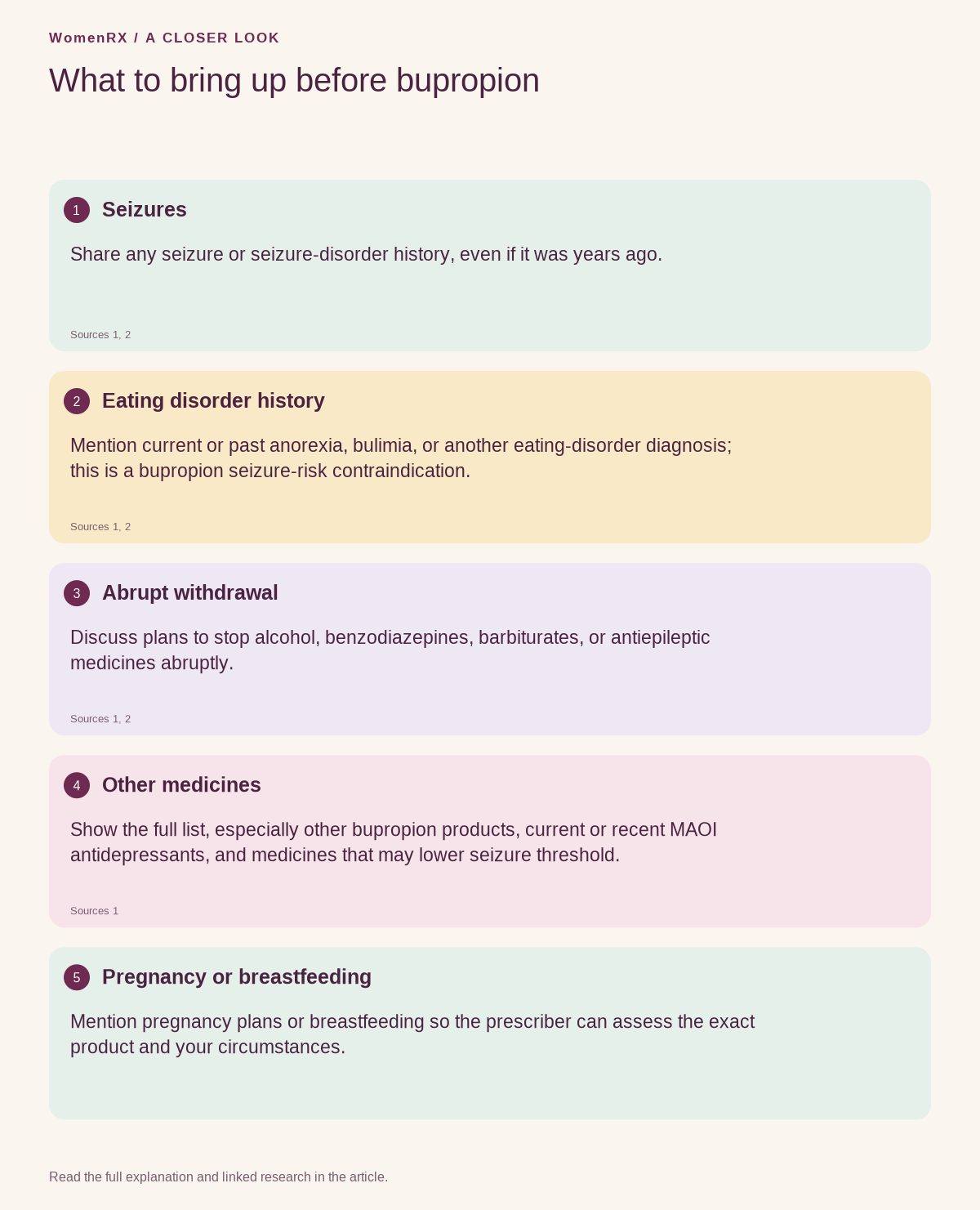
What to bring up before bupropion
Seizures: Share any seizure or seizure-disorder history, even if it was years ago.12
Eating disorder history: Mention current or past anorexia, bulimia, or another eating-disorder diagnosis; this is a bupropion seizure-risk contraindication.12
Abrupt withdrawal: Discuss plans to stop alcohol, benzodiazepines, barbiturates, or antiepileptic medicines abruptly.12
Other medicines: Show the full list, especially other bupropion products, current or recent MAOI antidepressants, and medicines that may lower seizure threshold.1
Pregnancy or breastfeeding: Mention pregnancy plans or breastfeeding so the prescriber can assess the exact product and your circumstances.
Read the figure as text
Use these prompts to cover the history and medicines that can change the prescribing decision. This is a conversation guide, not an eligibility test.- Seizures: Share any seizure or seizure-disorder history, even if it was years ago.12
- Eating disorder history: Mention current or past anorexia, bulimia, or another eating-disorder diagnosis; this is a bupropion seizure-risk contraindication.12
- Abrupt withdrawal: Discuss plans to stop alcohol, benzodiazepines, barbiturates, or antiepileptic medicines abruptly.12
- Other medicines: Show the full list, especially other bupropion products, current or recent MAOI antidepressants, and medicines that may lower seizure threshold.1
- Pregnancy or breastfeeding: Mention pregnancy plans or breastfeeding so the prescriber can assess the exact product and your circumstances.
Sources you can check
- CONTRAVE EXTENDED-RELEASE (NALTREXONE HYDROCHLORIDE AND BUPROPION HYDROCHLORIDE) TABLET, EXTENDED RELEASE [NALPROPION PHARMACEUTICALS LLC] | US prescribing information and patient instructionsAccessed 2026-09-25Return to first citation
- Bupropion ToxicityAlberter AA, Chambers AJ, Schaffer DH. · 2026Return to first citation