Starting Bupropion: What Changes Are Worth Tracking?
Compare mood, interest, and daily life with your starting point, and bring new or troubling changes to your prescriber sooner.
Track more than whether you feel happier. Note your mood, interest in things you usually care about, and what you can manage day to day. Compare those with your starting point at follow-up. Also record new anxiety, panic, agitation, or unusual changes in behavior or thinking. Contact your prescriber promptly about concerning changes rather than waiting for a planned review. 12
Pick a starting point you can recognize
Depression can affect mood, interest, sleep, eating, and everyday activities. The mix is different for each person. 2 Choose two or three changes that describe your depression. For example, you might note that you’re turning down plans you’d usually enjoy or struggling to get through work. If you’ve already started bupropion, write down what you remember about the days before treatment and what’s happening now. An imperfect starting point is still useful.
Keep each note short and concrete: what happened, whether it felt easier or harder than usual, and whether it affected your day. You don’t need to turn every feeling into a score.
Separate progress from new problems
When you check in, compare the same areas each time. Is your mood shifting? Are you interested in things again? Is it easier to do something that had become difficult? You might notice a welcome change in one area while another remains hard. That’s more useful to discuss than a single verdict of “working” or “not working.”
Record unwanted changes separately, including when you first noticed them and whether they’re interfering with your routine. US prescribing information for naltrexone-bupropion, a combination product containing the same active ingredient as bupropion antidepressants, calls for attention to worsening depression, new anxiety or panic, marked agitation, and behavior or thinking that’s unusual for the person taking it. Those changes aren’t proof that bupropion caused them, but they are reasons to contact your prescriber promptly rather than wait for a routine visit. The cited instructions are for the combination product, not a study of bupropion alone for depression. 1
Suicidal thoughts or behavior need immediate attention. Contact your prescriber right away; if you might act on those thoughts or can’t stay safe, seek emergency help now. 1
Use follow-up to answer a specific question
There’s no single before-and-after deadline that predicts your response. In a study of people with treatment-resistant depression, researchers followed outcomes across several next-step treatments, including switching to bupropion, over 12 weeks. That study period isn’t a timetable for when you should feel better. 3
Your notes can make the review more useful. If mood, interest, or daily functioning is improving, discuss what has changed and what still isn’t better. If the same difficulties persist, bring examples rather than waiting for a dramatic turning point. If something new or troubling appears, especially worsening mood or the changes described above, make contact before the planned review. 12
Bring up any other medicines you take, particularly if you take a product containing bupropion for another purpose. Naltrexone-bupropion, for example, contains the same active ingredient as bupropion antidepressants and is not approved to treat depression. 1 If you’re planning a pregnancy, pregnant, or postpartum, say so too. Depression can occur during pregnancy and after birth; these details help put your symptoms and treatment questions in context, without assuming your response to bupropion will be different. 2
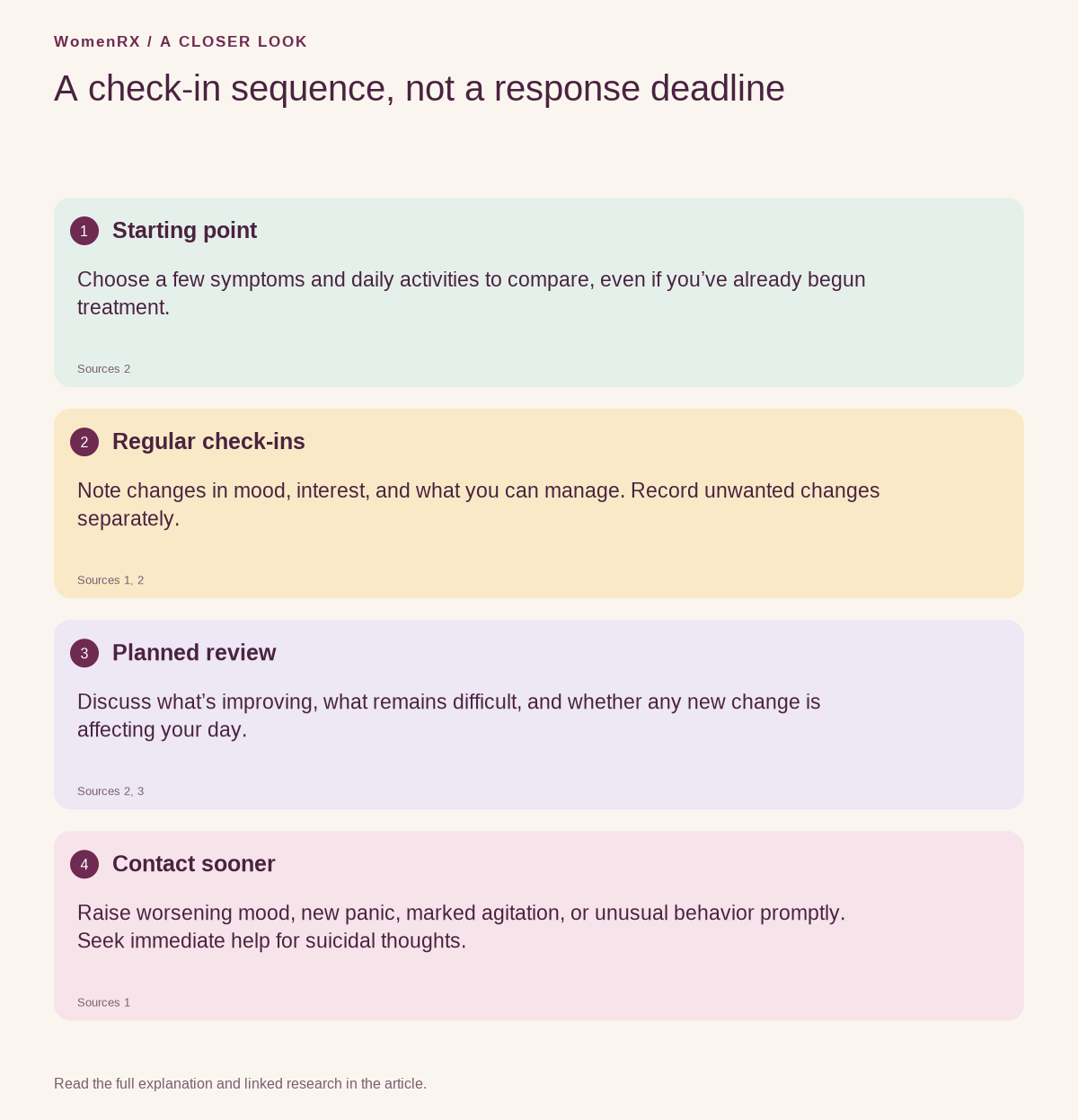
A check-in sequence, not a response deadline
Starting point: Choose a few symptoms and daily activities to compare, even if you’ve already begun treatment.2
Regular check-ins: Note changes in mood, interest, and what you can manage. Record unwanted changes separately.12
Planned review: Discuss what’s improving, what remains difficult, and whether any new change is affecting your day.23
Contact sooner: Raise worsening mood, new panic, marked agitation, or unusual behavior promptly. Seek immediate help for suicidal thoughts.1
Read the figure as text
Use these stages to organize your notes. They don’t prescribe when improvement should happen.- Starting point: Choose a few symptoms and daily activities to compare, even if you’ve already begun treatment.2
- Regular check-ins: Note changes in mood, interest, and what you can manage. Record unwanted changes separately.12
- Planned review: Discuss what’s improving, what remains difficult, and whether any new change is affecting your day.23
- Contact sooner: Raise worsening mood, new panic, marked agitation, or unusual behavior promptly. Seek immediate help for suicidal thoughts.1
Sources you can check
- CONTRAVE EXTENDED-RELEASE (NALTREXONE HYDROCHLORIDE AND BUPROPION HYDROCHLORIDE) TABLET, EXTENDED RELEASE [NALPROPION PHARMACEUTICALS LLC] | US prescribing information and patient instructionsAccessed 2026-09-25Return to first citation
- Depression: MedlinePlusAccessed 2026-09-25Return to first citation
- How Does Positive Mental Health Affect Next-Step Treatment Outcomes in Treatment-Resistant Depression? A VAST-D Report.Zisook S, Johnson GR, Planeta B, Mohamed S. · Journal of clinical psychopharmacology · 2025Return to first citation