Low-Dose Naltrexone: What to Review Before Starting
Opioid use, liver health, planned procedures, and pregnancy or breastfeeding all deserve a specific conversation before you begin.
Before starting low-dose naltrexone, tell the prescriber about any recent or ongoing opioid use, including pain, cough, or diarrhea medicines and treatments such as methadone or buprenorphine. Also discuss liver problems, medicines that may affect the liver, and any planned surgery or procedure where opioid pain relief might be needed. Raise pregnancy plans and breastfeeding too; the cited pregnancy model does not answer whether low-dose naltrexone alone is safe in pregnancy. 1 2
Start with any opioid exposure
Naltrexone blocks opioid effects. If you take an opioid pain medicine, use an opioid-containing cough or cold remedy, or take an opioid treatment such as methadone or buprenorphine, tell the prescriber before starting. Include tramadol and any nonprescription or borrowed medicines; the name on the package may not make the opioid ingredient obvious. The prescribing information for naltrexone-containing Contrave also warns that starting treatment in someone who is physically dependent on opioids can trigger sudden withdrawal. That warning comes from a specific extended-release combination product, but the opioid-blocking action of naltrexone makes your exposure history important to review for low-dose use too. 1
Be clear about when you last used an opioid and whether you have had withdrawal symptoms. Don't try to work out a safe waiting period on your own: the timing in the Contrave information applies to that product and its clinical guidance, and should not automatically be treated as a low-dose naltrexone schedule. Your prescriber needs the details to assess your situation.
Also ask what to do if you need opioid pain relief after starting. Naltrexone can make opioid-containing medicines less effective, and the Contrave information advises telling medical teams about treatment before surgery or another procedure. A planned operation, dental procedure, or other situation where opioid pain medicine might be considered is worth raising in advance. 1
Review liver health and the rest of your medication list
Tell the prescriber if you have liver disease, hepatitis, or a history of abnormal liver tests. The Contrave prescribing information reports liver inflammation or clinically significant liver dysfunction in some people exposed to naltrexone, as well as temporary enzyme elevations. It also notes that other causes, including existing liver disease and medicines that may affect the liver, were often present. This is a reason to review your history and medicines, not proof that low-dose naltrexone will cause liver injury. 1
Bring a complete medication list, including over-the-counter products. Make a point of identifying opioid-containing medicines and anything you have been told could affect your liver. The available safety details here come largely from Contrave, which combines naltrexone with bupropion in an extended-release product. Its full safety profile is not interchangeable with low-dose naltrexone alone, so ask which parts apply to the product being proposed for you. 1
Pregnancy, trying to conceive, and breastfeeding
If you're pregnant, might become pregnant, or are planning a pregnancy, say so before treatment. A 2025 study about pregnant people with methamphetamine use disorder was an exploratory model comparing treatments, including injectable naltrexone with bupropion; it relied on extrapolated data and noted insufficient information about fetal and infant effects. That model does not answer whether low-dose naltrexone alone is safe in pregnancy. 2
If you're breastfeeding, ask about the exact formulation and your goals for feeding. The Contrave prescribing information reports that naltrexone and its major metabolite are present in human milk, but that combination also contains bupropion and is not the same as low-dose naltrexone alone. The information does not establish what low-dose use means for a breastfed baby or milk production. 1
These conversations aren't a blanket yes or no. They help the prescriber weigh the reason for treatment, your circumstances, and what is known about the particular product and dose.
A useful pre-start checklist
Before the first dose, make sure the conversation covers:
- Opioids: Current or recent pain medicines, tramadol, opioid-containing cough or diarrhea products, methadone, buprenorphine, or other opioid use. 1
- Procedures: Upcoming surgery or dental work, and a plan for pain relief if opioids might be needed. 1
- Liver health: Liver disease, hepatitis, abnormal liver tests, and medicines that may affect the liver. 1
- Reproductive plans: Pregnancy, plans to conceive, or breastfeeding, with a discussion specific to the proposed low-dose product. The cited pregnancy model does not answer whether low-dose naltrexone alone is safe in pregnancy. 1 2
- Product details: Whether the plan is low-dose naltrexone alone or a combination product, since the safety information may not transfer directly. 1
A helpful question is: “Which safety points come from studies or labeling for this exact product, and which are being carried over from standard-dose or combination-product information?”
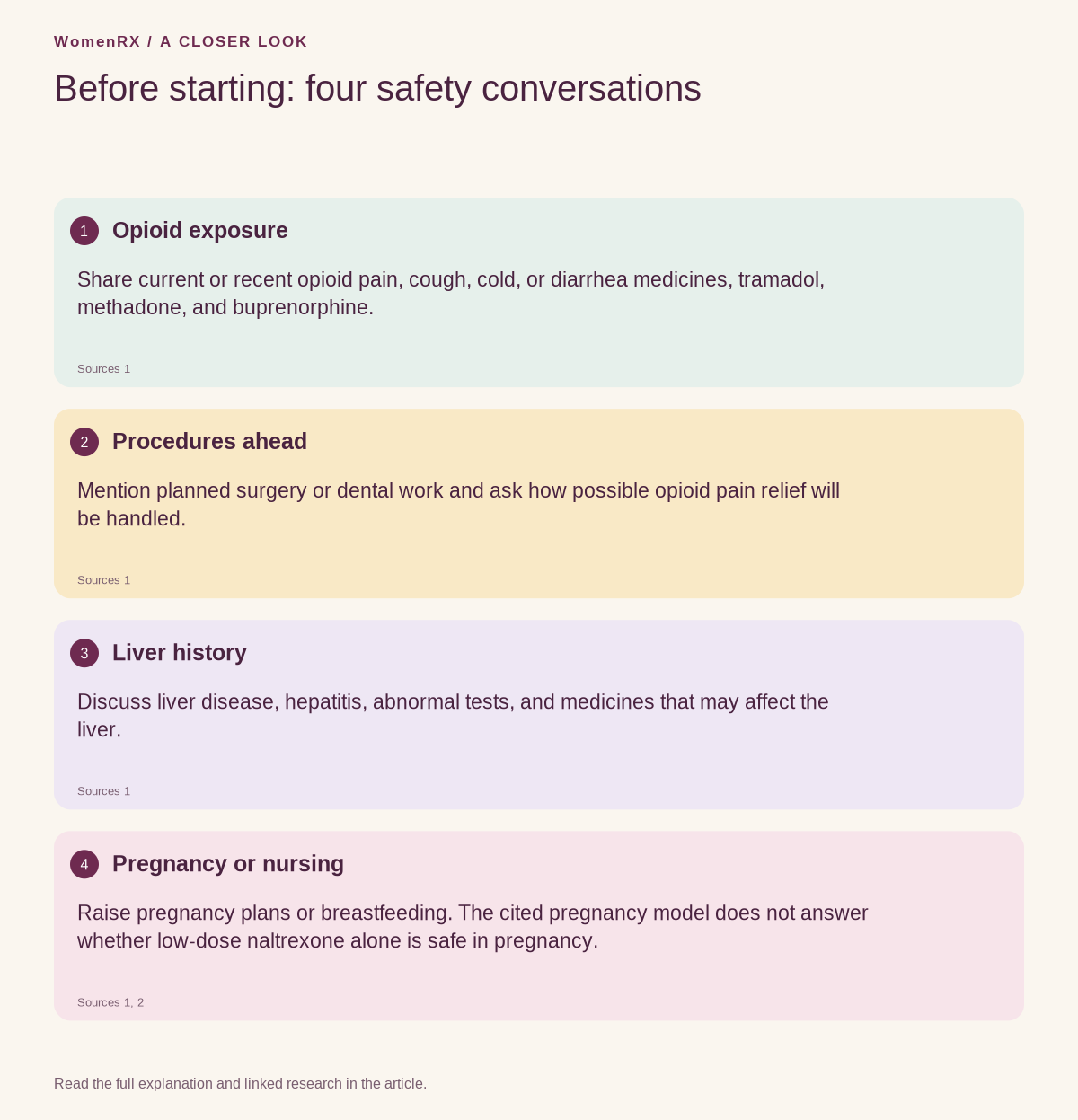
Before starting: four safety conversations
Opioid exposure: Share current or recent opioid pain, cough, cold, or diarrhea medicines, tramadol, methadone, and buprenorphine.1
Procedures ahead: Mention planned surgery or dental work and ask how possible opioid pain relief will be handled.1
Liver history: Discuss liver disease, hepatitis, abnormal tests, and medicines that may affect the liver.1
Pregnancy or nursing: Raise pregnancy plans or breastfeeding. The cited pregnancy model does not answer whether low-dose naltrexone alone is safe in pregnancy.12
Read the figure as text
Use these topics to make the pre-start conversation specific; they are discussion prompts, not a validated eligibility test.- Opioid exposure: Share current or recent opioid pain, cough, cold, or diarrhea medicines, tramadol, methadone, and buprenorphine.1
- Procedures ahead: Mention planned surgery or dental work and ask how possible opioid pain relief will be handled.1
- Liver history: Discuss liver disease, hepatitis, abnormal tests, and medicines that may affect the liver.1
- Pregnancy or nursing: Raise pregnancy plans or breastfeeding. The cited pregnancy model does not answer whether low-dose naltrexone alone is safe in pregnancy.12
More questions, answered
Should I stop an opioid medicine before starting low-dose naltrexone?
Tell the prescriber what opioid medicines or opioid-use-disorder treatments you take and when you last took them. Naltrexone-containing Contrave information warns that starting treatment in someone dependent on opioids can precipitate withdrawal. Its waiting-period guidance is specific to that product and should not be used as a personal low-dose schedule. 1
Does standard-dose naltrexone safety information apply to low-dose use?
Not automatically. The relevant prescribing information here covers extended-release Contrave, which combines naltrexone with bupropion. It can flag issues to discuss, particularly opioid exposure and liver health, but it does not establish the full safety profile of low-dose naltrexone alone. 1
Sources you can check
- CONTRAVE EXTENDED-RELEASE (NALTREXONE HYDROCHLORIDE AND BUPROPION HYDROCHLORIDE) TABLET, EXTENDED RELEASE [NALPROPION PHARMACEUTICALS LLC] | US prescribing information and patient instructionsAccessed 2026-09-25Return to first citation
- Cost-Effectiveness of Transcranial Magnetic Stimulation for Methamphetamine Use Disorder during Pregnancy.Jawish R, Tawfik AG, Mickey B, Gordon AJ, Silver R, Smid MC, Tak CR. · The journal of mental health policy and economics · 2025Return to first citation