Low-dose naltrexone: medicines and supplements to check
The clearest interaction to flag is with opioid medicines, but the effect at your low-dose naltrexone dose needs an individualized review.
Naltrexone can block opioid medicines, including opioid pain relievers, methadone, and buprenorphine. That interaction is established for naltrexone, but product information for a naltrexone-containing prescription product does not tell us how much blockade to expect at your low-dose naltrexone dose. Share your full medication and supplement list before pain treatment or a procedure. 1
Start with the opioid question
If you take low-dose naltrexone (LDN), tell the prescriber, pharmacist, dentist, surgeon, and anesthesia team before anyone plans pain treatment or a procedure. Naltrexone blocks opioid effects. Relevant medicines include opioid pain relievers and medicines for opioid use disorder, such as methadone and buprenorphine. 1
That doesn’t mean every dose of LDN blocks opioids to the same degree. The prescribing information that describes the opioid blockade is for Contrave, a product that combines naltrexone with bupropion. It is not a study of LDN, and it doesn’t establish how strong or how long the effect lasts at the dose you take. So don’t assume the interaction disappears at a low dose, and don’t assume the Contrave instructions provide a schedule for LDN. 1
The practical concern is that an opioid medicine may not work as expected while naltrexone is blocking its effect. The Contrave information also warns that trying to overcome the block by taking large amounts of opioids can cause serious injury, coma, or death. Don’t take extra opioid medicine to compensate. Ask the treating team to make a plan that accounts for your naltrexone use. 1
What about other prescriptions and supplements?
For psychiatric medicines, the interaction evidence is thinner than a simple list might suggest. A review of interactions between psychiatric medicines and treatments for opioid dependence found that few studies had examined naltrexone interactions, even though some interactions across the medicines reviewed could matter clinically. 2
If you take supplements, include them in the same medication review. Bring the product name, ingredients, and amount you use to a pharmacist or prescriber. Combination products deserve a close look because an ingredient may be easy to overlook on the front label.
Rather than trying to sort every medicine into “safe” or “unsafe” on your own, ask for a check of your exact list. The dose and formulation of LDN, other medicines, and the reason for treatment all matter to that conversation.
Make medication reconciliation useful
Before a visit or procedure, write down:
- Your LDN dose, how you take it, and when you last took it.
- Every prescription and over-the-counter medicine, including occasional pain, cough, or cold products.
- Supplements and combination products, with their labels or ingredient lists if possible.
- Any planned dental work, surgery, or other procedure where pain treatment may be needed.
Then ask: “Does anything on this list contain an opioid?” “Could LDN affect the pain treatment you’re considering?” and “Who should coordinate a plan if a procedure is coming up?” If you use methadone, buprenorphine, or another opioid medicine, say so directly rather than relying on a general medication list. The product information specifically identifies opioid medicines and warns against trying to overcome naltrexone’s blockade. 1
Ask the clinician who prescribed LDN or the pharmacist to coordinate with the team planning your pain care. Include how to handle any medication changes in that conversation.
Pregnancy, breastfeeding, and fertility treatment
If you’re pregnant, breastfeeding, or receiving fertility treatment, tell the relevant care team that you take LDN when you review your medicines. Ask whether the medication or pain-care plan should differ in your circumstances; the guidance cited here does not establish that it does. That’s especially useful before a procedure or a change in pain treatment, so the clinicians involved can coordinate the plan.
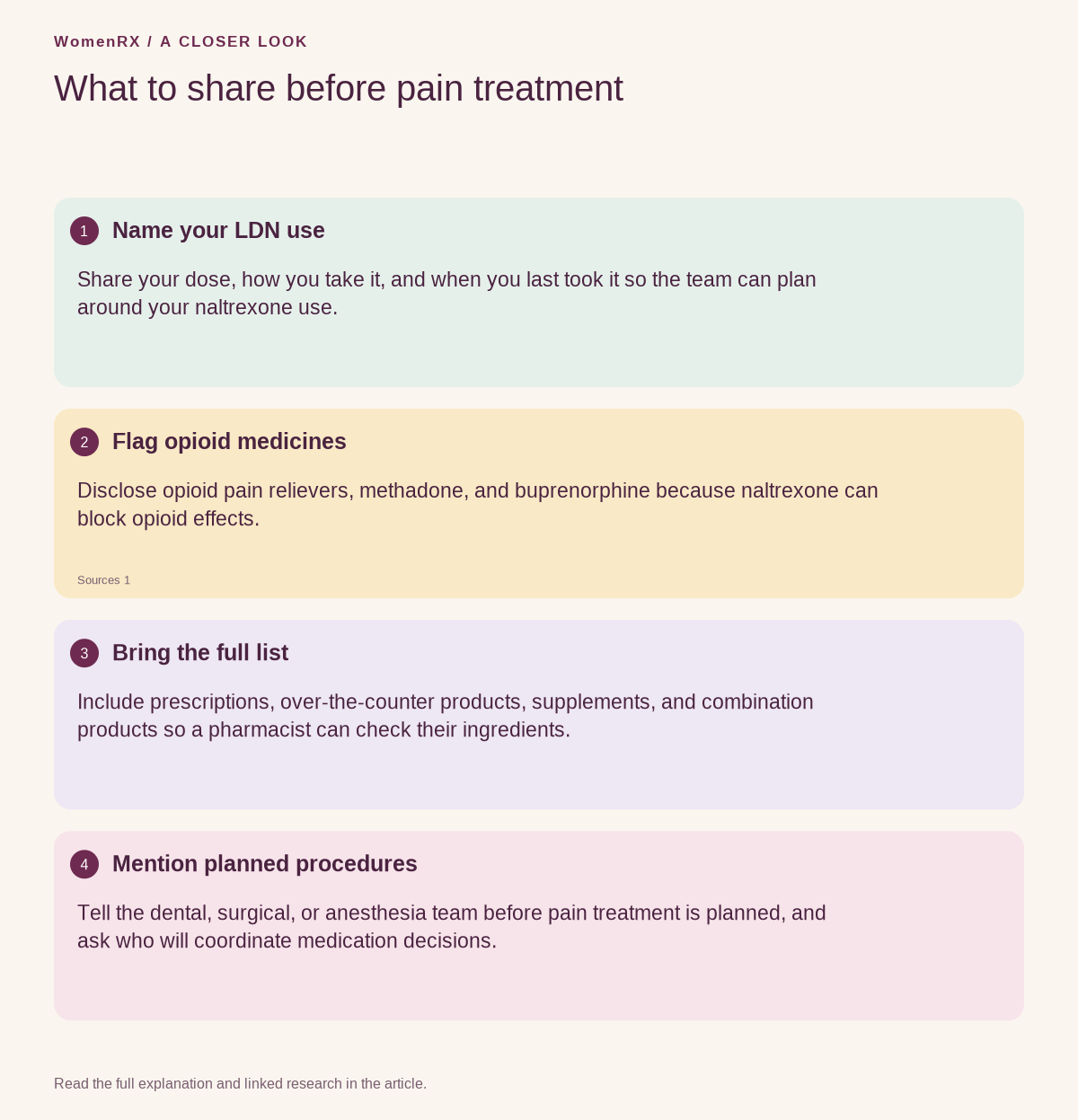
What to share before pain treatment
Name your LDN use: Share your dose, how you take it, and when you last took it so the team can plan around your naltrexone use.
Flag opioid medicines: Disclose opioid pain relievers, methadone, and buprenorphine because naltrexone can block opioid effects.1
Bring the full list: Include prescriptions, over-the-counter products, supplements, and combination products so a pharmacist can check their ingredients.
Mention planned procedures: Tell the dental, surgical, or anesthesia team before pain treatment is planned, and ask who will coordinate medication decisions.
Read the figure as text
Use this checklist to give the care team the information needed to review opioid blockade and check the rest of your medication list.- Name your LDN use: Share your dose, how you take it, and when you last took it so the team can plan around your naltrexone use.
- Flag opioid medicines: Disclose opioid pain relievers, methadone, and buprenorphine because naltrexone can block opioid effects.1
- Bring the full list: Include prescriptions, over-the-counter products, supplements, and combination products so a pharmacist can check their ingredients.
- Mention planned procedures: Tell the dental, surgical, or anesthesia team before pain treatment is planned, and ask who will coordinate medication decisions.
More questions, answered
Can I take an opioid pain medicine while using low-dose naltrexone?
Don’t assume it will work normally or change the dose yourself. Naltrexone can block opioid effects, but the product information describing this interaction does not establish the degree or duration of blockade at LDN doses. Contact the prescriber or pharmacist handling your pain treatment and tell them exactly what LDN you take. 1
Should I stop low-dose naltrexone before surgery?
Ask who will plan pain relief around your LDN use and whether your LDN schedule needs to change. Tell the surgeon and anesthesia team your dose and when you last took it, and ask them to coordinate a plan with your prescriber.
Sources you can check
- CONTRAVE EXTENDED-RELEASE (NALTREXONE HYDROCHLORIDE AND BUPROPION HYDROCHLORIDE) TABLET, EXTENDED RELEASE [NALPROPION PHARMACEUTICALS LLC] | US prescribing information and patient instructionsAccessed 2026-09-25Return to first citation
- Pharmacokinetic drug interactions and adverse consequences between psychotropic medications and pharmacotherapy for the treatment of opioid dependence.Saber-Tehrani AS, Bruce RD, Altice FL. · The American journal of drug and alcohol abuse · 2011Return to first citation