Magnesium Glycinate: What the Evidence Can Tell You
Magnesium glycinate has been studied in one specific lung-disease setting, but findings about magnesium in general don’t automatically apply to this form.
Magnesium glycinate is a source of magnesium, but evidence for magnesium as a nutrient or for other supplement forms doesn’t prove that glycinate treats a condition. One randomized trial studied glycinate as an add-on for adults with low magnesium and asthma or COPD; it’s a specific result, not proof of broad benefits. Safety depends on total supplemental and medication magnesium, kidney function, and interactions. 1 2
Start with the specific use
Magnesium helps the body carry out many routine functions, including muscle and nerve activity. That role doesn’t mean taking a magnesium supplement will relieve a particular symptom or treat a condition. And evidence about magnesium overall, or about another form such as citrate, isn’t automatically evidence for magnesium glycinate. 1
A randomized, double-blind, placebo-controlled trial studied 224 adults with low blood magnesium and either asthma or chronic obstructive pulmonary disease (COPD). Participants received magnesium glycinate or placebo alongside standard treatment for 12 months. The trial reported improvements in inflammation measures and lung function in the glycinate groups compared with placebo. 2
That finding applies to adults with these lung conditions and documented low magnesium. It doesn’t establish glycinate as a treatment for asthma or COPD generally, or show that it helps with sleep, stress, cramps, or other commonly proposed uses. The trial did not report whether women’s results differed. Investigators reported no serious adverse events, but provided limited detail about other adverse effects, so the finding doesn’t establish safety beyond the study’s reported results. 2
Don’t transfer evidence from other forms
For migraine prevention, the NIH Office of Dietary Supplements summarizes evidence on magnesium supplements overall and reports that a professional guideline considers magnesium probably effective. The evidence described isn’t specific to glycinate, so it can’t tell you whether glycinate works as well as the forms used in those studies. The guidance also says migraine-prevention amounts can exceed the adult upper limit for magnesium from supplements and medications, making this a use to discuss with a clinician rather than start on your own. 1
Other findings are also form-specific or uncertain. Magnesium supplements have only a small average effect on diastolic blood pressure in the trials summarized by NIH. For bone health, one short study in 20 postmenopausal women with osteoporosis used magnesium citrate, not glycinate; it measured a marker of bone turnover over 30 days, not whether fractures were prevented. Neither result establishes a benefit from glycinate. 1
For women, recommended magnesium intake changes with age and life stage. NIH lists daily allowances of 310-320 mg for adult women, 350-360 mg during pregnancy, and 310-320 mg during lactation, depending on age. These are total-intake recommendations, not suggested supplement doses. They also don’t show that glycinate has a special benefit during pregnancy, postpartum, perimenopause, or after menopause. 1
Check the label and the safety details
Look at the amount of elemental magnesium on the Supplement Facts panel. That’s the magnesium amount to count, not the total weight of the glycinate compound. For adults, the upper limit is 350 mg per day from supplements and magnesium-containing medicines; magnesium naturally present in food doesn’t count toward that limit. This limit is not a target, and it doesn’t establish a glycinate dose for treating a condition. 1
Too much magnesium from supplements or medicines can cause diarrhea, nausea, and abdominal cramping. The risk of serious toxicity is greater when kidney function is impaired, because the kidneys remove excess magnesium. If you have kidney disease or reduced kidney function, check with your care team before using a magnesium supplement. 1
Magnesium can also interfere with oral bisphosphonates used for osteoporosis and with tetracycline or quinolone antibiotics. Ask a pharmacist how to time a supplement if you take one of these medicines. Long-term use of proton pump inhibitors can lower magnesium levels in some people; loop and thiazide diuretics can increase magnesium loss, while potassium-sparing diuretics can reduce it. These are reasons to review your medication list, not reasons to add a supplement automatically. 1
A practical way to assess a proposed use is to ask: Was glycinate itself studied for this condition? Were the participants like me, including in their magnesium status and life stage? And does the potential benefit justify the supplement’s side effects and interaction risks? For most proposed uses, the distinction between evidence for magnesium generally and evidence for glycinate specifically is the key one.
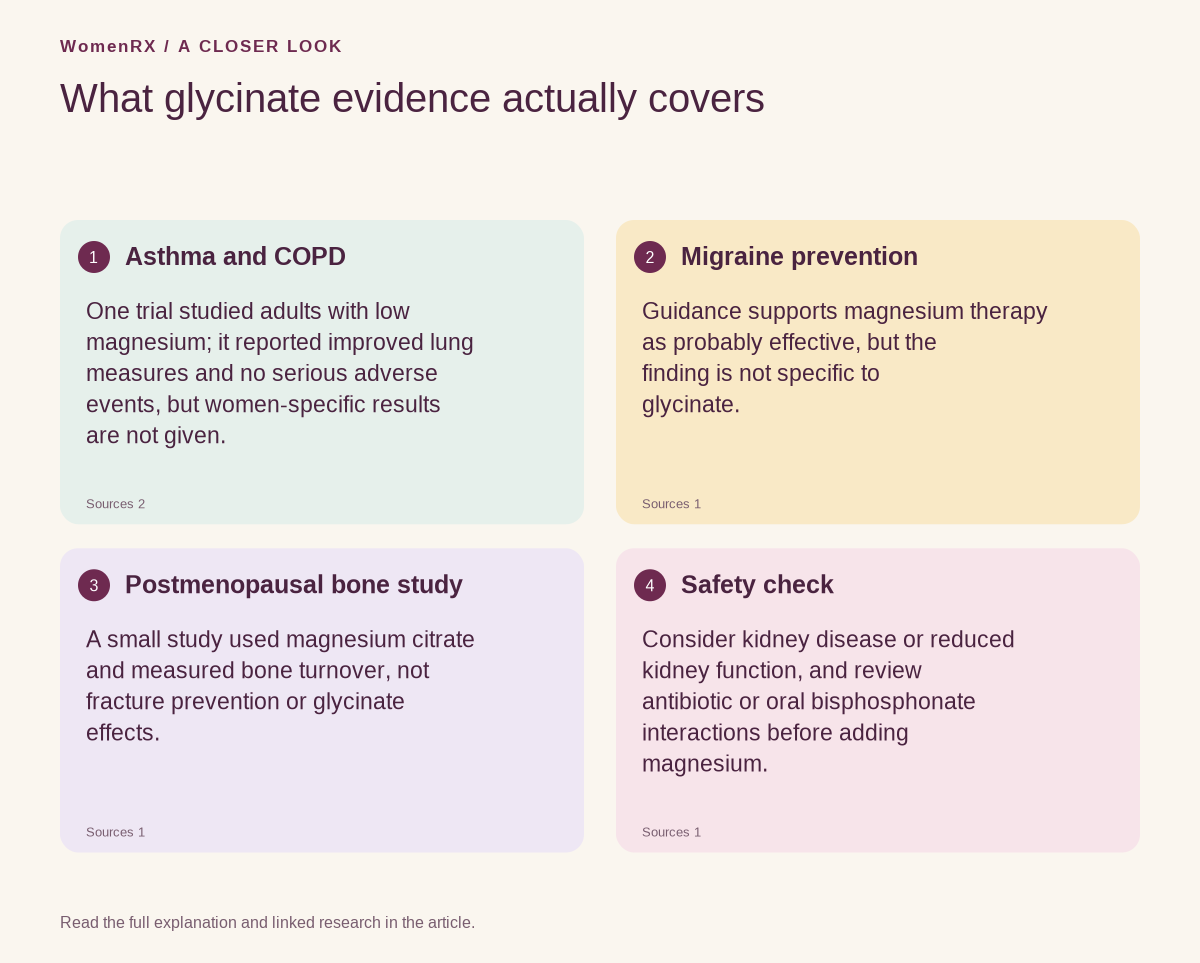
What glycinate evidence actually covers
Asthma and COPD: One trial studied adults with low magnesium; it reported improved lung measures and no serious adverse events, but women-specific results are not given.2
Migraine prevention: Guidance supports magnesium therapy as probably effective, but the finding is not specific to glycinate.1
Postmenopausal bone study: A small study used magnesium citrate and measured bone turnover, not fracture prevention or glycinate effects.1
Safety check: Consider kidney disease or reduced kidney function, and review antibiotic or oral bisphosphonate interactions before adding magnesium.1
Read the figure as text
Separate a direct trial of glycinate from magnesium findings that involve other forms or do not identify a specific form.- Asthma and COPD: One trial studied adults with low magnesium; it reported improved lung measures and no serious adverse events, but women-specific results are not given.2
- Migraine prevention: Guidance supports magnesium therapy as probably effective, but the finding is not specific to glycinate.1
- Postmenopausal bone study: A small study used magnesium citrate and measured bone turnover, not fracture prevention or glycinate effects.1
- Safety check: Consider kidney disease or reduced kidney function, and review antibiotic or oral bisphosphonate interactions before adding magnesium.1
More questions, answered
Does the adult upper limit include magnesium from food?
No. The 350 mg adult upper limit applies to magnesium from supplements and magnesium-containing medicines, not magnesium naturally found in food. It’s a safety limit, not a recommended supplement amount. 1
Is magnesium glycinate proven to help after menopause?
The postmenopausal bone study described used magnesium citrate and measured bone turnover over 30 days. It does not demonstrate a benefit from glycinate or show that magnesium prevents fractures. 1
Sources you can check
- Magnesium - Health Professional Fact SheetAccessed 2026-09-25Return to first citation
- Efficacy and safety of magnesium glycinate as add on therapy in hypomagnesemic asthma and chronic obstructive pulmonary disease patients: A randomised controlled study assessing inflammatory biomarkers.Maddirevula MK, Rajanandh MG, Wesley B. · Pulmonary pharmacology & therapeutics · 2026Return to first citation