Magnesium Citrate for Constipation: What to Know
Magnesium citrate has a laxative effect, but that doesn’t make a laxative product a substitute for a daily magnesium supplement.
Magnesium citrate can have an osmotic laxative effect, but a colonoscopy-prep trial doesn’t show how well it works alone for everyday constipation. For an occasional bout, start with fiber-rich foods. If diet and lifestyle changes do not help, ask a pharmacist about a suitable short-term laxative rather than using a magnesium supplement label to choose a dose. Don’t keep self-treating recurring symptoms; get individualized advice before using magnesium citrate if you have impaired kidney function or are pregnant or postpartum. 1 2 3 4
It works differently as a laxative
Magnesium citrate isn’t interchangeable with every magnesium supplement. Magnesium salts that remain in the gut can draw water into the intestine and colon, contributing to their laxative effect. That same effect can bring diarrhea, nausea, or abdominal cramping. 1
This is different from taking magnesium to meet a nutritional need. The amount of magnesium on a supplement label isn’t a constipation-treatment direction, and the tolerable upper intake level of 350 mg per day for adults applies to magnesium from supplements and medicines, not magnesium naturally present in food. It should not be treated as a recommended laxative dose. 1
What a constipation trial would need to show
A randomized study of 862 adults compared two schedules of a colonoscopy-preparation combination containing sodium picosulfate and magnesium citrate. It measured bowel cleansing before colonoscopy, not relief of everyday constipation; it also did not test magnesium citrate by itself. Those results therefore don’t establish how well magnesium citrate alone treats ordinary constipation. 4
That distinction matters if you’re comparing a laxative product with a general magnesium supplement or looking for a solution to repeated constipation. Check the product’s own directions with a pharmacist rather than assuming all magnesium products, or all uses of magnesium citrate, are equivalent.
Kidney function changes the safety picture
Your kidneys help remove magnesium. If kidney function is impaired, excess magnesium can be harder to clear, increasing the risk of magnesium toxicity. Very high magnesium exposure can cause serious problems, including low blood pressure, difficulty breathing, an irregular heartbeat, or cardiac arrest. Don’t use magnesium citrate to self-treat constipation if you have kidney disease or reduced kidney function without getting individualized medical advice. 1
Repeated use is also a reason to pause rather than keep taking more. Laxatives should be used only for a short time, and ongoing constipation merits assessment rather than repeated self-treatment. 3 Constipation can have different causes, including medicines. MedlinePlus recommends checking with a provider about medicines that may cause constipation and says a change in bowel habits should be discussed. 2 The NHS also advises seeking assessment for constipation with tummy pain, persistent tiredness, a sudden bowel-habit change, or a medicine that may be causing it. 3
Pregnancy and after birth deserve separate advice
Constipation is common during pregnancy and after giving birth. 3 During pregnancy, you can try diet and lifestyle changes first; the NHS says these simple measures are safe to try while pregnant. If they do not help, ask your prenatal care team or a pharmacist which laxative fits your situation. 3 After giving birth, ask your postpartum care team or a pharmacist about a suitable laxative if diet and lifestyle changes do not help. Neither situation is a reason to assume magnesium citrate is the right choice.
Choose the constipation step, not just the magnesium form
For an occasional bout without the cautions above, you can start with more fiber-rich foods, such as fruit, vegetables, and grains. If diet and lifestyle changes do not help, ask a pharmacist about a suitable short-term laxative. If you’re considering magnesium citrate, check its product directions rather than using a supplement label’s magnesium amount as a laxative direction. 1 2 3
Don’t make another laxative dose your next step if constipation keeps returning or comes with abdominal pain, a sudden change in bowel habits, or persistent tiredness. Those situations call for assessment. If you have impaired kidney function, are pregnant, or recently gave birth, get advice about a suitable option before using magnesium citrate. 1 2 3
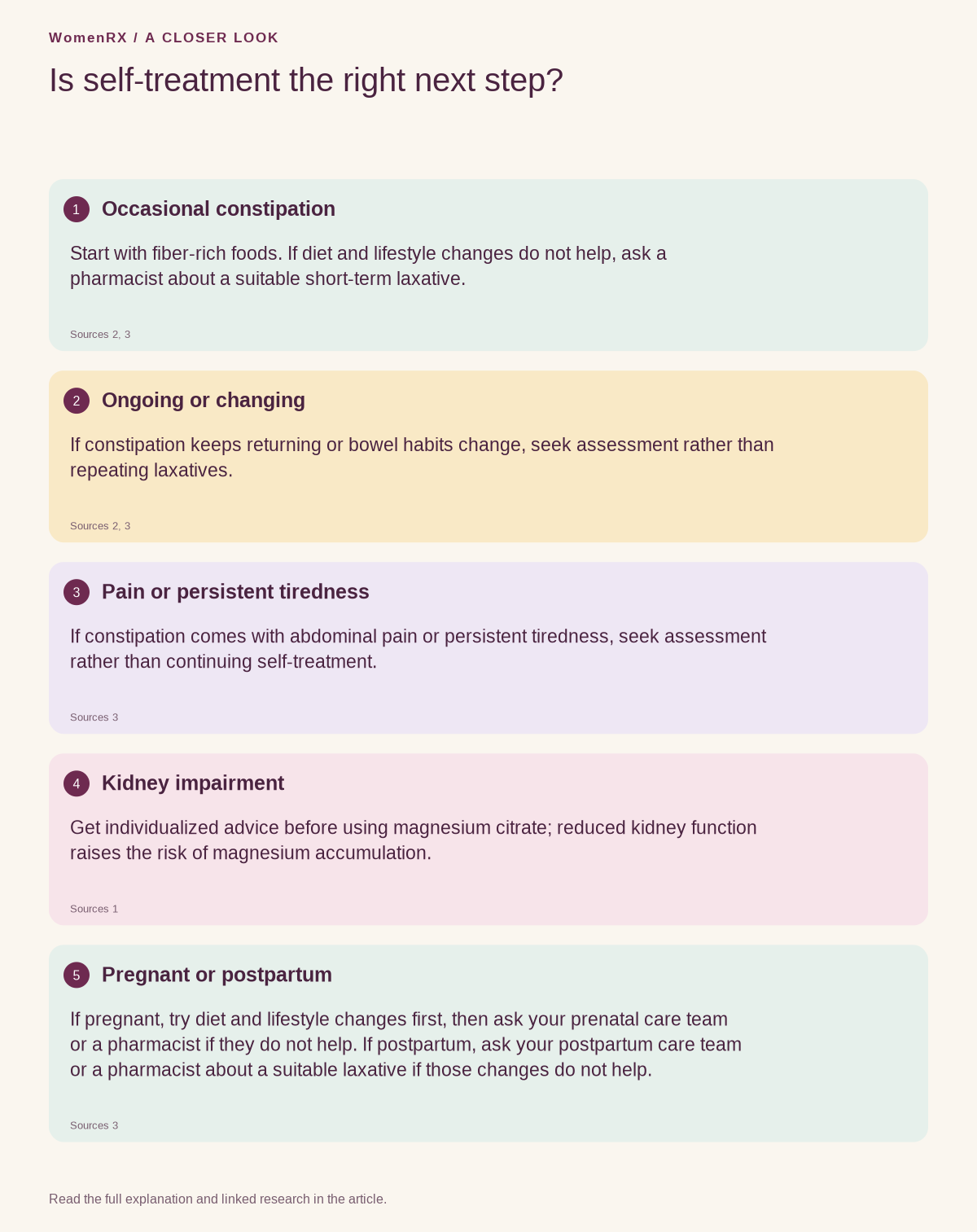
Is self-treatment the right next step?
Occasional constipation: Start with fiber-rich foods. If diet and lifestyle changes do not help, ask a pharmacist about a suitable short-term laxative.23
Ongoing or changing: If constipation keeps returning or bowel habits change, seek assessment rather than repeating laxatives.23
Pain or persistent tiredness: If constipation comes with abdominal pain or persistent tiredness, seek assessment rather than continuing self-treatment.3
Kidney impairment: Get individualized advice before using magnesium citrate; reduced kidney function raises the risk of magnesium accumulation.1
Pregnant or postpartum: If pregnant, try diet and lifestyle changes first, then ask your prenatal care team or a pharmacist if they do not help. If postpartum, ask your postpartum care team or a pharmacist about a suitable laxative if those changes do not help.3
Read the figure as text
Start with the occasional-constipation step, then check whether symptoms or circumstances point to assessment or individualized advice instead. The flow does not classify emergency symptoms.- Occasional constipation: Start with fiber-rich foods. If diet and lifestyle changes do not help, ask a pharmacist about a suitable short-term laxative.23
- Ongoing or changing: If constipation keeps returning or bowel habits change, seek assessment rather than repeating laxatives.23
- Pain or persistent tiredness: If constipation comes with abdominal pain or persistent tiredness, seek assessment rather than continuing self-treatment.3
- Kidney impairment: Get individualized advice before using magnesium citrate; reduced kidney function raises the risk of magnesium accumulation.1
- Pregnant or postpartum: If pregnant, try diet and lifestyle changes first, then ask your prenatal care team or a pharmacist if they do not help. If postpartum, ask your postpartum care team or a pharmacist about a suitable laxative if those changes do not help.3
More questions, answered
Does magnesium citrate raise magnesium levels like a supplement?
Some magnesium from the citrate form can be absorbed. Small studies suggest it’s absorbed more completely than magnesium oxide or sulfate, but that doesn’t mean a laxative product is a good routine way to meet magnesium needs. Magnesium from supplements or medicines can cause diarrhea, nausea, and cramping, and kidney impairment increases the risk of excess magnesium building up. 1
Sources you can check
- Magnesium - Health Professional Fact SheetAccessed 2026-09-25Return to first citation
- Constipation | MedlinePlusAccessed 2026-09-25Return to first citation
- Constipation - NHSAccessed 2026-09-25Return to first citation
- Randomized controlled trial comparing efficacy and acceptability of split- and standard-dose sodium picosulfate plus magnesium citrate for bowel cleansing prior to colonoscopy.Manes G, Repici A, Repici A, Hassan C, MAGIC-P study group. · Endoscopy · 2014Return to first citation