Can Magnesium Help Constipation? Choose the Right Product
Magnesium in a laxative and magnesium in a dietary supplement aren’t interchangeable, and kidney health can change the safety picture.
A magnesium-containing laxative may ease occasional constipation by drawing water into the bowel. That mechanism explains its intended use, but doesn’t tell you how much relief to expect compared with other options. A dietary magnesium supplement adds a nutrient; studies of how well its magnesium is absorbed don’t establish constipation relief. Constipation is common during pregnancy and after birth. 4 Check with your health care provider before using a laxative. Kidney problems and other medicines can affect whether a magnesium product is appropriate. 2 3
Magnesium may be relevant to occasional constipation, but first check what kind of product you’re holding. Some medicines use magnesium as a laxative. A dietary supplement has a different purpose and shouldn’t automatically be treated as a constipation remedy. 2
Laxative medicine and supplements do different jobs
Certain magnesium salts are used in laxatives. Some of the salt remains unabsorbed in the gut, where its osmotic effect draws water into the bowel and can loosen stool. The same effect can cause diarrhea, nausea, or abdominal cramping. 2 That mechanism explains why magnesium salts are used as laxatives, but it isn’t a randomized-trial result. It can’t tell you how much relief to expect compared with another treatment or no treatment.
Dietary supplements are labeled by the amount of elemental magnesium they contain. The NIH Office of Dietary Supplements notes that absorption varies among forms, but studies of nutrient absorption don’t establish constipation relief. 2 A product labeled as a laxative has a different intended use from a dietary magnesium supplement. Check with a clinician or pharmacist before using a laxative, and don’t transfer directions from one kind of product to another. 2 3
Kidney health and other medicines matter
The kidneys help remove excess magnesium. When kidney function is impaired, magnesium can build up, raising the risk of toxicity. High amounts from supplements or magnesium-containing medicines can also cause diarrhea, nausea, and cramps; severe toxicity can affect blood pressure, breathing, and heart rhythm. 2 If you have kidney disease or reduced kidney function, don’t start a magnesium laxative or supplement without product-specific advice.
Magnesium can reduce absorption of some oral antibiotics, including tetracyclines and quinolones, and of oral bisphosphonates used for osteoporosis. If you take one of these medicines, ask a pharmacist how to separate it from a magnesium product. 2
Pregnancy and after birth
Constipation is common during pregnancy and after giving birth. 4 If you’re considering a laxative, check with your health care provider before using it. 3
For mild, occasional constipation, simple steps may help: include fiber-rich foods such as fruits, vegetables, and grains, and don’t put off the urge to have a bowel movement. 3 4 If your bowel habits have changed, arrange medical advice instead of repeatedly reaching for a laxative. 3
Know when to get medical help immediately
A new or ongoing change in bowel habits is a reason to contact your clinician. 3 Get medical help immediately for sudden, sharp abdominal pain; blood in your stool; a hard, stiff, tender abdomen; or being unable to pass stool, especially if you’re also vomiting. 1 These symptoms call for immediate assessment, not a trial of a magnesium product.
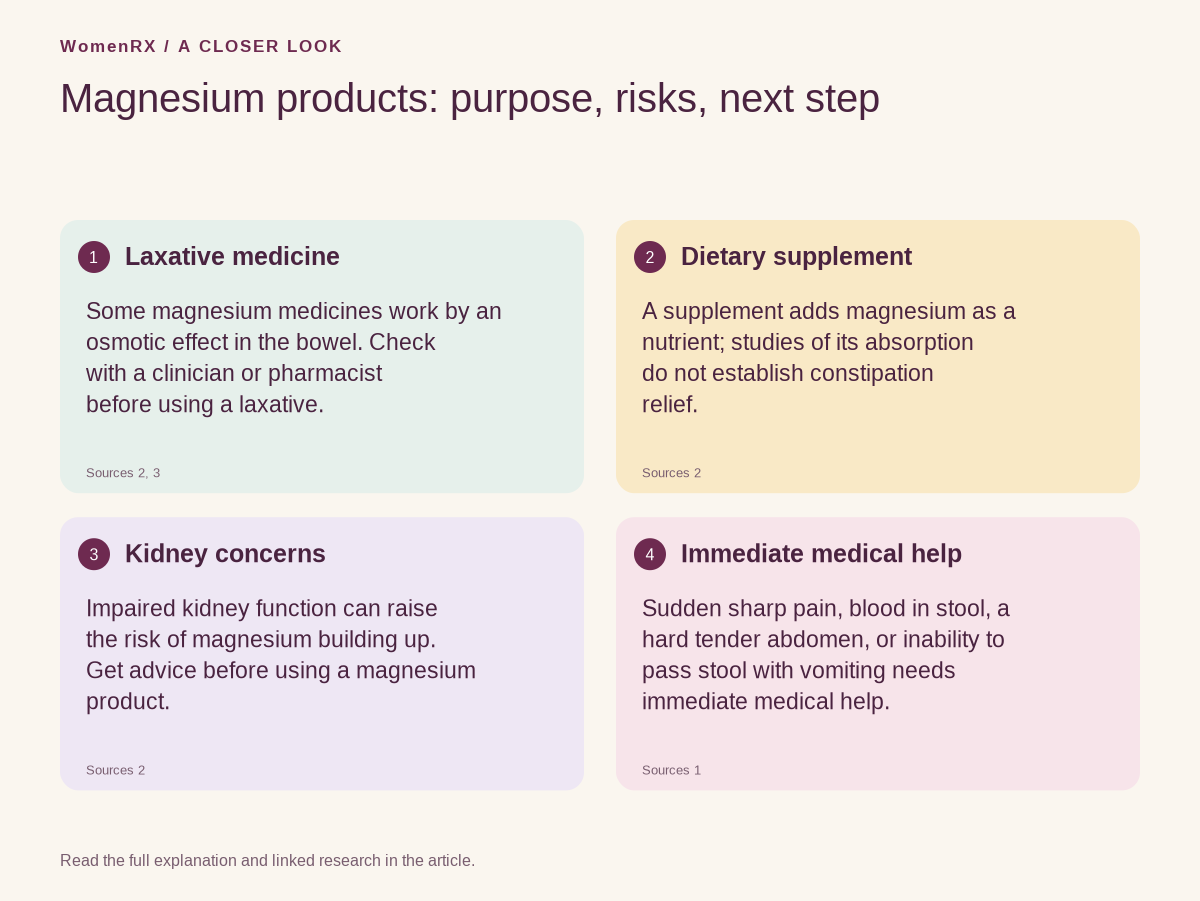
Magnesium products: purpose, risks, next step
Laxative medicine: Some magnesium medicines work by an osmotic effect in the bowel. Check with a clinician or pharmacist before using a laxative.23
Dietary supplement: A supplement adds magnesium as a nutrient; studies of its absorption do not establish constipation relief.2
Kidney concerns: Impaired kidney function can raise the risk of magnesium building up. Get advice before using a magnesium product.2
Immediate medical help: Sudden sharp pain, blood in stool, a hard tender abdomen, or inability to pass stool with vomiting needs immediate medical help.1
Read the figure as text
Magnesium occurs in dietary supplements and in some laxative medicines. Check the product’s labeled purpose and consider the safety context.- Laxative medicine: Some magnesium medicines work by an osmotic effect in the bowel. Check with a clinician or pharmacist before using a laxative.23
- Dietary supplement: A supplement adds magnesium as a nutrient; studies of its absorption do not establish constipation relief.2
- Kidney concerns: Impaired kidney function can raise the risk of magnesium building up. Get advice before using a magnesium product.2
- Immediate medical help: Sudden sharp pain, blood in stool, a hard tender abdomen, or inability to pass stool with vomiting needs immediate medical help.1
More questions, answered
Do absorption studies show that a magnesium citrate supplement relieves constipation?
No. NIH lists citrate among magnesium supplement forms, but the absorption studies it summarizes don’t measure constipation relief. Some magnesium medicines are intended as laxatives; don’t assume a supplement is one. 2
Can I use a magnesium laxative if I have kidney disease?
Kidney impairment can increase the risk of magnesium building up in the body. Get advice about the specific product before using it. 2
Sources you can check
- Abdominal Pain | MedlinePlusAccessed 2026-09-25Return to first citation
- Magnesium - Health Professional Fact SheetAccessed 2026-09-25Return to first citation
- Constipation | MedlinePlusAccessed 2026-09-25Return to first citation
- Constipation - NHSAccessed 2026-09-25Return to first citation