Magnesium Citrate and the Scale: What Changes?
A short-term scale dip after a bowel movement may reflect less stool or fluid, not lost body fat.
A scale change around a bowel movement or diarrhea can reflect stool leaving your digestive tract or fluid loss. It doesn’t show that body fat has changed, and it isn’t evidence of lasting weight loss. If you’re taking magnesium citrate, consider what happened with your bowel movements before attributing a short-term reading to the supplement. 134
A bowel change can move the scale without changing body fat
A bowel movement changes what’s in your digestive tract. Diarrhea can also mean losing fluid. Either may affect a short-term scale reading, but the number can’t tell you that you’ve lost body fat. A bowel-related dip isn’t evidence of lasting weight loss. 14
Magnesium citrate is one form of magnesium found in supplements, and magnesium is an ingredient in some laxatives. Unabsorbed magnesium salts can draw water into the bowel and stimulate gut movement, though this general explanation doesn’t establish the effect of magnesium citrate on its own. Higher amounts of magnesium from supplements or medicines can cause diarrhea, nausea, or abdominal cramping. 1
The same distinction applies in the other direction. If you’re constipated, stool may be hard and dry, and you may be having fewer bowel movements than usual. A bowel movement can change what’s in your digestive tract, but having one every day isn’t necessary for everyone. 3
What to make of a reading after a bowel change
If your weight drops around a bowel movement or a bout of diarrhea, treat it as a short-term reading, not a measure of fat loss. A reading that rises after you replace lost fluids also doesn’t mean you gained body fat. If you compare weights, look at readings taken under similar conditions and pay more attention to the pattern than to one number. 4
Constipation can make the scale harder to interpret because bowel habits and stool contents change. MedlinePlus defines constipation as fewer than three bowel movements a week, but also notes that a bowel movement every day isn’t required. A change in your usual bowel habits is more useful context than comparing yourself with a daily schedule. 3
If you’re pregnant, don’t treat a bowel-related scale dip as a change in body fat or assume magnesium citrate explains a change in weight. Pregnancy has its own magnesium intake recommendations, but those recommendations don’t explain an individual scale reading. 134 Likewise, if a reading changes around your period, notice whether constipation, a bowel movement, or diarrhea happened at the same time. That context can help you interpret the reading without assuming citrate caused every change. 34
A laxative-related change isn’t fat loss
A change related to bowel emptying or diarrhea is not evidence that body fat has changed. Diarrhea can cause fluid loss, and the laxative effects described for magnesium salts involve unabsorbed salts in the intestine and colon, not a demonstrated fat-burning effect. 14
If you’re taking magnesium citrate, judge any bowel effects by the bowel issue you’re addressing, not by a temporary change in weight. Don’t take more to chase a lower reading. Magnesium products can cause diarrhea, and people with impaired kidney function have a greater risk of magnesium toxicity because their bodies may be less able to remove excess magnesium. 1
When diarrhea needs attention
Diarrhea can cause dehydration. Feeling very thirsty or dizzy can be a sign of dehydration; confusion or shock calls for immediate medical help. For an adult, contact a health care provider for diarrhea lasting more than two days, signs of dehydration, or severe abdominal or rectal pain. 24
The useful distinction is simple: a scale change around bowel emptying or diarrhea may reflect stool or fluid. It can’t tell you whether body fat has changed.
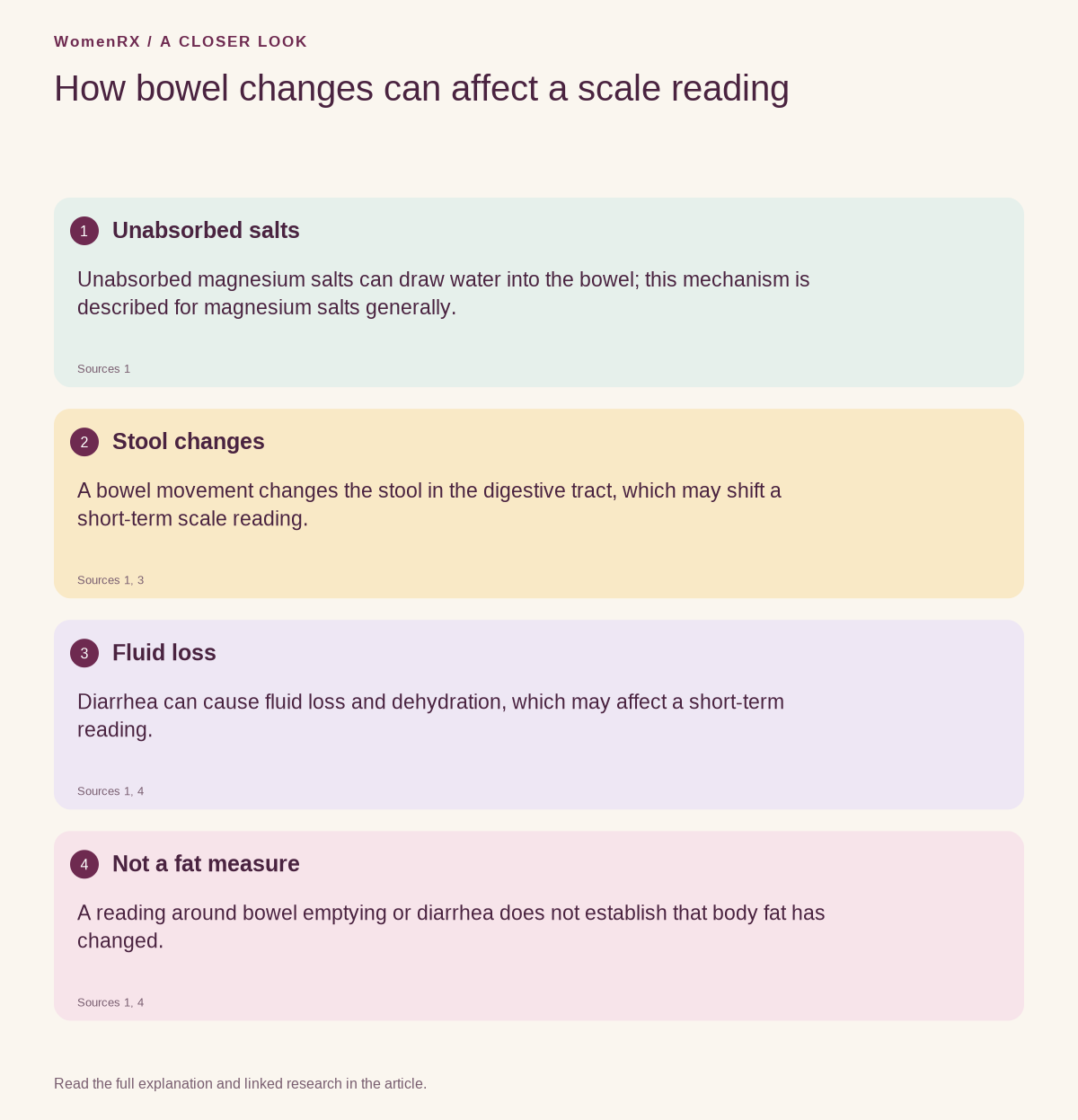
How bowel changes can affect a scale reading
Unabsorbed salts: Unabsorbed magnesium salts can draw water into the bowel; this mechanism is described for magnesium salts generally.1
Stool changes: A bowel movement changes the stool in the digestive tract, which may shift a short-term scale reading.13
Fluid loss: Diarrhea can cause fluid loss and dehydration, which may affect a short-term reading.14
Not a fat measure: A reading around bowel emptying or diarrhea does not establish that body fat has changed.14
Read the figure as text
A bowel movement or diarrhea may change stool contents or fluid and shift a short-term reading. That reading does not show whether body fat has changed.- Unabsorbed salts: Unabsorbed magnesium salts can draw water into the bowel; this mechanism is described for magnesium salts generally.1
- Stool changes: A bowel movement changes the stool in the digestive tract, which may shift a short-term scale reading.13
- Fluid loss: Diarrhea can cause fluid loss and dehydration, which may affect a short-term reading.14
- Not a fat measure: A reading around bowel emptying or diarrhea does not establish that body fat has changed.14
More questions, answered
Can constipation affect the number on the scale?
It can change what is temporarily in your digestive tract, so a reading may be harder to interpret. Constipation means fewer than three bowel movements a week, but a daily bowel movement isn’t necessary for everyone. 3
Does diarrhea after taking magnesium citrate mean it is working for weight loss?
No. Diarrhea can lead to fluid loss; a lower scale reading afterward isn’t evidence of fat loss. For an adult, diarrhea lasting more than two days, signs of dehydration, or severe abdominal or rectal pain are reasons to contact a health care provider. 124
Sources you can check
- Magnesium - Health Professional Fact SheetAccessed 2026-09-25Return to first citation
- Diarrhea | MedlinePlusAccessed 2026-09-25Return to first citation
- Constipation | MedlinePlusAccessed 2026-09-25Return to first citation
- Dehydration: MedlinePlusAccessed 2026-09-25Return to first citation