How Much Iron Do You Need at Different Life Stages?
Your daily iron target depends on life stage, but a nutrition target is not the same as a treatment dose for low iron.
For women ages 19-50, the recommended dietary allowance is 18 mg of iron a day from all sources. The RDA differs by sex and life stage: for women it is 8 mg from age 51 and 27 mg during pregnancy. These are nutrition targets, not instructions to take that amount as a supplement. Heavy periods or a low iron result call for a closer look at blood tests and the cause. 2
Start with the kind of iron question you have
There are two different questions: how much iron to get in a usual diet, and how much iron to take to treat a deficiency. The recommended dietary allowance (RDA) answers the first. It is a planning target for healthy people, not a treatment dose or a recommendation that everyone take an iron pill. 2
That distinction matters because iron needs shift with life stage, and taking more is not automatically better. Iron supplements can cause nausea or constipation, and excess iron can be a concern for some people, including those with hereditary hemochromatosis. 2
Your life stage changes the dietary target
For women ages 19-50, the RDA is 18 mg of iron a day. It drops to 8 mg at age 51 and older. Pregnancy raises the target to 27 mg a day; during lactation, the target is 9 mg for ages 19-50. These totals include food and supplements. 2
Menstrual blood loss is one reason some people need closer attention to iron status. A study of Dutch blood donors found that menstrual blood loss was associated with ferritin and hemoglobin levels in premenopausal donors. That finding helps explain why heavy bleeding can matter, but it does not tell you whether you personally need a supplement. 3
Menopause itself isn't the cutoff for the dietary target: the recommendation changes at age 51, whether menopause happened earlier or later. 1 2 But a low iron result should not be dismissed as an expected part of getting older. Blood loss, diet, and problems absorbing nutrients are among the factors associated with iron deficiency, so the reason for a low result still matters. 2
Pregnancy is different again: the dietary target rises, but that number alone does not determine whether you need a particular supplement or treatment. Discuss your iron intake and test results with your pregnancy care team rather than adding a separate high-dose product on your own. 2
Food can contribute, but intake is not a test result
Iron comes from both animal and plant foods. Meat and seafood provide heme iron, which is more readily absorbed; beans, lentils, tofu, nuts, vegetables, and fortified grain products provide nonheme iron. Vitamin C and meat, poultry, or seafood can help the body absorb nonheme iron. People following vegetarian diets have a higher iron requirement in the dietary reference guidance because plant iron is less bioavailable. 2
For example, lentils, white beans, fortified cereal, and tofu can all contribute iron. A varied diet can help meet ordinary needs, but food choices alone cannot tell you whether your iron stores are low. And if a blood test confirms a deficiency, improving your diet may not be the whole treatment plan. 2
What ferritin and a blood count can tell you
Iron deficiency can develop in stages. Ferritin, a marker of stored iron, can fall before hemoglobin declines. Hemoglobin is part of a blood count; when it is low because iron stores are depleted, the deficiency has progressed to iron-deficiency anemia. So a normal hemoglobin result does not necessarily mean iron stores are full. 2
A low iron result is best interpreted with the test names and values in front of you, along with your symptoms, bleeding history, pregnancy status, and other health factors. Anemia can also have causes other than iron deficiency, so a blood count alone does not identify the cause. 2
Fatigue and weakness can occur with iron-deficiency anemia, but they are not proof that iron is the problem. If you have very heavy bleeding, a major change in your cycle, or periods that regularly last longer than eight days, get the bleeding itself assessed as well as asking whether iron testing is appropriate. 1
If you’re considering a supplement, read the label carefully
Look at the Supplement Facts panel for the amount of iron, meaning elemental iron. The weight of the iron compound is not the same as the amount of elemental iron. For example, ferrous fumarate, ferrous sulfate, and ferrous gluconate contain different proportions of elemental iron, so comparing the compound names alone can be misleading. 2
An iron-only supplement may contain much more than the 18 mg found in many women’s multivitamins. The NIH Office of Dietary Supplements reports that supplemental doses of 45 mg a day or more may cause stomach upset, nausea, or constipation. That figure is not a personal treatment threshold; it is a reason to avoid assuming that a larger dose is harmless or appropriate. 2
Calcium may interfere with iron absorption, although the effect is not certain. The NIH fact sheet notes that experts suggest taking separate calcium and iron supplements at different times. If a clinician has recommended iron and you are also taking calcium, ask how to fit both into your routine. 2
A practical way to choose your next step
If you feel well and want to meet ordinary needs, start with food and your life-stage RDA rather than automatically adding an iron-only supplement. If you have heavy periods, are pregnant, or have a low ferritin or blood-count result, ask what the tests show and what may be causing the result. If treatment is recommended, follow the plan for the specific finding rather than treating the RDA as a dose. The right choice depends on whether you are preventing a shortfall or treating a confirmed deficiency.
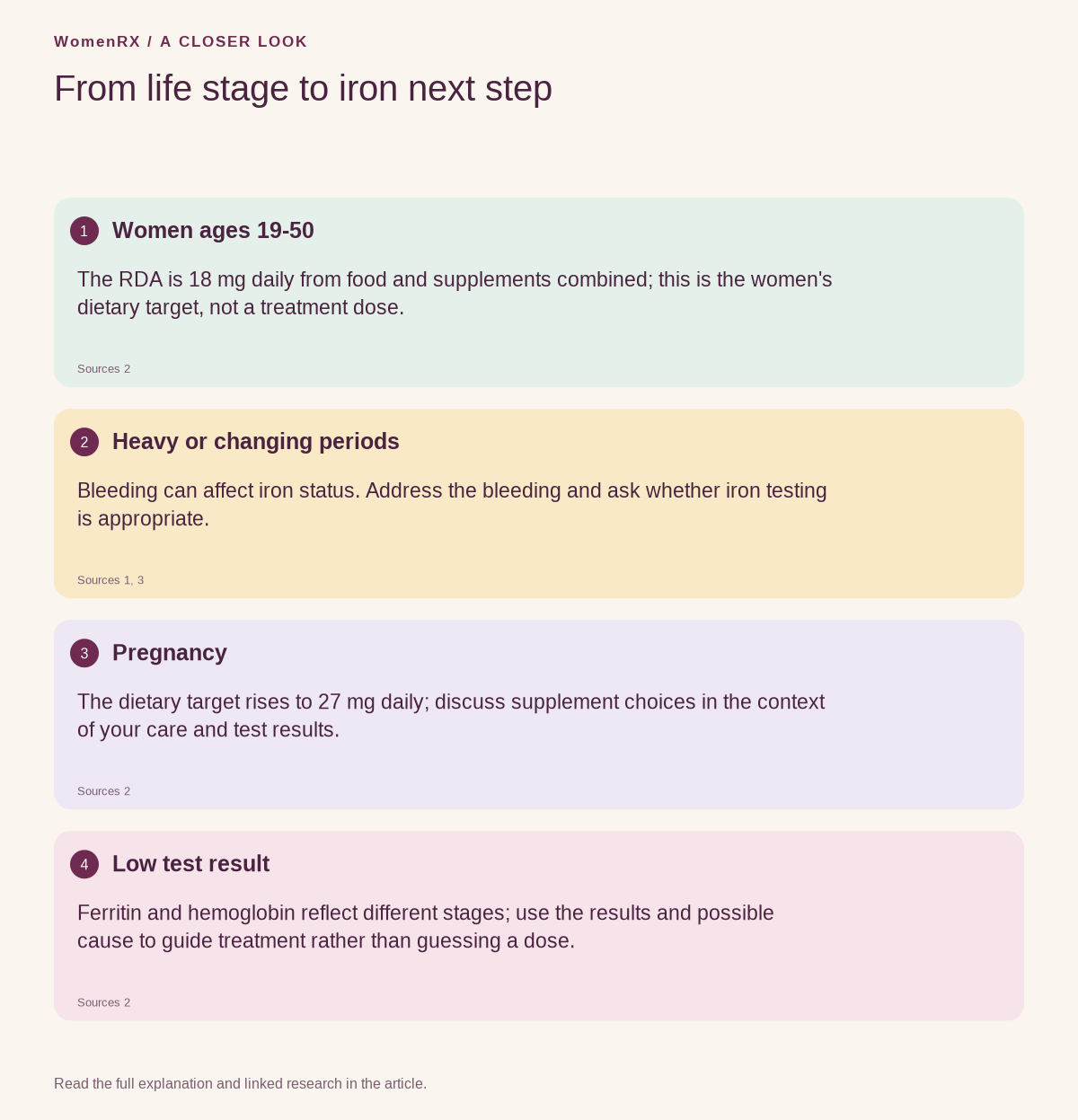
From life stage to iron next step
Women ages 19-50: The RDA is 18 mg daily from food and supplements combined; this is the women's dietary target, not a treatment dose.2
Heavy or changing periods: Bleeding can affect iron status. Address the bleeding and ask whether iron testing is appropriate.13
Pregnancy: The dietary target rises to 27 mg daily; discuss supplement choices in the context of your care and test results.2
Low test result: Ferritin and hemoglobin reflect different stages; use the results and possible cause to guide treatment rather than guessing a dose.2
Read the figure as text
Use this path to distinguish ordinary dietary intake from a question that may need blood-test interpretation or individualized treatment.- Women ages 19-50: The RDA is 18 mg daily from food and supplements combined; this is the women's dietary target, not a treatment dose.2
- Heavy or changing periods: Bleeding can affect iron status. Address the bleeding and ask whether iron testing is appropriate.13
- Pregnancy: The dietary target rises to 27 mg daily; discuss supplement choices in the context of your care and test results.2
- Low test result: Ferritin and hemoglobin reflect different stages; use the results and possible cause to guide treatment rather than guessing a dose.2
More questions, answered
Can I tell whether I need iron from symptoms?
No symptom by itself confirms iron deficiency. Fatigue and weakness can occur with iron-deficiency anemia, but iron status is assessed through blood tests and the wider clinical picture. 2
Does a normal hemoglobin result rule out low iron stores?
Not necessarily. Ferritin can decline as iron stores are depleted before hemoglobin falls enough to indicate anemia. 2
Sources you can check
- Menstruation | Period | MedlinePlusAccessed 2026-09-25Return to first citation
- Iron - Health Professional Fact SheetAccessed 2026-09-25Return to first citation
- Menstrual blood loss is an independent determinant of hemoglobin and ferritin levels in premenopausal blood donors.Ekroos S, Karregat J, Toffol E, Castrén J, Arvas M, van den Hurk K. · Acta obstetricia et gynecologica Scandinavica · 2024Return to first citation