When Long-Term Iron Supplements Need a Second Look
Whether to keep taking iron depends on why you started, whether that reason still applies, and what your follow-up shows.
There’s no single point when iron becomes “too long” to take. Treatment may still be needed if iron deficiency or its cause persists, but an over-the-counter iron pill isn’t something to continue indefinitely just because it once seemed useful. Review why you started, any ongoing blood loss or pregnancy-related need, other products containing iron, and whether blood count and iron-store tests would help guide the next decision. 23
The reason you started matters more than the calendar
Iron helps your body make hemoglobin, the protein in red blood cells that carries oxygen. Low iron can result from blood loss, too little iron in the diet, or difficulty absorbing it. That means a supplement may address the shortage without settling why it happened. 3
If iron was prescribed after a documented deficiency, don’t stop it simply because you’ve taken it for a while. Instead, revisit two questions: Has the deficiency improved? And is the reason for it still present? A blood count can help assess anemia, while ferritin is a measure of iron stores. Ask which results are useful in your situation rather than relying on how you feel alone. The right follow-up depends on the reason for treatment; there isn’t one duration or testing schedule that fits everyone. 24
If you started an iron pill on your own, that review is just as useful. A product labeled “for women” doesn’t establish that you need iron, and iron-only supplements often contain more than multivitamins do. The elemental iron amount on the Supplement Facts panel tells you how much iron a supplement provides, even when products use different forms such as ferrous sulfate or ferrous fumarate. 2
What might have changed since you began?
Heavy periods can mean continuing iron loss. Heavy menstrual bleeding raises the risk of iron deficiency. If your bleeding remains heavy, an improved test result doesn’t necessarily mean the reason for low iron has gone away. If bleeding has changed, your iron plan may need to change too. 2
Pregnancy changes iron needs. The body needs more iron during pregnancy as blood volume expands and the fetus and placenta develop. Pregnancy advice is distinct from a plan for treating an established deficiency: the NIH Office of Dietary Supplements reports differing recommendations on routine screening and supplementation for pregnant people without symptoms, while describing iron treatment for iron-deficiency anemia as a separate issue. Review your prenatal vitamin and any additional iron together rather than assuming a previous plan still fits. 2
After periods end, an old explanation may no longer fit. Recommended iron intake is lower for women ages 51 and older than for women ages 19 to 50, but those age-based figures aren’t a test of your personal iron status. If you were taking iron because of menstrual losses and no longer menstruate, it’s worth revisiting the reason for continued use. If tests still show deficiency, the question becomes what’s causing it now; blood loss and absorption problems are among the possible causes of low iron. 23
Other circumstances matter as well. Frequent blood donation can deplete iron stores; in trials involving donors, oral iron probably reduced deferral for low hemoglobin at the first donation after treatment began compared with no iron. That finding supports a specific use of iron, not a reason for every donor to take it indefinitely. 24
Check for extra iron and problems you can feel
Look at everything you take, not just the bottle marked “iron.” Multivitamins and prenatal supplements may contain it too. If you use ferrous sulfate, mention medicines such as levothyroxine, doxycycline, or ciprofloxacin, as well as calcium supplements or antacids, when reviewing your routine: these can affect how iron or the other medicine works. A pharmacist can help you work out an appropriate separation plan rather than guessing at a timing gap. 12
Nausea and constipation are possible side effects of higher supplemental iron intakes. Too much iron can be harmful, and the inherited condition hemochromatosis is another way iron can build up in the body. Neither an upset stomach nor the length of time you’ve taken a pill proves that you have iron overload. They’re reasons to look at your symptoms, intake, and test results in context rather than simply adding more iron or continuing without review. 23
A useful next move is to bring the reason iron was started, any past results you have, and photos of your supplement labels to the person managing your care. Ask what’s being treated now, whether the cause is ongoing, and which follow-up results would support continuing or changing the plan.
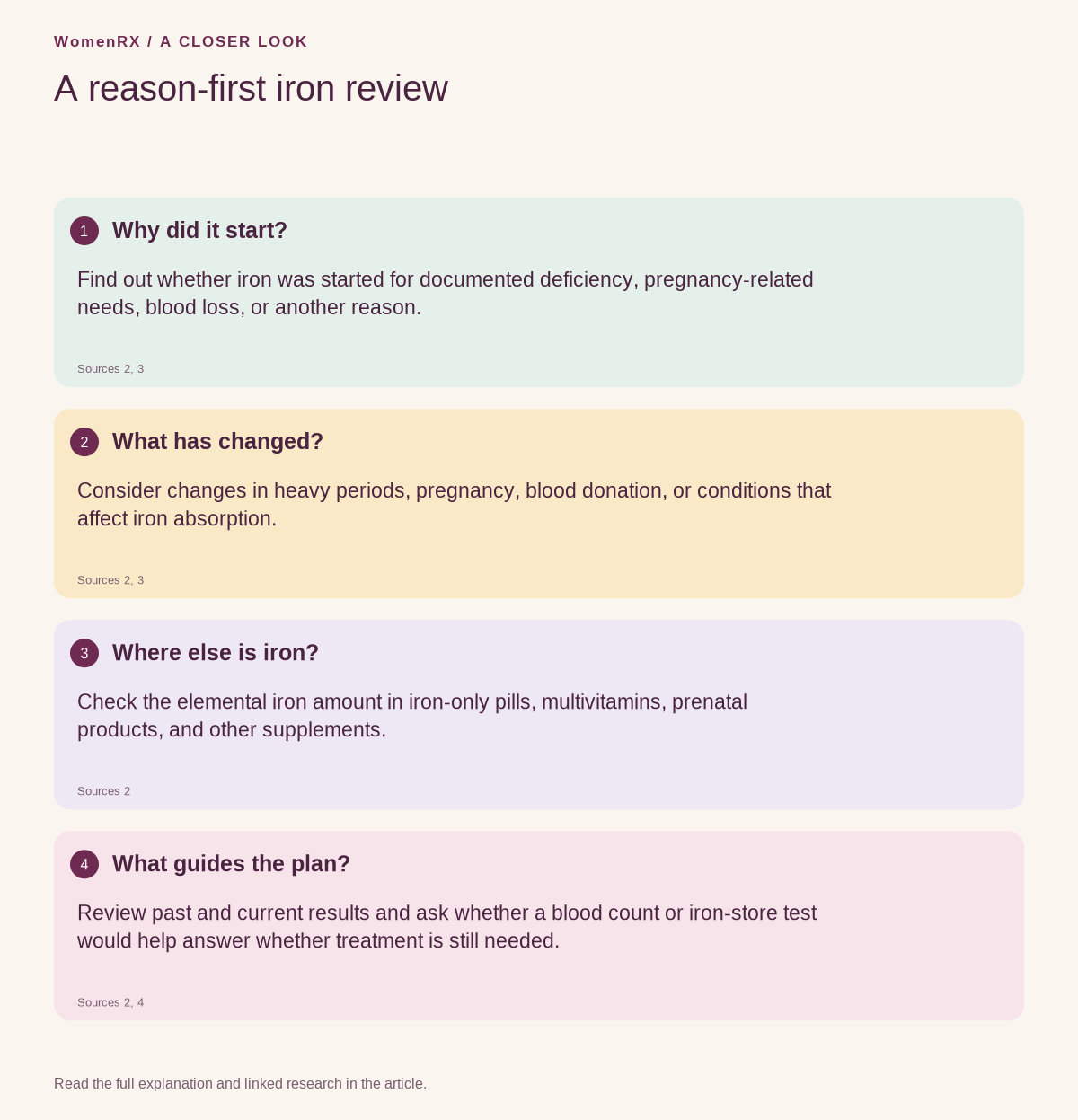
A reason-first iron review
Why did it start?: Find out whether iron was started for documented deficiency, pregnancy-related needs, blood loss, or another reason.23
What has changed?: Consider changes in heavy periods, pregnancy, blood donation, or conditions that affect iron absorption.23
Where else is iron?: Check the elemental iron amount in iron-only pills, multivitamins, prenatal products, and other supplements.2
What guides the plan?: Review past and current results and ask whether a blood count or iron-store test would help answer whether treatment is still needed.24
Read the figure as text
Four questions connect the original reason for iron with what to check before deciding whether the plan still fits.- Why did it start?: Find out whether iron was started for documented deficiency, pregnancy-related needs, blood loss, or another reason.23
- What has changed?: Consider changes in heavy periods, pregnancy, blood donation, or conditions that affect iron absorption.23
- Where else is iron?: Check the elemental iron amount in iron-only pills, multivitamins, prenatal products, and other supplements.2
- What guides the plan?: Review past and current results and ask whether a blood count or iron-store test would help answer whether treatment is still needed.24
More questions, answered
Does long-term iron use mean I have iron overload?
No. Duration alone doesn’t establish iron overload. Excess iron can harm the body, but whether you need to change a supplement plan depends on your intake, medical history, and appropriate assessment, not the calendar by itself. 3
Does the iron in my multivitamin count?
Yes. Check its Supplement Facts panel for elemental iron and include it when reviewing other iron-containing products. Multivitamins vary, and some iron-only supplements provide considerably more iron. 2
Sources you can check
- Taking ferrous sulfate with other medicines and herbal supplements - NHSAccessed 2026-09-25Return to first citation
- Iron - Health Professional Fact SheetAccessed 2026-09-25Return to first citation
- Iron: MedlinePlusAccessed 2026-09-25Return to first citation
- Oral or parenteral iron supplementation to reduce deferral, iron deficiency and/or anaemia in blood donors.Geneen LJ, Atha K, Kimber C, McClune W, Dorée C, Vendramin C, Chia LW, Roberts DJ. · The Cochrane database of systematic reviews · 2026Return to first citation