How to Choose an Iron Supplement After Deficiency
Compare the elemental iron amount first, then choose a form and schedule that match your treatment plan and what you can tolerate.
On an iron label, focus on the amount of elemental iron, not just the weight of the iron compound. Ferrous sulfate, fumarate, and gluconate contain different proportions of elemental iron, and higher supplemental amounts can cause stomach or bowel symptoms. Ask your clinician what amount and schedule to use, how progress will be checked, and whether ongoing blood loss or pregnancy-related needs affect the plan. 1
Start with the amount your body receives
When comparing bottles, find the amount of elemental iron per serving in the Supplement Facts panel. The compound name and its total weight are not the same as the amount of iron supplied. For example, ferrous fumarate is about 33% elemental iron by weight, ferrous sulfate about 20%, and ferrous gluconate about 12%. The panel lists elemental iron so you don’t have to calculate it yourself. 1
That distinction matters when comparing products. A label that highlights a larger number for the compound may not provide more elemental iron. Compare the elemental iron amount and serving size, then check that the product matches the amount your clinician recommended.
The Daily Value is also not a personal treatment target. NIH lists 18 mg as the Daily Value for adults and children age four and older, while iron-only supplements often provide more. A percentage of Daily Value helps compare products, but it doesn’t tell you which amount is right for treating a confirmed deficiency. 1
Form can affect both response and comfort
Ferrous salts, including sulfate, fumarate, and gluconate, are common supplement forms. Ferrous iron is more bioavailable than ferric iron, and higher supplemental amounts can cause gastrointestinal effects such as nausea and constipation. Other forms may be marketed as gentler, but a different label or a “gentle” claim doesn’t establish that a product will work as well for you. 1
A small randomized trial offers a useful example of the trade-off, not a universal ranking. In 57 women who completed a 12-week study, daily ferrous sulfate providing 105 mg elemental iron plus sodium ascorbate was compared with an iron(III)-hydroxide polymaltose complex providing 100 mg elemental iron. Ferritin increased in the sulfate group and did not change significantly in the complex group; the complex group had a lower rate of reported symptoms, while sulfate caused more and more severe gastrointestinal symptoms. The women included athlete, premenopausal, and postmenopausal cohorts, and the findings don’t establish that one form is best for every person or dose. 3
So the useful comparison is not simply “which form is gentlest?” It’s whether a form and schedule can deliver the treatment your clinician intends while remaining tolerable enough to take consistently. If side effects make that difficult, tell your clinician rather than choosing a lower amount or changing products on your own. They can decide whether to adjust the plan or consider another formulation.
Bring your life stage and the source of iron loss into the choice
Heavy menstrual bleeding is a recognized risk factor for iron deficiency. Blood loss, problems absorbing iron, and some digestive conditions can also contribute. Replacing iron may be only part of the plan if the cause is continuing. 12
If your periods are heavy, ask whether addressing the bleeding should happen alongside iron treatment. If you’re pregnant, trying to become pregnant, or recently gave birth, mention that when discussing the product and amount. Iron needs and supplementation guidance differ by life stage, and pregnancy guidance includes recommendations and uncertainties for routine supplementation in people without symptoms that shouldn’t be used to set a treatment dose for confirmed deficiency. 1
A prenatal vitamin, multivitamin, or combination product can contain iron, but don’t assume its amount or form matches your treatment plan. Check the elemental iron amount and tell your clinician about all supplements you take. Too much iron can cause harm, and taking calcium and iron supplements at different times is suggested because calcium might interfere with iron absorption, though the effect isn’t definitively established. 12
Questions that make the label useful
Before buying, make sure you can answer these questions with your clinician:
- How many milligrams of elemental iron should I take, and how often?
- Is this product’s elemental iron amount the one you intended?
- If I have nausea, constipation, or other stomach symptoms, what should I do before changing the product or schedule?
- What blood tests will show whether treatment is working, and when should they be repeated?
- Could ongoing heavy periods, pregnancy or postpartum needs, or a problem absorbing iron be affecting the plan?
Monitoring belongs to the treatment plan, not the product label. Ask which results will be followed and what would prompt a change. That gives you a clearer basis for comparing products than brand rankings or marketing claims.
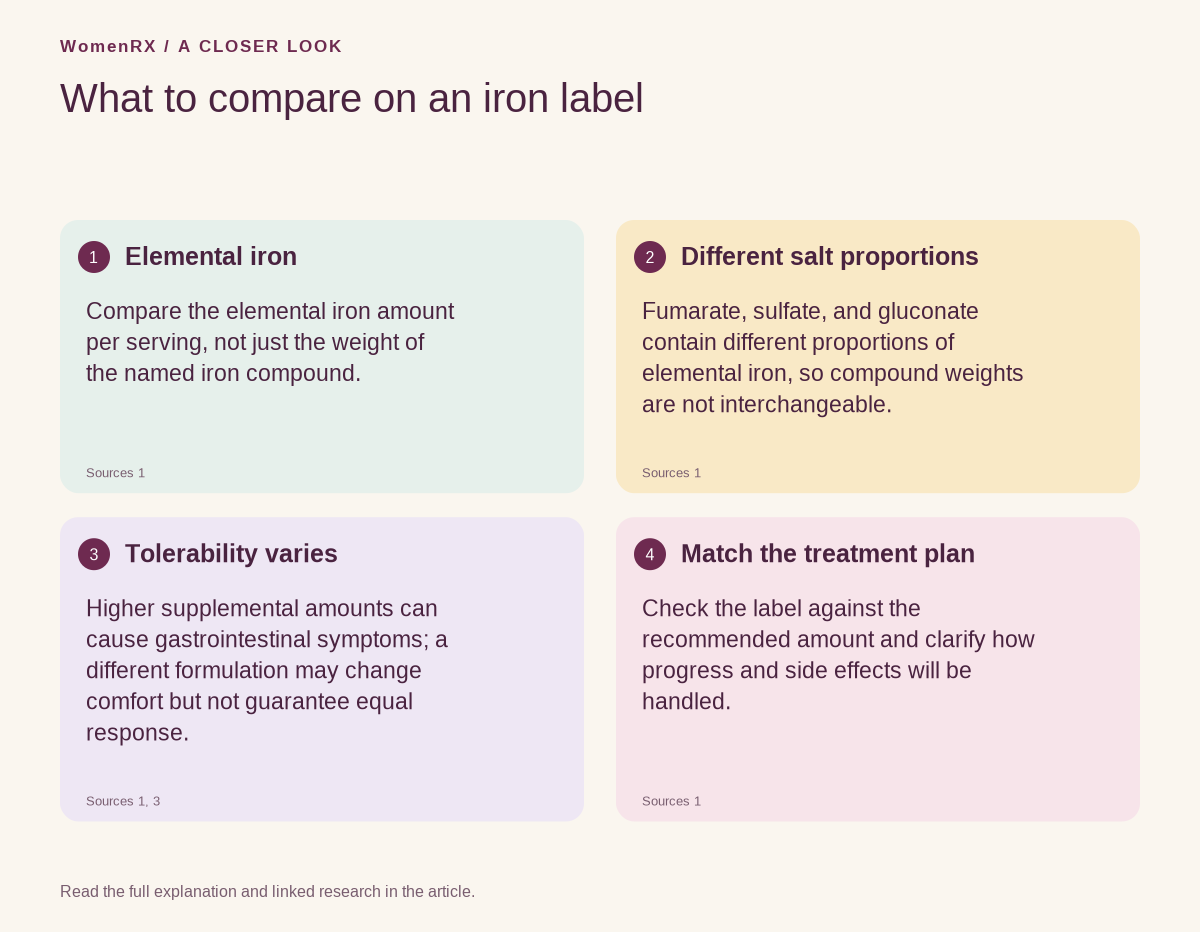
What to compare on an iron label
Elemental iron: Compare the elemental iron amount per serving, not just the weight of the named iron compound.1
Different salt proportions: Fumarate, sulfate, and gluconate contain different proportions of elemental iron, so compound weights are not interchangeable.1
Tolerability varies: Higher supplemental amounts can cause gastrointestinal symptoms; a different formulation may change comfort but not guarantee equal response.13
Match the treatment plan: Check the label against the recommended amount and clarify how progress and side effects will be handled.1
Read the figure as text
Compare the iron your serving provides, the form it comes in, and what to clarify about tolerability and treatment fit.- Elemental iron: Compare the elemental iron amount per serving, not just the weight of the named iron compound.1
- Different salt proportions: Fumarate, sulfate, and gluconate contain different proportions of elemental iron, so compound weights are not interchangeable.1
- Tolerability varies: Higher supplemental amounts can cause gastrointestinal symptoms; a different formulation may change comfort but not guarantee equal response.13
- Match the treatment plan: Check the label against the recommended amount and clarify how progress and side effects will be handled.1
More questions, answered
Is a higher percentage of Daily Value better for treating deficiency?
No. The Daily Value is a general label reference, not an individualized treatment target. Compare the elemental iron amount with the amount recommended for you. 1
Should I switch forms if iron upsets my stomach?
Don’t assume another form will be equally effective or solve the problem. Some forms may be better tolerated, but a small trial in women found a trade-off between ferritin response and gastrointestinal symptoms for the specific products studied. Tell your clinician what you’re experiencing before changing the plan. 13
Sources you can check
- Iron - Health Professional Fact SheetAccessed 2026-09-25Return to first citation
- Iron: MedlinePlusAccessed 2026-09-25Return to first citation
- Oral ferrous sulphate supplementation has greater efficacy, but lower tolerance than iron (III)-hydroxide polymaltose complexes in exercising women with low iron stores.McKay AK, Broome S, Tee N, Yim KL, Sim M, Peeling P, Burke LM. · Clinical nutrition (Edinburgh, Scotland) · 2026Return to first citation