Can Diet Alone Correct Iron Deficiency?
Food can help improve iron intake, but whether it’s enough depends on your test results, the cause of the deficiency, and whether iron stores are continuing to fall.
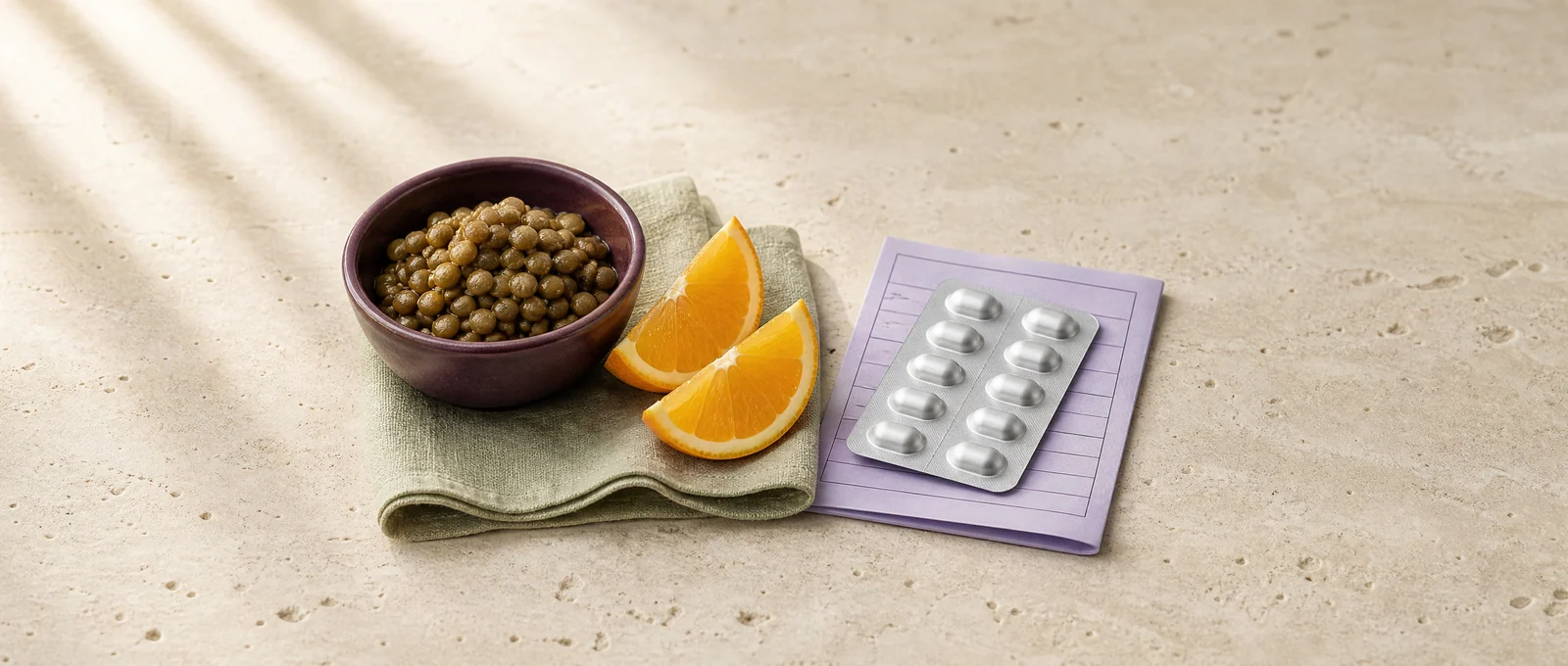
Food can improve iron intake, but that doesn’t establish that diet alone will correct diagnosed iron deficiency. Iron supplements are commonly used to treat low iron and iron-deficiency anemia; whether they’re part of your plan depends on your test results and the cause. Finding ongoing blood loss or an absorption problem matters too, because changing meals may not address it. 12
Low iron and anemia aren’t the same thing
Iron deficiency can start with low iron stores while hemoglobin remains in the normal range. Anemia develops later, when iron is too low to support normal hemoglobin production. That distinction matters: a normal hemoglobin result doesn’t necessarily mean iron stores are adequate. Ferritin is used to assess iron stores, while hemoglobin helps identify anemia; inflammation can make ferritin harder to interpret, so clinicians may consider more than one blood test. 1
When food may help, and when it may not
Iron-rich meals can support your intake. Meat and seafood provide heme iron, which is more readily absorbed; beans, nuts, vegetables, tofu, and iron-fortified grains provide nonheme iron. Vitamin C can help your body absorb nonheme iron. Plant-based iron can still contribute, but it is generally less bioavailable than heme iron. 1
That makes food a useful part of care, not a guaranteed replacement for treatment. MedlinePlus describes iron supplements as the usual treatment for low iron and iron-deficiency anemia. The need for supplements depends on your situation, including how low your stores are, whether you’re anemic, and whether the cause is still present. Don’t start a high-dose iron supplement just because you feel tired: fatigue can have other causes, and excess iron can be harmful. 12
For example, adding beans, lentils, or fortified cereal to meals may improve dietary iron intake. But if heavy bleeding continues or your body isn’t absorbing iron well, changing meals alone may not address what’s driving the deficiency. 12
The cause changes the plan
Heavy menstrual bleeding raises the risk of iron deficiency because it increases iron loss. Pregnancy raises iron needs. Other possible contributors include low dietary intake, digestive conditions that interfere with absorption, and blood loss. These are possibilities to investigate, not causes to assume. 12
Tell your clinician if you’re pregnant or recently gave birth, and mention whether you’re breastfeeding. Needs differ by life stage, and that context helps put your test results and intake in perspective. After menopause, menstrual loss no longer explains low iron; other possible sources of blood loss, low intake, or absorption problems may need consideration. 1
The practical question isn’t only “Am I eating enough iron?” It’s also “Why did my iron get low, and is that cause continuing?” Treating the cause, when one can be identified, can matter as much as replacing iron. 12
Make follow-up about both numbers and tolerance
Ask which results show low iron and whether you also have anemia. You can also ask what the follow-up plan is: which blood tests will be repeated, when they’ll be checked, and what result would show that iron stores, not just hemoglobin, are improving. Ferritin can be affected by inflammation, so the answer may depend on your full set of results. 1
If iron is recommended, tell your care team if it causes nausea, constipation, or other stomach symptoms. These can occur with iron supplements, and the amount of elemental iron varies among products, so don’t switch products or change how you take it without checking. Iron can interfere with levothyroxine absorption, and calcium may also reduce iron absorption; ask a pharmacist or clinician how to handle your specific medicines and supplements. 1
A useful next step is to bring together your lab results, bleeding history, diet, digestive symptoms, pregnancy or postpartum context, and current medicines. That gives you and your clinician a better chance of choosing a plan that addresses both the low iron and its cause.
From iron results to a treatment plan
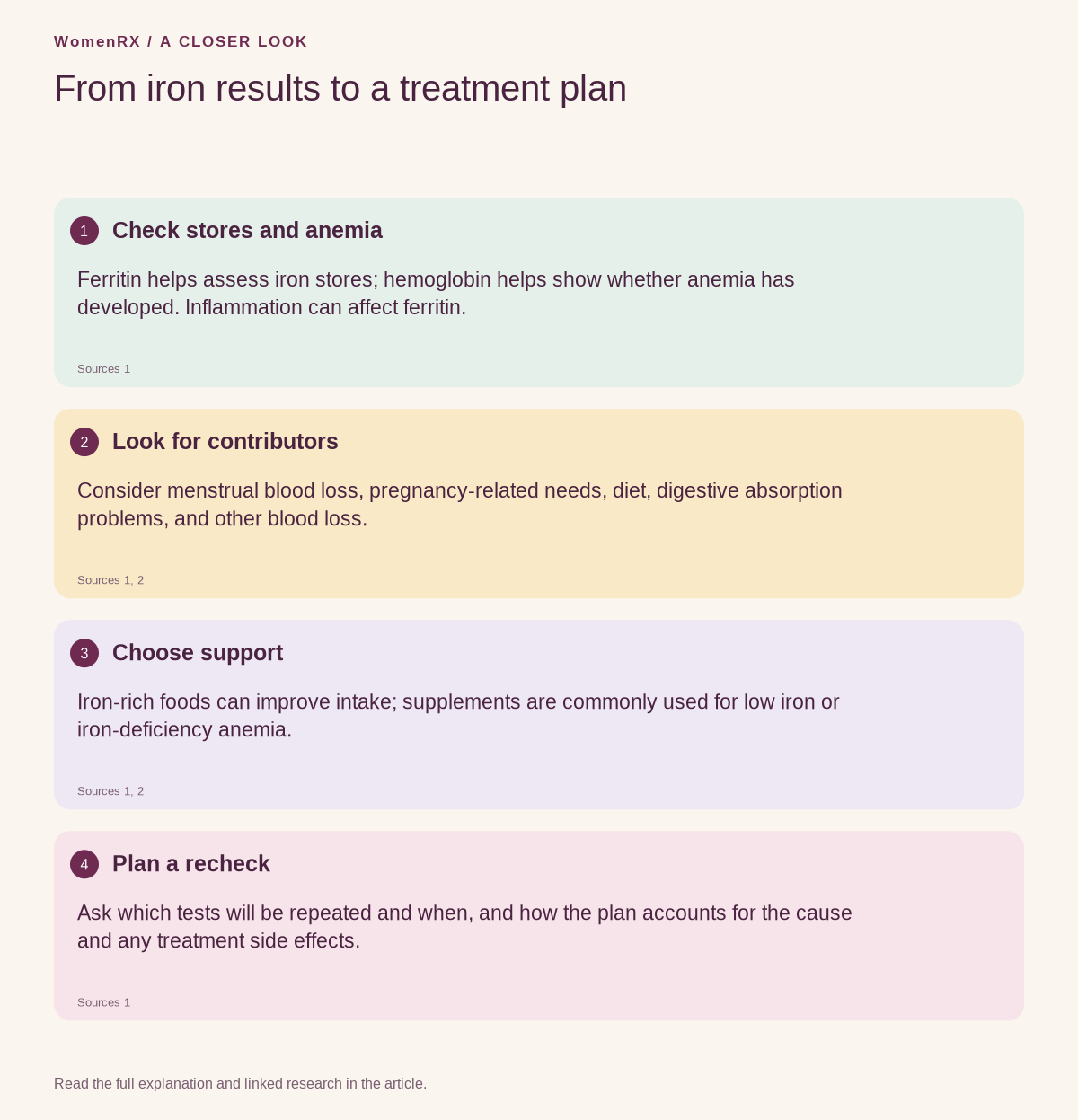
Check stores and anemia: Ferritin helps assess iron stores; hemoglobin helps show whether anemia has developed. Inflammation can affect ferritin.1
Look for contributors: Consider menstrual blood loss, pregnancy-related needs, diet, digestive absorption problems, and other blood loss.12
Choose support: Iron-rich foods can improve intake; supplements are commonly used for low iron or iron-deficiency anemia.12
Plan a recheck: Ask which tests will be repeated and when, and how the plan accounts for the cause and any treatment side effects.1
Read the figure as text
A simple way to connect what tests show with the questions that shape next steps. It is a discussion aid, not a diagnostic algorithm.- Check stores and anemia: Ferritin helps assess iron stores; hemoglobin helps show whether anemia has developed. Inflammation can affect ferritin.1
- Look for contributors: Consider menstrual blood loss, pregnancy-related needs, diet, digestive absorption problems, and other blood loss.12
- Choose support: Iron-rich foods can improve intake; supplements are commonly used for low iron or iron-deficiency anemia.12
- Plan a recheck: Ask which tests will be repeated and when, and how the plan accounts for the cause and any treatment side effects.1
More questions, answered
Can I eat more iron-rich foods while taking an iron supplement?
Iron-rich foods can support your overall intake, but they don’t replace the reason for a prescribed supplement. If you use calcium supplements or take levothyroxine, ask how to manage them alongside iron because they can affect absorption. 1
What should I ask about repeat blood tests?
Ask which tests will be repeated and when, and whether the plan checks both hemoglobin and iron stores. Ferritin reflects iron stores, but inflammation can affect its level, so results may need to be interpreted alongside other measures. 1
Sources you can check
- Iron - Health Professional Fact SheetAccessed 2026-09-25Return to first citation
- Iron: MedlinePlusAccessed 2026-09-25Return to first citation