Iron Deficiency: Choosing a Supplement With a Clinician
The right iron plan depends on whether your iron stores are low, whether anemia has developed, and what’s causing the deficiency.
Iron deficiency can exist before hemoglobin falls enough to count as anemia, so a normal hemoglobin result alone may not tell the whole story. For confirmed iron-deficiency anemia, oral iron is commonly used before intravenous iron; the form and schedule should fit your results, other medicines, tolerance, and likely cause. Heavy periods, pregnancy, blood loss, or poor absorption may shape the plan. 23
Low iron stores and anemia aren’t the same thing
Iron deficiency develops in stages. Iron stores, often assessed with ferritin, can fall before hemoglobin becomes low. Iron-deficiency anemia (IDA) means the shortage has progressed far enough to reduce hemoglobin. That distinction matters: someone can have depleted iron stores without anemia, and a hemoglobin test by itself may not identify early deficiency. Ferritin also needs context because inflammation can raise it and make iron stores harder to interpret. 2
Ask what your results show separately: are your iron stores low, is hemoglobin low, or are both? A clinician may interpret ferritin alongside a blood count and other iron measures rather than relying on a single number. 2
The supplement label doesn’t tell the whole story
Ferrous sulfate and ferrous fumarate are common iron salts. Different forms contain different amounts of elemental iron, meaning the amount of iron the supplement contains; the Supplement Facts panel lists that amount. Ferrous iron is generally more bioavailable than ferric iron, but absorption also depends on factors such as food and other medicines. The label alone doesn’t determine which option is best for you. 2
The treatment amount and schedule aren’t the same as the daily iron intake recommended for healthy people. A treatment plan depends on your lab results and circumstances, so don’t use a general supplement recommendation as a substitute for a plan based on confirmed deficiency. 2
Oral iron can cause nausea, stomach discomfort, constipation, or diarrhea. Higher supplemental amounts are more likely to cause gastrointestinal effects, and taking iron with food may help ease side effects, though your clinician can help weigh comfort against the plan’s goals. If side effects make it hard to keep taking the supplement, say so rather than silently stopping or switching products. 12
Mention your medicines and supplements. Iron can reduce absorption of levothyroxine and levodopa when taken at the same time; proton pump inhibitors such as omeprazole may also reduce iron absorption. Calcium may interfere with iron absorption, although that effect isn’t firmly established. 2
Treating the shortage includes looking for its cause
Replacing iron may not be enough if you’re continuing to lose it or can’t absorb it well. Heavy menstrual bleeding can contribute to iron deficiency, but it shouldn’t automatically be assumed to explain every case. Gastrointestinal blood loss, conditions such as celiac disease or inflammatory bowel disease, and some gastrointestinal surgeries can also be relevant. 2
Pregnancy increases iron needs, and professional recommendations differ on routine screening or supplementation for people without symptoms. If you’re pregnant or breastfeeding, mention that when discussing your results; those life stages have different iron intake reference values. 2
A useful question is: “What do you think is causing my low iron, and do we need to evaluate that as well as replace it?” The answer may affect whether the plan focuses only on iron, also addresses bleeding, or considers a problem with absorption. 2
If the plan isn’t working, ask what to reassess
You can ask: “Which results will we use to judge whether the plan is helping, and when should we revisit it?” If you’re having trouble tolerating oral iron or are concerned it isn’t helping, useful questions include whether the diagnosis or cause needs another look, whether side effects or a medicine interaction are getting in the way, and whether absorption may be limited. 2
Oral iron isn’t the only possible route. A small prospective study of 30 adults with IDA who couldn’t tolerate or didn’t respond to oral iron reported improved blood and iron measures after intravenous iron. That study doesn’t establish what is best for everyone, but it supports discussing whether a different approach fits when oral treatment isn’t workable or effective. 3
Keep iron supplements securely away from children. Taking too much can cause severe poisoning, and iron-containing products are a particular accidental overdose risk for young children. 2
The most useful conversation connects three things: what your tests show, what may be driving the deficiency, and what results or changes would prompt another look at the plan. That’s a better basis for choosing an iron product than picking one by name alone.
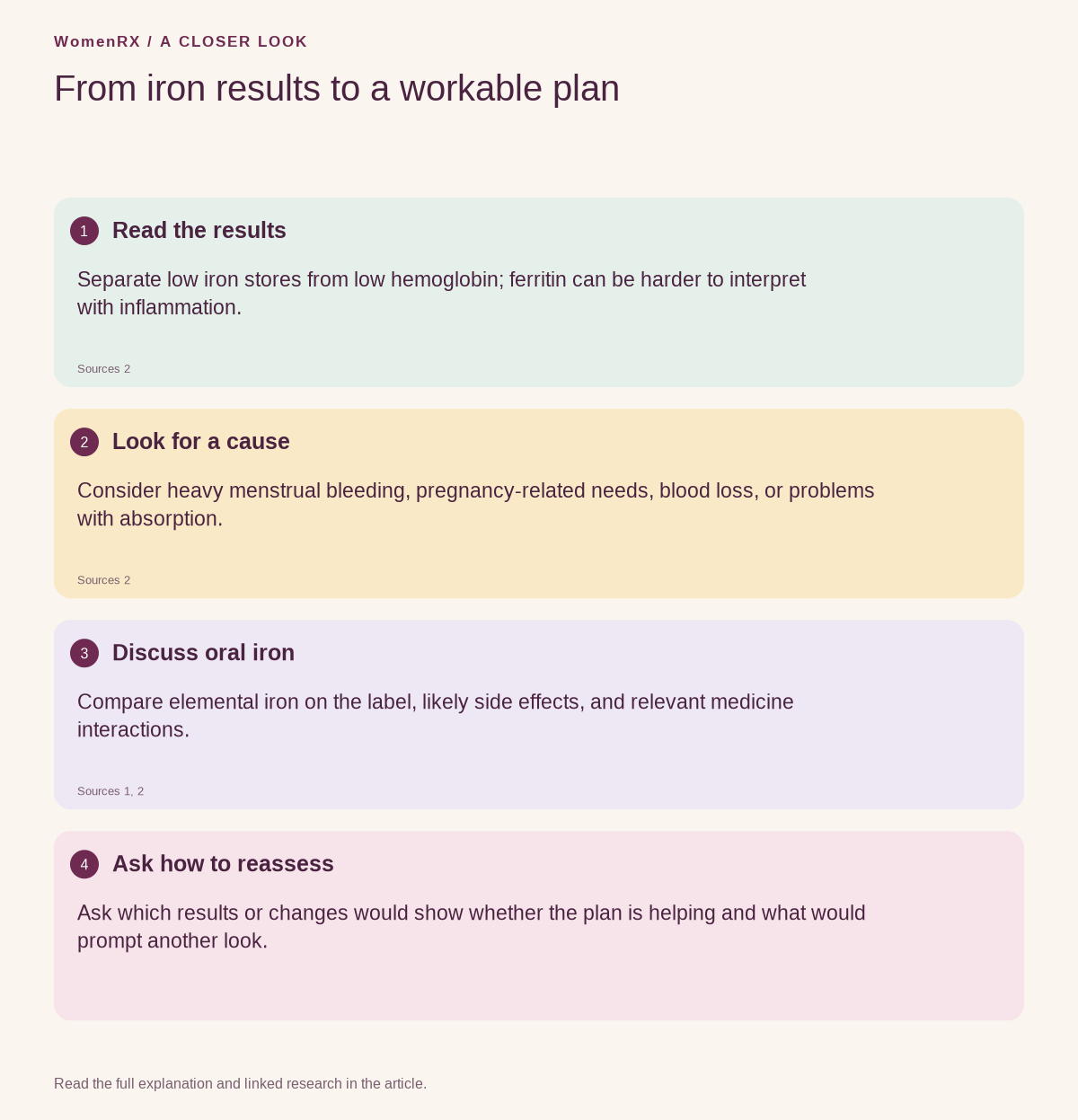
From iron results to a workable plan
Read the results: Separate low iron stores from low hemoglobin; ferritin can be harder to interpret with inflammation.2
Look for a cause: Consider heavy menstrual bleeding, pregnancy-related needs, blood loss, or problems with absorption.2
Discuss oral iron: Compare elemental iron on the label, likely side effects, and relevant medicine interactions.12
Ask how to reassess: Ask which results or changes would show whether the plan is helping and what would prompt another look.
Read the figure as text
A practical sequence for connecting test results, possible causes, treatment discussions, and questions about response.- Read the results: Separate low iron stores from low hemoglobin; ferritin can be harder to interpret with inflammation.2
- Look for a cause: Consider heavy menstrual bleeding, pregnancy-related needs, blood loss, or problems with absorption.2
- Discuss oral iron: Compare elemental iron on the label, likely side effects, and relevant medicine interactions.12
- Ask how to reassess: Ask which results or changes would show whether the plan is helping and what would prompt another look.
More questions, answered
Can iron be low if I’m not anemic?
Yes. Iron stores can become depleted before hemoglobin falls, so iron deficiency can be present without iron-deficiency anemia. Ferritin and other results help put that distinction in context. 2
What if oral iron upsets my stomach?
Nausea, stomach discomfort, constipation, and diarrhea can happen. Tell the clinician who is guiding your treatment if side effects are making it difficult to continue; taking iron with food may ease some side effects. 12
Sources you can check
- Side effects of ferrous sulfate - NHSAccessed 2026-09-25Return to first citation
- Iron - Health Professional Fact SheetAccessed 2026-09-25Return to first citation
- Real-world use of intravenous ferric derisomaltose in Brazilian patients with iron deficiency anemia.Leite LAC, Barros GDS, do Carmo TA, Cançado RD. · Hematology, transfusion and cell therapy · 2026Return to first citation